
靶向多胺氧化酶以预防兴奋性毒性诱导的视网膜神经变性。
Targeting Polyamine Oxidase to Prevent Excitotoxicity-Induced Retinal Neurodegeneration.
作者信息
Pichavaram Prahalathan, Palani Chithra Devi, Patel Chintan, Xu Zhimin, Shosha Esraa, Fouda Abdelrahman Y, Caldwell Ruth B, Narayanan Subhadra Priya
机构信息
Vision Discovery Institute, Augusta University, Augusta, GA, United States.
College of Allied Health Sciences, Augusta University, Augusta, GA, United States.
出版信息
Front Neurosci. 2019 Jan 10;12:956. doi: 10.3389/fnins.2018.00956. eCollection 2018.
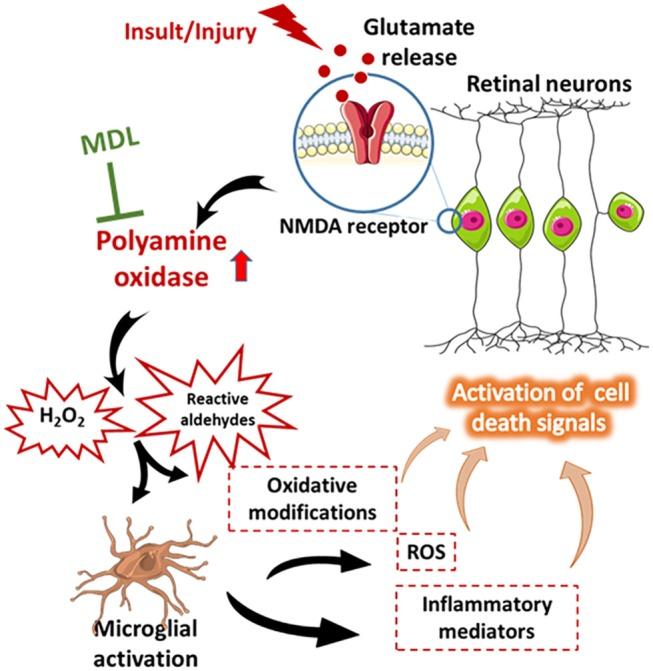
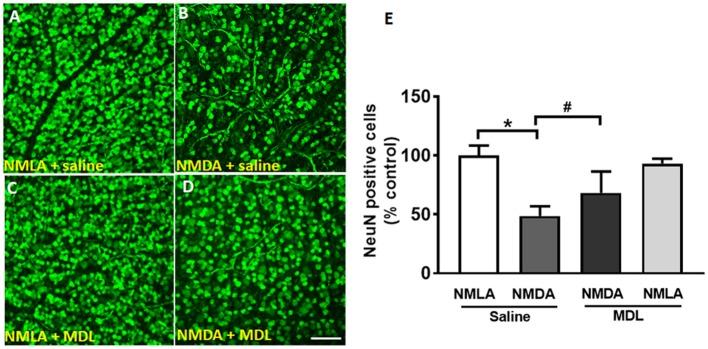
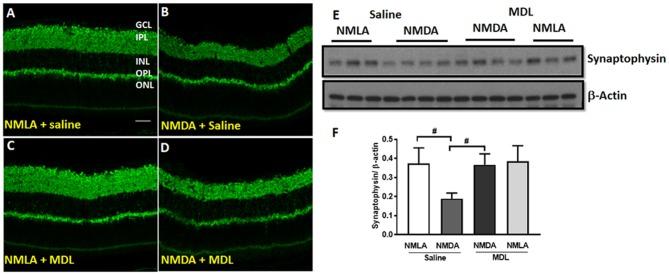
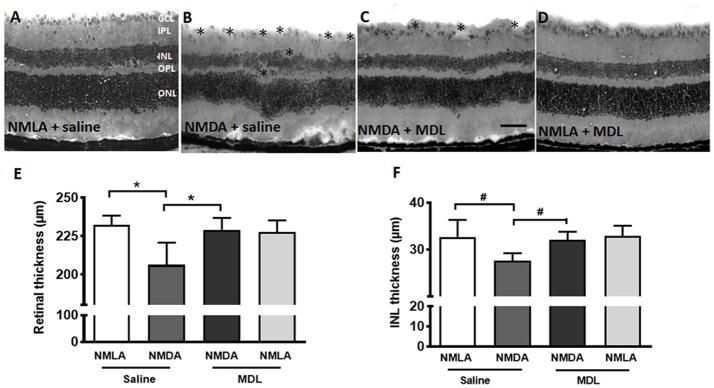
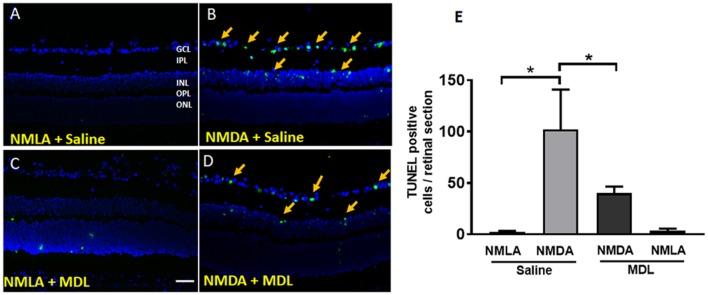
Dysfunction of retinal neurons is a major cause of vision impairment in blinding diseases that affect children and adults worldwide. Cellular damage resulting from polyamine catabolism has been demonstrated to be a major player in many neurodegenerative conditions. We have previously shown that inhibition of polyamine oxidase (PAO) using MDL 72527 significantly reduced retinal neurodegeneration and cell death signaling pathways in hyperoxia-mediated retinopathy. In the present study, we investigated the impact of PAO inhibition in limiting retinal neurodegeneration in a model of NMDA ()-induced excitotoxicity. Adult mice (8-10 weeks old) were given intravitreal injections (20 nmoles) of NMDA or NMLA (, control). Intraperitoneal injection of MDL 72527 (40 mg/kg body weight/day) or vehicle (normal saline) was given 24 h before NMDA or NMLA treatment and continued until the animals were sacrificed (varied from 1 to 7 days). Analyses of retinal ganglion cell (RGC) layer cell survival was performed on retinal flatmounts. Retinal cryostat sections were prepared for immunostaining, TUNEL assay and retinal thickness measurements. Fresh frozen retinal samples were used for Western blotting analysis. A marked decrease in the neuronal survival in the RGC layer was observed in NMDA treated retinas compared to their NMLA treated controls, as studied by NeuN immunostaining of retinal flatmounts. Treatment with MDL 72527 significantly improved survival of NeuN positive cells in the NMDA treated retinas. Excitotoxicity induced neurodegeneration was also demonstrated by reduced levels of synaptophysin and degeneration of inner retinal neurons in NMDA treated retinas compared to controls. TUNEL labeling studies showed increased cell death in the NMDA treated retinas. However, treatment with MDL 72527 markedly reduced these changes. Analysis of signaling pathways during excitotoxic injury revealed the downregulation of pro-survival signaling molecules p-ERK and p-Akt, and the upregulation of a pro-apoptotic molecule BID, which were normalized with PAO inhibition. Our data demonstrate that inhibition of polyamine oxidase blocks NMDA-induced retinal neurodegeneration and promotes cell survival, thus offering a new therapeutic target for retinal neurodegenerative disease conditions.
视网膜神经元功能障碍是影响全球儿童和成人的致盲性疾病中视力受损的主要原因。多胺分解代谢导致的细胞损伤已被证明是许多神经退行性疾病的主要因素。我们之前已经表明,使用MDL 72527抑制多胺氧化酶(PAO)可显著减少高氧介导的视网膜病变中的视网膜神经退行性变和细胞死亡信号通路。在本研究中,我们研究了PAO抑制在限制NMDA()诱导的兴奋性毒性模型中视网膜神经退行性变的影响。给成年小鼠(8 - 10周龄)玻璃体内注射(20纳摩尔)NMDA或NMLA(,对照)。在NMDA或NMLA治疗前24小时腹腔注射MDL 72527(40毫克/千克体重/天)或溶剂(生理盐水),并持续至动物处死(1至7天不等)。对视网膜平铺片进行视网膜神经节细胞(RGC)层细胞存活分析。制备视网膜低温切片用于免疫染色、TUNEL检测和视网膜厚度测量。新鲜冷冻的视网膜样本用于蛋白质印迹分析。通过视网膜平铺片的NeuN免疫染色研究发现,与NMLA处理的对照相比,NMDA处理的视网膜中RGC层的神经元存活率显著降低。用MDL 72527治疗可显著提高NMDA处理的视网膜中NeuN阳性细胞的存活率。与对照相比,NMDA处理的视网膜中突触素水平降低和视网膜内层神经元变性也证明了兴奋性毒性诱导的神经退行性变。TUNEL标记研究显示NMDA处理的视网膜中细胞死亡增加。然而,用MDL 72527治疗可显著减少这些变化。对兴奋性毒性损伤期间信号通路的分析显示,促生存信号分子p-ERK和p-Akt下调,促凋亡分子BID上调,而PAO抑制可使其恢复正常。我们的数据表明,抑制多胺氧化酶可阻断NMDA诱导的视网膜神经退行性变并促进细胞存活,从而为视网膜神经退行性疾病提供了一个新的治疗靶点。




 Zotero 插件