
PN159/KLAL/MAP肽的双重作用:通过调节紧密连接和质膜通透性增加药物跨Caco-2肠屏障模型的渗透
Dual Action of the PN159/KLAL/MAP Peptide: Increase of Drug Penetration across Caco-2 Intestinal Barrier Model by Modulation of Tight Junctions and Plasma Membrane Permeability.
作者信息
Bocsik Alexandra, Gróf Ilona, Kiss Lóránd, Ötvös Ferenc, Zsíros Ottó, Daruka Lejla, Fülöp Lívia, Vastag Monika, Kittel Ágnes, Imre Norbert, Martinek Tamás A, Pál Csaba, Szabó-Révész Piroska, Deli Mária A
机构信息
Institute of Biophysics, Biological Research Centre, Hungarian Academy of Sciences, H-6726, Szeged, Hungary.
Doctoral School in Biology, Faculty of Science and Informatics, University of Szeged, Szeged, Hungary.
出版信息
Pharmaceutics. 2019 Feb 10;11(2):73. doi: 10.3390/pharmaceutics11020073.
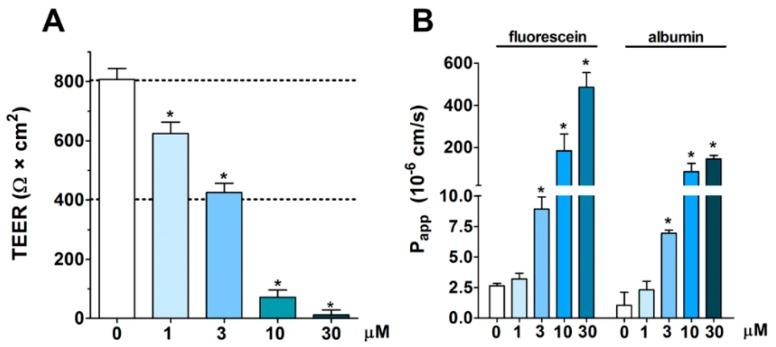
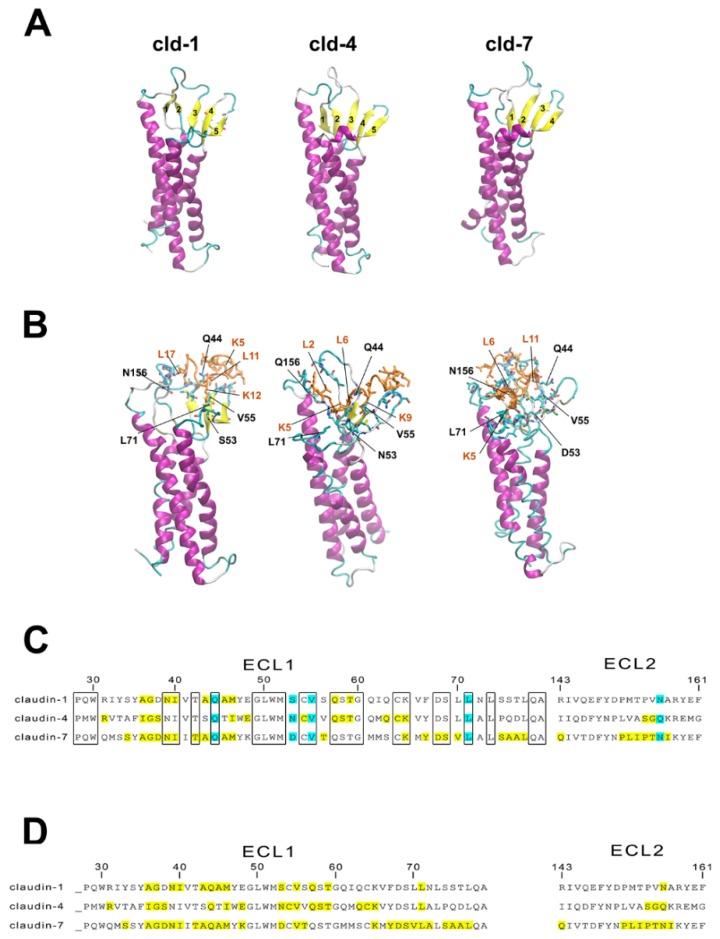
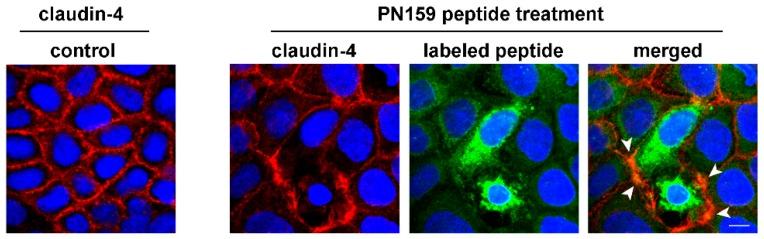
The absorption of drugs is limited by the epithelial barriers of the gastrointestinal tract. One of the strategies to improve drug delivery is the modulation of barrier function by the targeted opening of epithelial tight junctions. In our previous study the 18-mer amphiphilic PN159 peptide was found to be an effective tight junction modulator on intestinal epithelial and blood⁻brain barrier models. PN159, also known as KLAL or MAP, was described to interact with biological membranes as a cell-penetrating peptide. In the present work we demonstrated that the PN159 peptide as a penetration enhancer has a dual action on intestinal epithelial cells. The peptide safely and reversibly enhanced the permeability of Caco-2 monolayers by opening the intercellular junctions. The penetration of dextran molecules with different size and four efflux pump substrate drugs was increased several folds. We identified claudin-4 and -7 junctional proteins by docking studies as potential binding partners and targets of PN159 in the opening of the paracellular pathway. In addition to the tight junction modulator action, the peptide showed cell membrane permeabilizing and antimicrobial effects. This dual action is not general for cell-penetrating peptides (CPPs), since the other three CPPs tested did not show barrier opening effects.
药物的吸收受到胃肠道上皮屏障的限制。改善药物递送的策略之一是通过靶向打开上皮紧密连接来调节屏障功能。在我们之前的研究中,发现18聚体两亲性PN159肽在肠道上皮和血脑屏障模型上是一种有效的紧密连接调节剂。PN159,也称为KLAL或MAP,被描述为作为一种细胞穿透肽与生物膜相互作用。在本研究中,我们证明PN159肽作为一种渗透增强剂对肠道上皮细胞具有双重作用。该肽通过打开细胞间连接安全且可逆地增强了Caco-2单层细胞的通透性。不同大小的葡聚糖分子和四种外排泵底物药物的渗透增加了几倍。我们通过对接研究确定claudin-4和-7连接蛋白是PN159在细胞旁途径开放中的潜在结合伙伴和靶点。除了紧密连接调节作用外,该肽还表现出细胞膜通透作用和抗菌作用。这种双重作用并非细胞穿透肽(CPPs)所共有,因为测试的其他三种CPPs未表现出屏障打开效应。





 Zotero 插件