
考虑使用 Cre 重组酶在小鼠晶状体中进行条件性基因缺失。
Considerations for the use of Cre recombinase for conditional gene deletion in the mouse lens.
机构信息
Department of Biology, Miami University, Oxford, OH, 45056, USA.
Present Address: Solomon H. Snyder Department of Neuroscience, Johns Hopkins University School of Medicine, Baltimore, MD, 21205, USA.
出版信息
Hum Genomics. 2019 Feb 15;13(1):10. doi: 10.1186/s40246-019-0192-8.
BACKGROUND
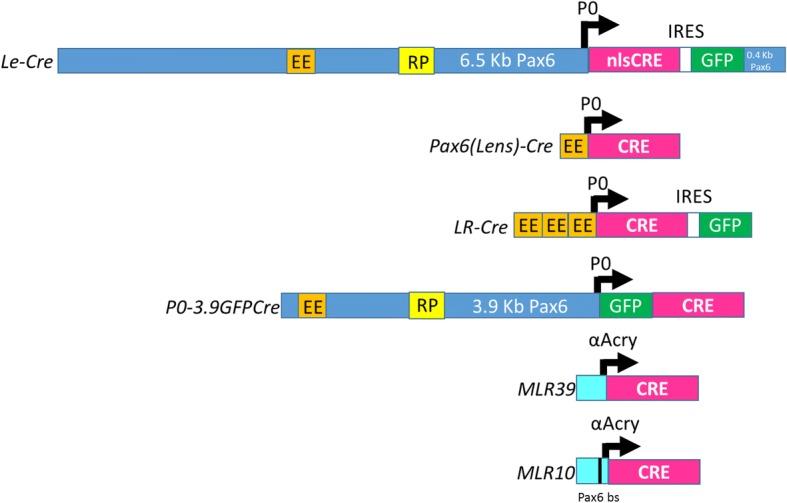
Despite a number of different transgenes that can mediate DNA deletion in the developing lens, each has unique features that can make a given transgenic line more or less appropriate for particular studies. The purpose of this work encompasses both a review of transgenes that lead to the expression of Cre recombinase in the lens and a comparative analysis of currently available transgenic lines with a particular emphasis on the Le-Cre and P0-3.9GFPCre lines that can mediate DNA deletion in the lens placode. Although both of these transgenes are driven by elements of the Pax6 P0 promoter, the Le-Cre transgene consistently leads to ocular abnormalities in homozygous state and can lead to ocular defects on some genetic backgrounds when hemizygous.
RESULT
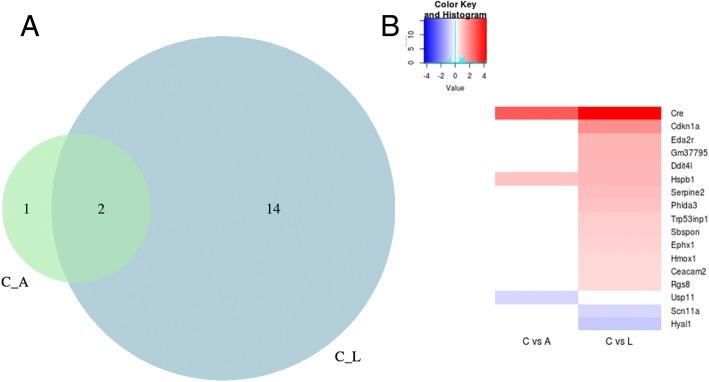
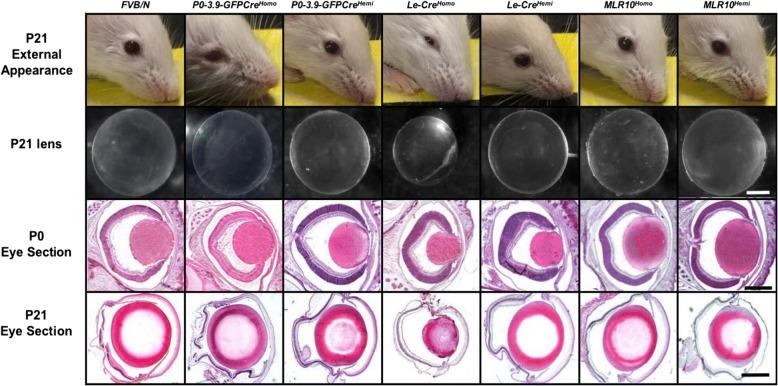
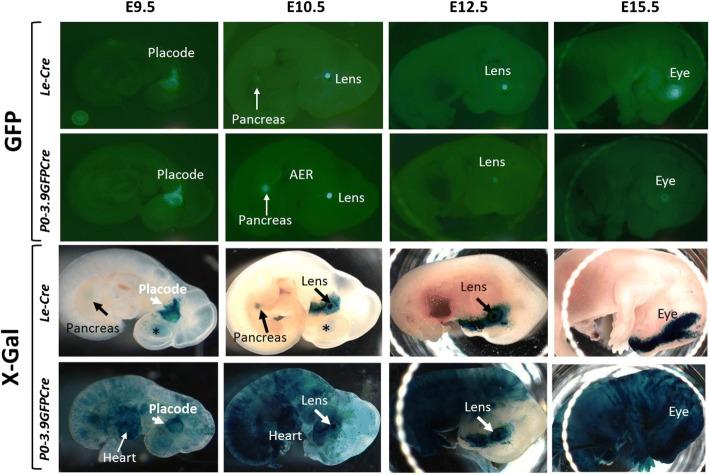
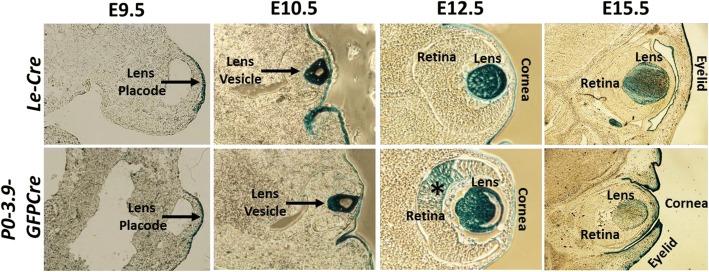
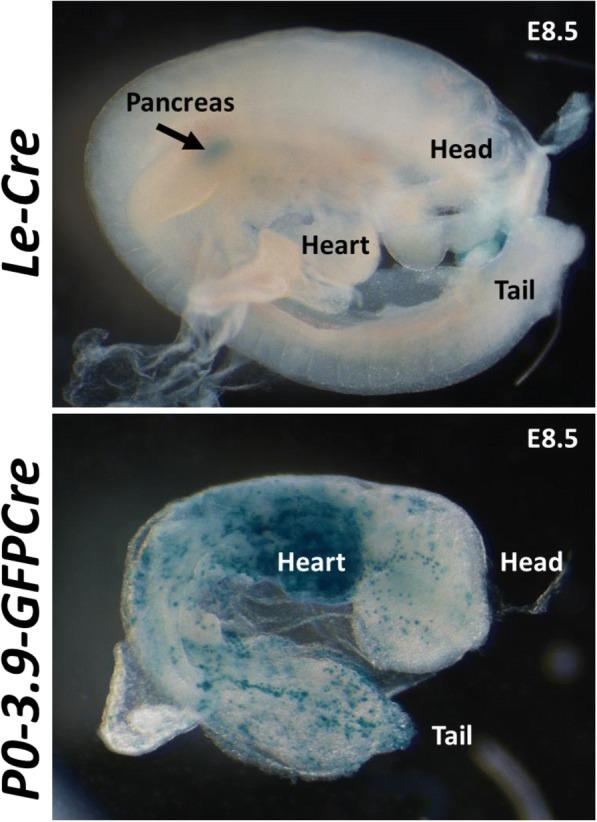
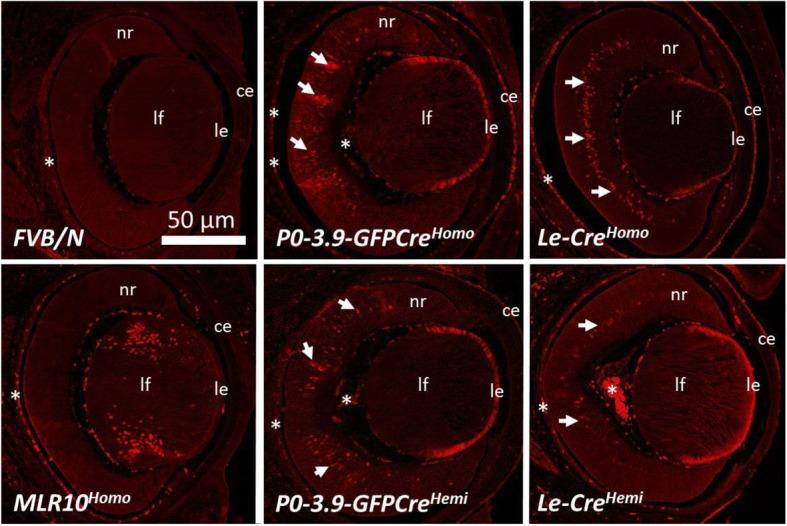
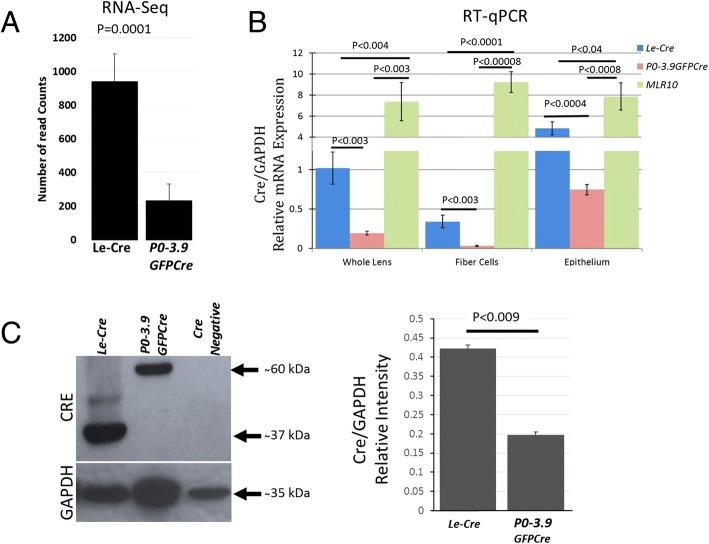
Although both P0-3.9GFPCre and Le-Cre hemizygous transgenic mice undergo normal eye development on an FVB/N genetic background, Le-Cre homozygotes uniquely exhibit microphthalmia. Examination of the expression patterns of these two transgenes revealed similar expression in the developing eye and pancreas. However, lineage tracing revealed widespread non-ocular CRE reporter gene expression in the P0-3.9GFPCre transgenic mice that results from stochastic CRE expression in the P0-3.9GFPCre embryos prior to lens placode formation. Postnatal hemizygous Le-Cre transgenic lenses express higher levels of CRE transcript and protein than the hemizygous lenses of P0-3.9GFPCre mice. Transcriptome analysis revealed that Le-Cre hemizygous lenses deregulated the expression of 15 murine genes, several of which are associated with apoptosis. In contrast, P0-3.9GFPCre hemizygous lenses only deregulated two murine genes. No known PAX6-responsive genes or genes directly associated with lens differentiation were deregulated in the hemizygous Le-Cre lenses.
CONCLUSIONS
Although P0-3.9GFPCre transgenic mice appear free from ocular abnormalities, extensive non-ocular CRE expression represents a potential problem for conditional gene deletion studies using this transgene. The higher level of CRE expression in Le-Cre lenses versus P0-3.9GFPCre lenses may explain abnormal lens development in homozygous Le-Cre mice. Given the lack of deregulation of PAX6-responsive transcripts, we suggest that abnormal eye development in Le-Cre transgenic mice stems from CRE toxicity. Our studies reinforce the requirement for appropriate CRE-only expressing controls when using CRE as a driver of conditional gene targeting strategies.
背景
尽管有许多不同的转基因可以介导发育中的晶状体中的 DNA 缺失,但每种转基因都有其独特的特征,这使得特定的转基因系在特定的研究中或多或少地适用。这项工作的目的包括对在晶状体中表达 Cre 重组酶的转基因进行综述,以及对现有的转基因系进行比较分析,特别是对 Le-Cre 和 P0-3.9GFPCre 线,它们可以介导晶状体基板中的 DNA 缺失。尽管这两种转基因都由 Pax6 P0 启动子的元件驱动,但 Le-Cre 转基因在纯合状态下始终导致眼部异常,并在杂合状态下在某些遗传背景下导致眼部缺陷。
结果
尽管 P0-3.9GFPCre 和 Le-Cre 半合子转基因小鼠在 FVB/N 遗传背景下均经历正常的眼部发育,但 Le-Cre 纯合子独特地表现为小眼症。对这两种转基因的表达模式进行研究表明,它们在发育中的眼睛和胰腺中有相似的表达。然而,谱系追踪显示,在 P0-3.9GFPCre 转基因小鼠中,广泛存在非眼部 CRE 报告基因的表达,这是由于 P0-3.9GFPCre 胚胎在晶状体基板形成之前发生随机 CRE 表达所致。出生后半合子 Le-Cre 转基因晶状体表达的 CRE 转录本和蛋白水平高于 P0-3.9GFPCre 小鼠的半合子晶状体。转录组分析显示,Le-Cre 半合子晶状体下调了 15 个小鼠基因的表达,其中几个与凋亡有关。相比之下,P0-3.9GFPCre 半合子晶状体仅下调了两个小鼠基因。在半合子 Le-Cre 晶状体中,没有发现与 PAX6 反应性基因或与晶状体分化直接相关的基因发生失调。
结论
尽管 P0-3.9GFPCre 转基因小鼠似乎没有眼部异常,但广泛的非眼部 CRE 表达代表了使用这种转基因进行条件性基因缺失研究的一个潜在问题。与 P0-3.9GFPCre 晶状体相比,Le-Cre 晶状体中 CRE 的表达水平更高,这可能解释了纯合子 Le-Cre 小鼠晶状体发育异常的原因。鉴于 PAX6 反应性转录本没有失调,我们认为 Le-Cre 转基因小鼠的异常眼部发育源于 CRE 毒性。我们的研究强调了在使用 CRE 作为条件性基因靶向策略的驱动子时,需要使用仅表达 CRE 的对照。
 Zotero 插件