
超声引导下连续竖脊肌平面阻滞促进开腹肝切除术后患者的康复:一项随机对照、开放标签试验。
Ultrasound guided continuous Quadratus Lumborum block hastened recovery in patients undergoing open liver resection: a randomized controlled, open-label trial.
机构信息
Department of Anesthesiology, The Second Xiangya Hospital of Central South University, 139 Renmin Middle Road, Hunan, China.
Department of Hepatobiliary Surgery, The Second Xiangya Hospital of Central South University, 139 Renmin Middle Road, Hunan, China.
出版信息
BMC Anesthesiol. 2019 Feb 18;19(1):23. doi: 10.1186/s12871-019-0692-z.
BACKGROUND
Quadratus lumborum (QL) block is increasingly being used as a new abdominal nerve block technique. In some studies of mid and lower abdominal and hip analgesia, continuous QL block achieved favorable outcomes as an alternative to continuous intravenous analgesia with opioids. However, the use of continuous QL block for upper abdominal pain is less well characterized. This study aimed to investigate the effects of continuous anterior QL block (CQLB) on postoperative pain and recovery in patients undergoing open liver resection.
METHODS
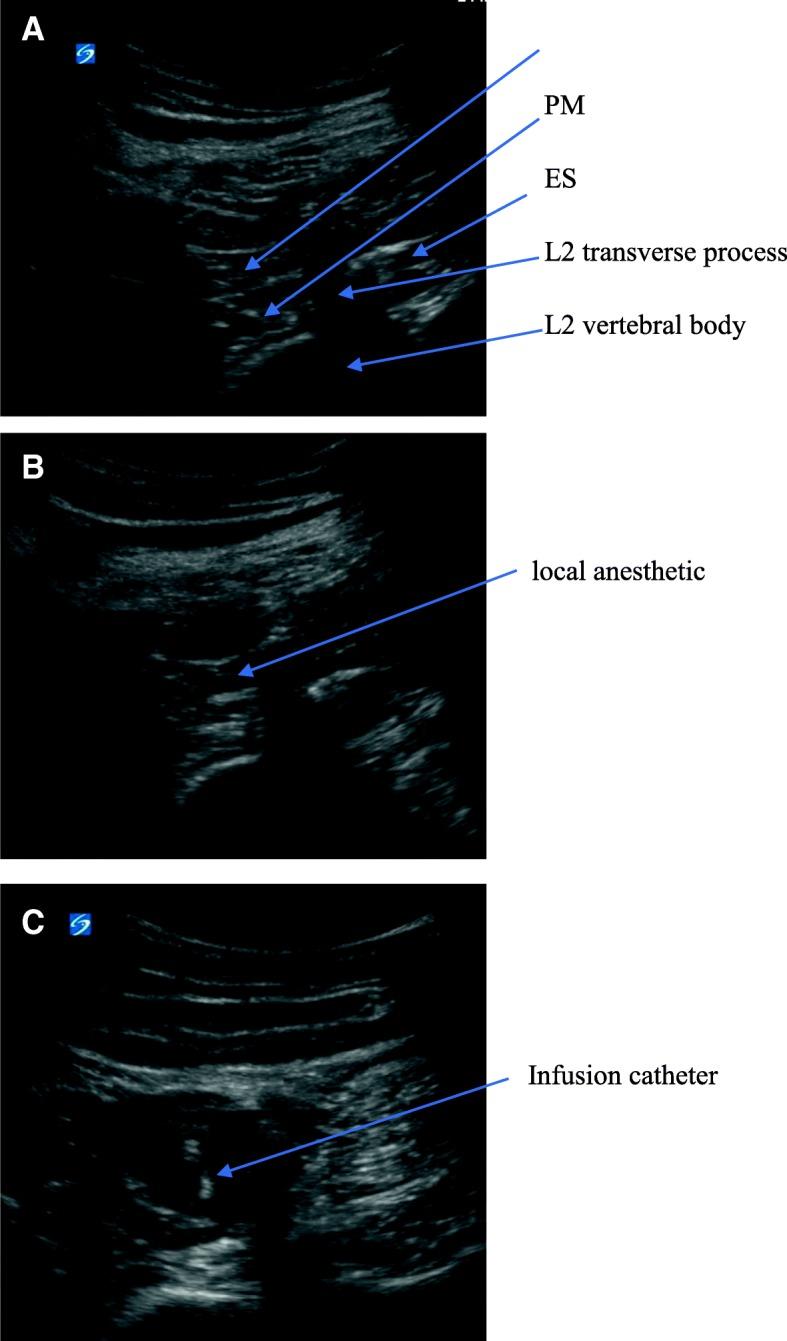
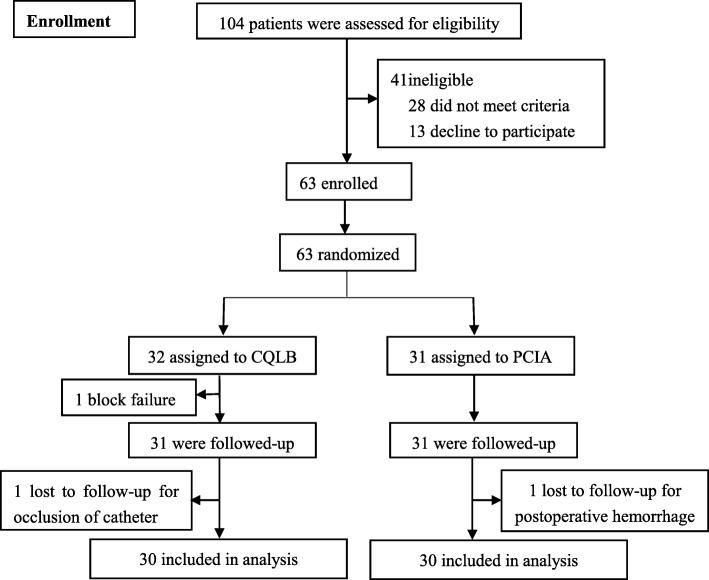
Sixty-three patients underwent elective open liver resection were randomly divided into continuous anterior QL block (CQLB, n = 32) group and patient-controlled intravenous analgesia (PCIA, n = 31) group. Patients in CQLB group underwent ultrasound-guided anterior QL block at the second lumbar vertebral transverse processes before general anesthesia, followed by postoperative CQLB analgesia. Patients in PCIA group underwent continuous intravenous analgesia postoperatively. Postoperative numerical rating scale (NRS) pain scores upon coughing and at rest, self-administered analgesic counts, rate of rescue analgesic use, time to first out-of-bed activity and anal flatus after surgery, and incidences of analgesic-related adverse effects were recorded.
RESULTS
Postoperative NRS pain scores on coughing in CQLB group at different time points and NRS pain score at rest 48 h after surgery were significantly lower than those in PCIA group (P < 0.05). Time to first out-of-bed activity and anal flatus after surgery in CQLB group were significantly earlier than those in PCIA group (P < 0.05). No significant differences of postoperative self-administered analgesic counts, rate of postoperative rescue analgesic usage, or incidences of analgesic-related adverse effects were found between the two groups (P > 0.05).
CONCLUSIONS
Ultrasound-guided anterior QL block significantly alleviated the pain during coughing after surgery, shortened the time to first out-of-bed activity and anal flatus, promoting postoperative recovery of the patients undergoing open liver resection.
TRIAL REGISTRATION
This study has been registered in April 1, 2018 on Chinese Clinical Trail Registry, the registration number is ChiCTR1800015454 .
背景
竖脊肌(QL)阻滞作为一种新的腹部神经阻滞技术,应用日益广泛。在一些中下腹和髋部镇痛的研究中,连续 QL 阻滞作为阿片类药物持续静脉镇痛的替代方法,取得了良好的效果。然而,连续 QL 阻滞在上腹部疼痛中的应用尚不清楚。本研究旨在探讨连续前路 QL 阻滞(CQLB)对开腹肝切除术患者术后疼痛和恢复的影响。
方法
63 例行择期开腹肝切除术的患者随机分为连续前路 QL 阻滞(CQLB,n=32)组和患者自控静脉镇痛(PCIA,n=31)组。CQLB 组患者在全麻前行超声引导前路 QL 阻滞,于第二腰椎横突,术后行 CQLB 镇痛。PCIA 组患者术后行持续静脉镇痛。记录术后咳嗽时和休息时的数字评分量表(NRS)疼痛评分、自行使用镇痛药次数、使用解救镇痛药的比例、术后首次下床活动和肛门排气时间以及镇痛相关不良反应的发生率。
结果
CQLB 组患者在不同时间点的术后咳嗽时 NRS 疼痛评分和术后 48 小时静息时 NRS 疼痛评分均明显低于 PCIA 组(P<0.05)。CQLB 组患者术后首次下床活动和肛门排气时间明显早于 PCIA 组(P<0.05)。两组患者术后自行使用镇痛药次数、术后使用解救镇痛药的比例及镇痛相关不良反应的发生率无统计学差异(P>0.05)。
结论
超声引导前路 QL 阻滞可显著减轻开腹肝切除术后咳嗽时的疼痛,缩短患者首次下床活动和肛门排气时间,促进患者术后恢复。
试验注册
本研究于 2018 年 4 月 1 日在中国临床试验注册中心注册,注册号为 ChiCTR1800015454。
 Zotero 插件