
内分泌介导的代谢紊乱机制及评估公共卫生威胁的新方法
Endocrine-Mediated Mechanisms of Metabolic Disruption and New Approaches to Examine the Public Health Threat.
作者信息
Kassotis Christopher D, Stapleton Heather M
机构信息
Nicholas School of the Environment, Duke University, Durham, NC, United States.
出版信息
Front Endocrinol (Lausanne). 2019 Feb 7;10:39. doi: 10.3389/fendo.2019.00039. eCollection 2019.
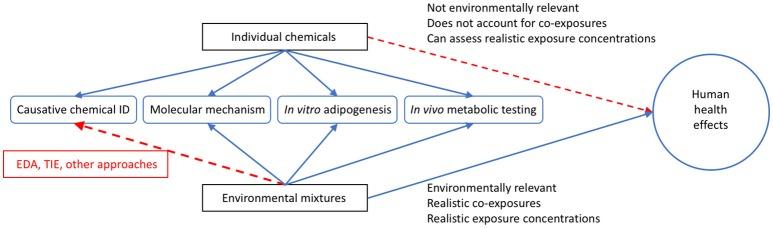
Obesity and metabolic disorders are of great societal concern and generate substantial human health care costs globally. Interventions have resulted in only minimal impacts on disrupting this worsening health trend, increasing attention on putative environmental contributors. Exposure to numerous environmental contaminants have, over decades, been demonstrated to result in increased metabolic dysfunction and/or weight gain in cell and animal models, and in some cases, even in humans. There are numerous mechanisms through which environmental contaminants may contribute to metabolic dysfunction, though certain mechanisms, such as activation of the peroxisome proliferator activated receptor gamma or the retinoid x receptor, have received considerably more attention than less-studied mechanisms such as antagonism of the thyroid receptor, androgen receptor, or mitochondrial toxicity. As such, research on putative metabolic disruptors is growing rapidly, as is our understanding of molecular mechanisms underlying these effects. Concurrent with these advances, new research has evaluated current models of adipogenesis, and new models have been proposed. Only in the last several years have studies really begun to address complex mixtures of contaminants and how these mixtures may disrupt metabolic health in environmentally relevant exposure scenarios. Several studies have begun to assess environmental mixtures from various environments and study the mechanisms underlying their putative metabolic dysfunction; these studies hold real promise in highlighting crucial mechanisms driving observed organismal effects. In addition, high-throughput toxicity databases (ToxCast, etc.) may provide future benefits in prioritizing chemicals for testing, particularly once the causative molecular mechanisms promoting dysfunction are better understood and expert critiques are used to hone the databases. In this review, we will review the available literature linking metabolic disruption to endocrine-mediated molecular mechanisms, discuss the novel application of environmental mixtures and implications for metabolic health, and discuss the putative utility of applying high-throughput toxicity databases to answering complex organismal health outcome questions.
肥胖和代谢紊乱是社会高度关注的问题,在全球范围内产生了巨额的医疗保健费用。干预措施对扭转这一日益恶化的健康趋势影响甚微,因此人们越来越关注假定的环境因素。数十年来,在细胞和动物模型中,甚至在某些情况下在人类中,已证明接触多种环境污染物会导致代谢功能障碍增加和/或体重增加。环境污染物可能通过多种机制导致代谢功能障碍,尽管某些机制,如过氧化物酶体增殖物激活受体γ或视黄酸X受体的激活,比甲状腺受体、雄激素受体的拮抗作用或线粒体毒性等研究较少的机制受到了更多关注。因此,关于假定的代谢干扰物的研究正在迅速增长,我们对这些影响背后的分子机制的理解也是如此。与这些进展同时,新的研究评估了当前的脂肪生成模型,并提出了新的模型。直到最近几年,研究才真正开始探讨污染物的复杂混合物以及这些混合物在与环境相关的暴露场景中如何破坏代谢健康。一些研究已经开始评估来自各种环境的环境混合物,并研究其假定的代谢功能障碍背后的机制;这些研究在突出驱动观察到的生物体效应的关键机制方面具有真正的前景。此外,高通量毒性数据库(如ToxCast等)可能会在确定化学品测试优先级方面提供未来的益处,特别是一旦促进功能障碍的致病分子机制得到更好的理解,并利用专家评论来完善这些数据库。在这篇综述中,我们将回顾将代谢紊乱与内分泌介导的分子机制联系起来的现有文献,讨论环境混合物的新应用及其对代谢健康的影响,并讨论应用高通量毒性数据库来回答复杂的生物体健康结果问题的假定效用。


 Zotero 插件