
仑伐替尼联合抗 PD-1 抗体治疗通过减少肿瘤相关巨噬细胞和激活干扰素通路来激活 CD8+T 细胞。
Lenvatinib plus anti-PD-1 antibody combination treatment activates CD8+ T cells through reduction of tumor-associated macrophage and activation of the interferon pathway.
机构信息
Tsukuba Research Laboratories, Eisai Co., Ltd., Tsukuba, Ibaraki, Japan.
The Systems Biology Institute, Shinagawa, Tokyo, Japan.
出版信息
PLoS One. 2019 Feb 27;14(2):e0212513. doi: 10.1371/journal.pone.0212513. eCollection 2019.
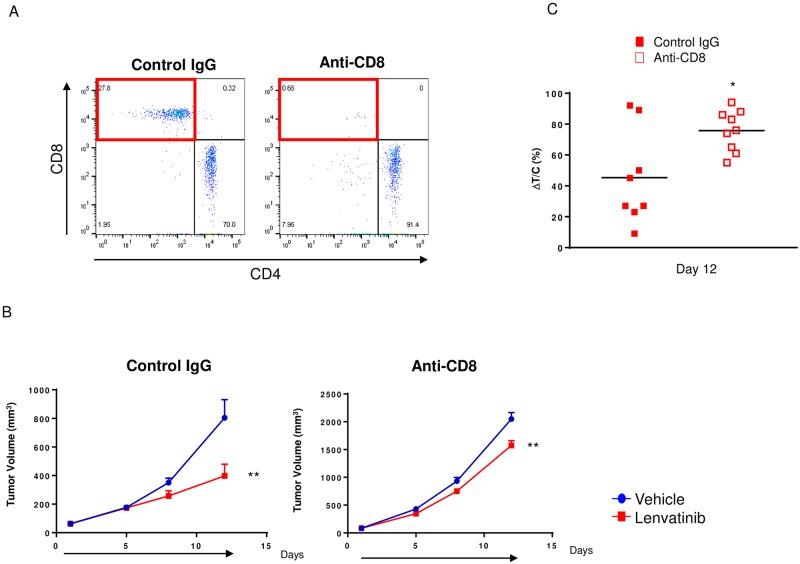
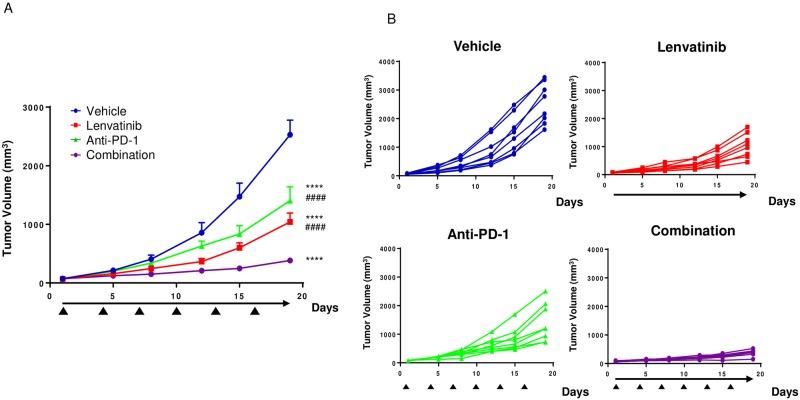
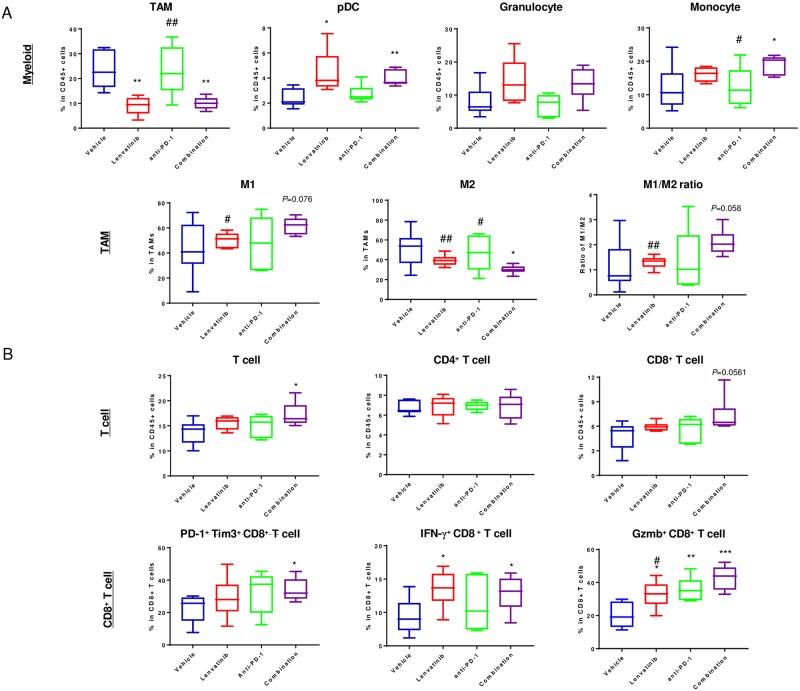
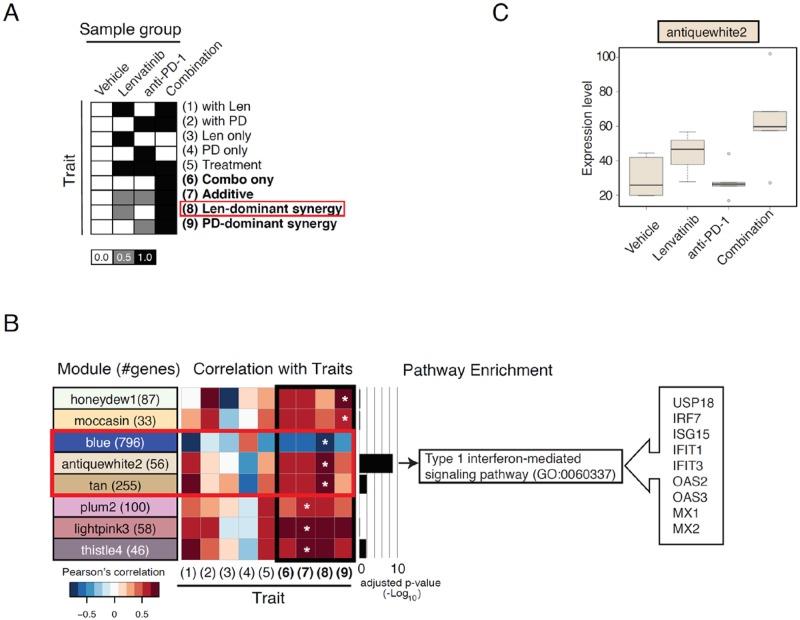
Lenvatinib is a multiple receptor tyrosine kinase inhibitor targeting mainly vascular endothelial growth factor (VEGF) and fibroblast growth factor (FGF) receptors. We investigated the immunomodulatory activities of lenvatinib in the tumor microenvironment and its mechanisms of enhanced antitumor activity when combined with a programmed cell death-1 (PD-1) blockade. Antitumor activity was examined in immunodeficient and immunocompetent mouse tumor models. Single-cell analysis, flow cytometric analysis, and immunohistochemistry were used to analyze immune cell populations and their activation. Gene co-expression network analysis and pathway analysis using RNA sequencing data were used to identify lenvatinib-driven combined activity with anti-PD-1 antibody (anti-PD-1). Lenvatinib showed potent antitumor activity in the immunocompetent tumor microenvironment compared with the immunodeficient tumor microenvironment. Antitumor activity of lenvatinib plus anti-PD-1 was greater than that of either single treatment. Flow cytometric analysis revealed that lenvatinib reduced tumor-associated macrophages (TAMs) and increased the percentage of activated CD8+ T cells secreting interferon (IFN)-γ+ and granzyme B (GzmB). Combination treatment further increased the percentage of T cells, especially CD8+ T cells, among CD45+ cells and increased IFN-γ+ and GzmB+ CD8+ T cells. Transcriptome analyses of tumors resected from treated mice showed that genes specifically regulated by the combination were significantly enriched for type-I IFN signaling. Pretreatment with lenvatinib followed by anti-PD-1 treatment induced significant antitumor activity compared with anti-PD-1 treatment alone. Our findings show that lenvatinib modulates cancer immunity in the tumor microenvironment by reducing TAMs and, when combined with PD-1 blockade, shows enhanced antitumor activity via the IFN signaling pathway. These findings provide a scientific rationale for combination therapy of lenvatinib with PD-1 blockade to improve cancer immunotherapy.
仑伐替尼是一种多受体酪氨酸激酶抑制剂,主要针对血管内皮生长因子(VEGF)和成纤维细胞生长因子(FGF)受体。我们研究了仑伐替尼在肿瘤微环境中的免疫调节活性及其与程序性细胞死亡-1(PD-1)阻断联合应用时增强抗肿瘤活性的机制。在免疫缺陷和免疫功能正常的小鼠肿瘤模型中检查了抗肿瘤活性。使用单细胞分析、流式细胞术分析和免疫组织化学分析来分析免疫细胞群体及其激活。使用 RNA 测序数据进行基因共表达网络分析和通路分析,以鉴定仑伐替尼与抗 PD-1 抗体(抗 PD-1)联合作用的驱动因素。与免疫缺陷肿瘤微环境相比,仑伐替尼在免疫功能正常的肿瘤微环境中表现出强大的抗肿瘤活性。仑伐替尼联合抗 PD-1 的抗肿瘤活性大于单一治疗。流式细胞术分析显示,仑伐替尼减少了肿瘤相关巨噬细胞(TAMs),并增加了分泌干扰素(IFN)-γ+和颗粒酶 B(GzmB)的活化 CD8+T 细胞的百分比。联合治疗进一步增加了 CD45+细胞中 T 细胞的百分比,尤其是 CD8+T 细胞,并增加了 IFN-γ+和 GzmB+CD8+T 细胞的百分比。从接受治疗的小鼠切除的肿瘤的转录组分析显示,组合特异性调节的基因在 I 型 IFN 信号通路中显著富集。与单独使用抗 PD-1 相比,先用仑伐替尼预处理再用抗 PD-1 治疗可诱导显著的抗肿瘤活性。我们的研究结果表明,仑伐替尼通过减少 TAMs 来调节肿瘤微环境中的癌症免疫,当与 PD-1 阻断联合使用时,通过 IFN 信号通路显示出增强的抗肿瘤活性。这些发现为仑伐替尼与 PD-1 阻断联合治疗以改善癌症免疫治疗提供了科学依据。


 Zotero 插件