
了解特应性皮炎的免疫景观:生物制剂和新兴治疗方法的时代。
Understanding the immune landscape in atopic dermatitis: The era of biologics and emerging therapeutic approaches.
机构信息
Aravax, Melbourne, Victoria, Australia.
Dermira, Inc., Menlo Park, California.
出版信息
Exp Dermatol. 2019 Jul;28(7):756-768. doi: 10.1111/exd.13911. Epub 2019 Apr 15.
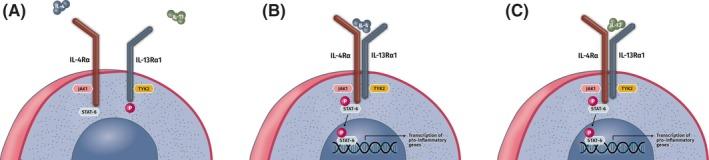
Atopic dermatitis (AD) is a chronic, systemic, inflammatory disease that affects the skin and is characterized by persistent itch and marked redness. AD is associated with an increased risk of skin infections and a reduced quality of life. Most AD treatment options to date were not designed to selectively target disease-causing pathways that have been established for this indication. Topical therapies have limited efficacy in moderate-to-severe disease, and systemic agents such as corticosteroids and immunosuppressants present with tolerability issues. Advances in the understanding of AD pathobiology have made possible a new generation of more disease-specific AD therapies. AD is characterized by the inappropriate activation of type 2 T helper (Th2) cells and type 2 innate lymphoid (ILC2) cells, with a predominant increase in type 2 cytokines in the skin, including interleukin (IL)-13 and IL-4. Both cytokines are implicated in tissue inflammation and epidermal barrier dysfunction, and monoclonal antibodies targeting each of these interleukins or their receptors are in clinical development in AD. In March 2017, dupilumab, a human anti-IL-4Rα antibody, became the first biologic to receive approval in the United States for the treatment of moderate-to-severe AD. The anti-IL-13 monoclonal antibodies lebrikizumab and tralokinumab, which bind different IL-13 epitopes with potentially different effects, are currently in advanced-stage trials. Here, we briefly review the underlying pathobiology of AD, the scientific basis for current AD targets, and summarize current clinical studies of these agents, including new research to develop both predictive and response biomarkers to further advance AD therapy in the era of precision medicine.
特应性皮炎(AD)是一种慢性、全身性、炎症性疾病,影响皮肤,其特征为持续瘙痒和明显的发红。AD 与皮肤感染风险增加和生活质量降低有关。迄今为止,大多数 AD 治疗选择并非旨在有针对性地针对已确定的疾病致病途径。局部治疗在中重度疾病中的疗效有限,而皮质类固醇和免疫抑制剂等全身药物存在耐受性问题。对 AD 病理生物学的理解的进步使得新一代更具疾病特异性的 AD 治疗成为可能。AD 的特征是 2 型辅助性 T(Th2)细胞和 2 型先天淋巴样(ILC2)细胞的不当激活,皮肤中 2 型细胞因子(包括白细胞介素(IL)-13 和 IL-4)显著增加。这两种细胞因子都与组织炎症和表皮屏障功能障碍有关,靶向这些白细胞介素或其受体的单克隆抗体正在 AD 的临床开发中。2017 年 3 月,抗 IL-4Rα 人源化单克隆抗体 dupilumab 成为首个在美国获得批准用于治疗中重度 AD 的生物制剂。抗 IL-13 单克隆抗体 lebrikizumab 和 tralokinumab 结合不同的 IL-13 表位,具有潜在不同的作用,目前处于后期临床试验阶段。在这里,我们简要回顾 AD 的基础病理生物学、当前 AD 靶点的科学基础,并总结这些药物的当前临床研究,包括开发预测和反应生物标志物的新研究,以在精准医学时代进一步推进 AD 治疗。

 Zotero 插件