
泊洛沙姆的自组装现象及其对通过溶剂法获得的固体分散体中难溶性药物溶出度的影响。
The Self-Assembly Phenomenon of Poloxamers and Its Effect on the Dissolution of a Poorly Soluble Drug from Solid Dispersions Obtained by Solvent Methods.
作者信息
Szafraniec Joanna, Antosik Agata, Knapik-Kowalczuk Justyna, Chmiel Krzysztof, Kurek Mateusz, Gawlak Karolina, Odrobińska Joanna, Paluch Marian, Jachowicz Renata
机构信息
Department of Pharmaceutical Technology and Biopharmaceutics, Faculty of Pharmacy, Jagiellonian University Medical College, Medyczna 9, 30-688 Krakow, Poland.
Department of Physical Chemistry and Electrochemistry, Faculty of Chemistry, Jagiellonian University, Gronostajowa 2, 30-387 Krakow, Poland.
出版信息
Pharmaceutics. 2019 Mar 19;11(3):130. doi: 10.3390/pharmaceutics11030130.
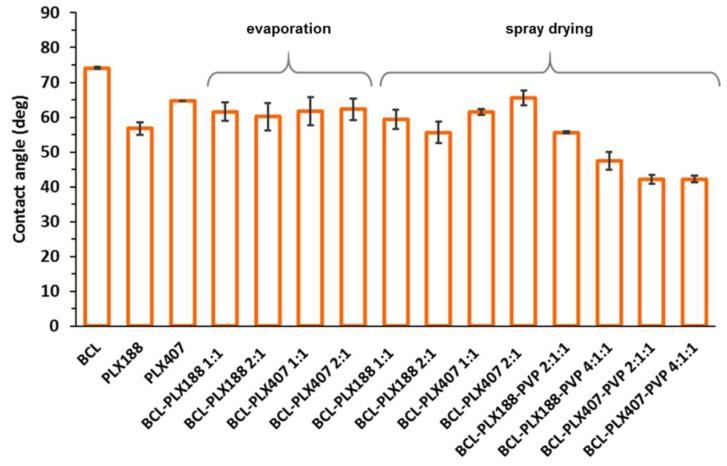
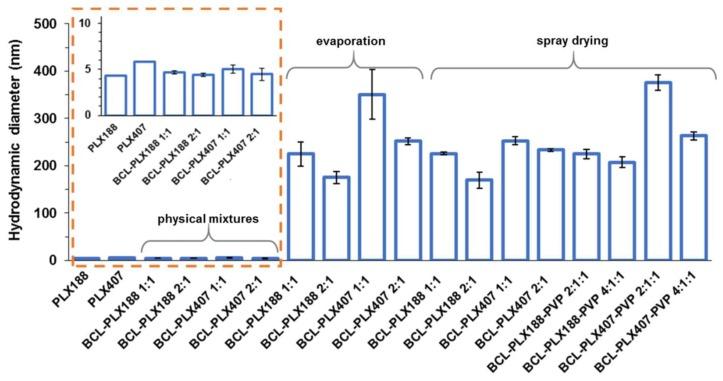
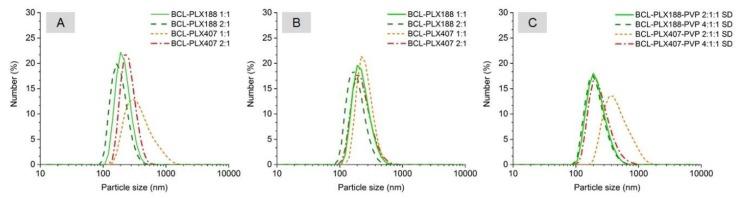
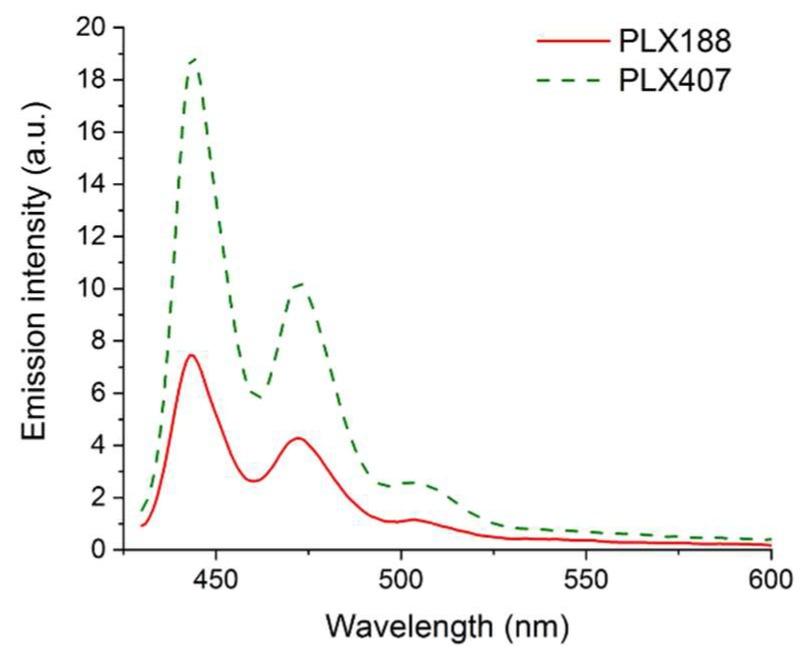
The self-assembly phenomenon of amphiphiles has attracted particular attention in recent years due to its wide range of applications. The formation of nanoassemblies able to solubilize sparingly water-soluble drugs was found to be a strategy to solve the problem of poor solubility of active pharmaceutical ingredients. Binary and ternary solid dispersions containing Biopharmaceutics Classification System (BCS) class II drug bicalutamide and either Poloxamer188 or Poloxamer407 as the surface active agents were obtained by either spray drying or solvent evaporation under reduced pressure. Both processes led to morphological changes and a reduction of particle size, as confirmed by scanning electron microscopy and laser diffraction measurements. The increase in powder wettability was confirmed by means of contact angle measurements. The effect of an alteration of the crystal structure was followed by powder X-ray diffractometry while thermal properties were determined using differential scanning calorimetry. Interestingly, bicalutamide exhibited a polymorph transition after spray drying with the poloxamer and polyvinylpyrrolidone (PVP), while the poloxamer underwent partial amorphization. Moreover, due to the surface activity of the carrier, the solid dispersions formed nanoaggregates in water, as confirmed using dynamic light scattering measurements. The aggregates measuring 200⁻300 nm in diameter were able to solubilize bicalutamide inside the hydrophobic inner parts. The self-assembly of binary systems was found to improve the amount of dissolved bicalutamide by 4- to 8-fold in comparison to untreated drug. The improvement in drug dissolution was correlated with the solubilization of poorly soluble molecules by macromolecules, as assessed using emission spectroscopy.
近年来,两亲分子的自组装现象因其广泛的应用而备受关注。能够增溶难溶性药物的纳米组装体的形成被认为是解决活性药物成分溶解度差问题的一种策略。通过喷雾干燥或减压溶剂蒸发法获得了包含生物药剂学分类系统(BCS)II类药物比卡鲁胺以及泊洛沙姆188或泊洛沙姆407作为表面活性剂的二元和三元固体分散体。扫描电子显微镜和激光衍射测量结果证实,这两种方法都会导致形态变化和粒径减小。通过接触角测量证实了粉末润湿性的增加。采用粉末X射线衍射法跟踪晶体结构的变化,同时使用差示扫描量热法测定热性质。有趣的是,比卡鲁胺与泊洛沙姆和聚乙烯吡咯烷酮(PVP)喷雾干燥后发生了多晶型转变,而泊洛沙姆发生了部分非晶化。此外,由于载体的表面活性,固体分散体在水中形成了纳米聚集体,动态光散射测量结果证实了这一点。直径为200⁻300 nm的聚集体能够在疏水内部增溶比卡鲁胺。与未处理的药物相比,二元体系的自组装使比卡鲁胺的溶解量提高了4至8倍。如发射光谱法所评估,药物溶出度的提高与大分子对难溶性分子的增溶作用相关。

 Zotero 插件