
化疗引起的周围神经病的机制。
Mechanisms of Chemotherapy-Induced Peripheral Neuropathy.
机构信息
Department of Interdisciplinary Intensive Care, Jagiellonian University, Medical College, 31-501 Krakow, Poland.
Department of Pain Research and Treatment, Jagiellonian University, Medical College, 31-501 Krakow, Poland.
出版信息
Int J Mol Sci. 2019 Mar 22;20(6):1451. doi: 10.3390/ijms20061451.
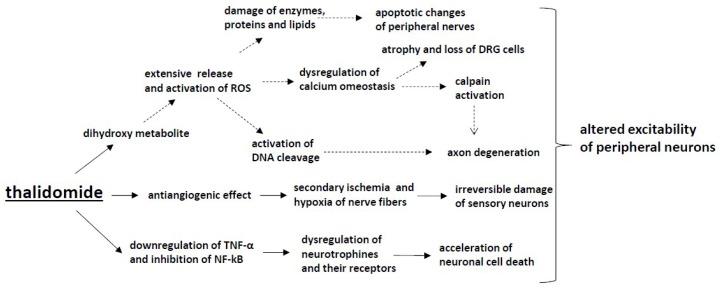
Chemotherapy-induced peripheral neuropathy (CIPN) is one of the most frequent side effects caused by antineoplastic agents, with a prevalence from 19% to over 85%. Clinically, CIPN is a mostly sensory neuropathy that may be accompanied by motor and autonomic changes of varying intensity and duration. Due to its high prevalence among cancer patients, CIPN constitutes a major problem for both cancer patients and survivors as well as for their health care providers, especially because, at the moment, there is no single effective method of preventing CIPN; moreover, the possibilities of treating this syndrome are very limited. There are six main substance groups that cause damage to peripheral sensory, motor and autonomic neurons, which result in the development of CIPN: platinum-based antineoplastic agents, vinca alkaloids, epothilones (ixabepilone), taxanes, proteasome inhibitors (bortezomib) and immunomodulatory drugs (thalidomide). Among them, the most neurotoxic are platinum-based agents, taxanes, ixabepilone and thalidomide; other less neurotoxic but also commonlyused drugs are bortezomib and vinca alkaloids. This paper reviews the clinical picture of CIPN and the neurotoxicity mechanisms of the most common antineoplastic agents. A better understanding of the risk factors and underlying mechanisms of CIPN is needed to develop effective preventive and therapeutic strategies.
化疗引起的周围神经病(CIPN)是抗肿瘤药物最常见的副作用之一,其患病率为 19%至 85%以上。临床上,CIPN 主要是一种感觉神经病变,可能伴有不同强度和持续时间的运动和自主神经变化。由于癌症患者中 CIPN 的患病率很高,因此它不仅是癌症患者及其幸存者,而且也是他们的医疗保健提供者的一个主要问题,尤其是因为目前还没有单一有效的方法来预防 CIPN;此外,治疗这种综合征的可能性非常有限。有六种主要的物质群会损害周围感觉、运动和自主神经元,从而导致 CIPN 的发展:铂类抗肿瘤药物、长春花生物碱、埃博霉素(伊沙匹隆)、紫杉烷类、蛋白酶体抑制剂(硼替佐米)和免疫调节剂(沙利度胺)。其中,最具神经毒性的是铂类药物、紫杉烷类、伊沙匹隆和沙利度胺;其他毒性较小但也常用的药物是硼替佐米和长春花生物碱。本文综述了 CIPN 的临床表现和最常见的抗肿瘤药物的神经毒性机制。需要更好地了解 CIPN 的危险因素和潜在机制,以制定有效的预防和治疗策略。




 Zotero 插件