
游离DNA作为癌症管理分子标志物的新兴作用。
The emerging role of cell-free DNA as a molecular marker for cancer management.
作者信息
Bronkhorst Abel Jacobus, Ungerer Vida, Holdenrieder Stefan
机构信息
Institute for Laboratory Medicine, German Heart Centre, Technical University Munich, Lazarettstraße. 36, D-80636, Munich, Germany.
出版信息
Biomol Detect Quantif. 2019 Mar 18;17:100087. doi: 10.1016/j.bdq.2019.100087. eCollection 2019 Mar.
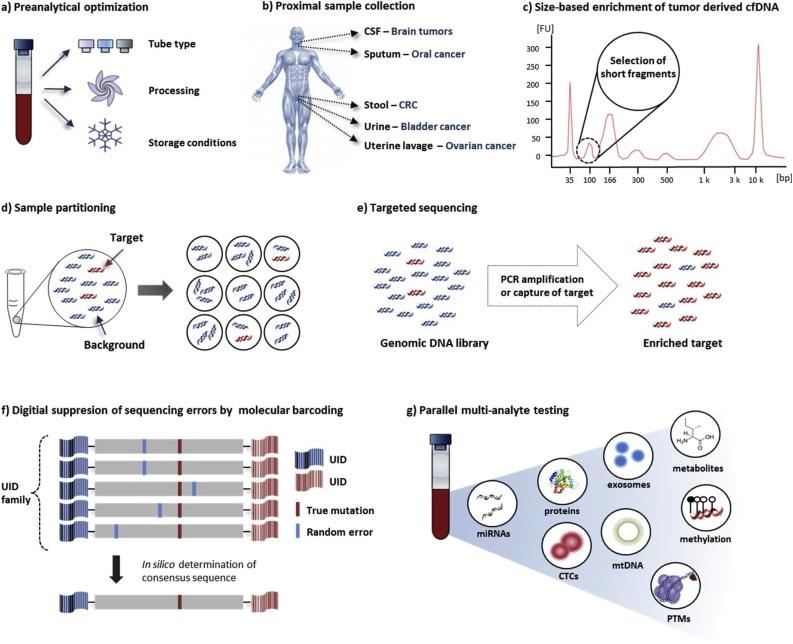
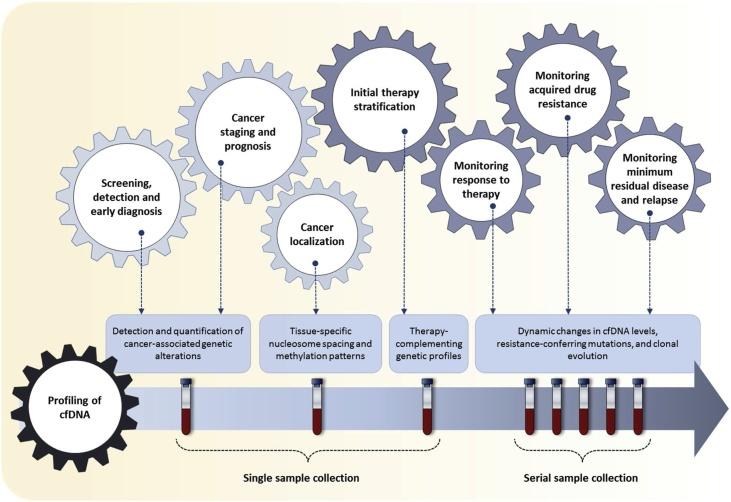
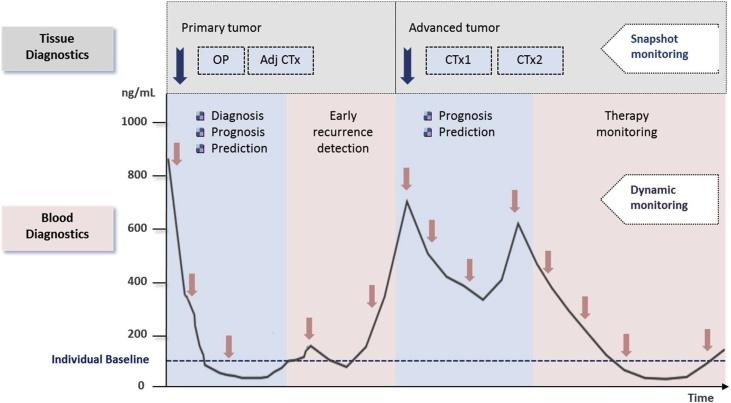
An increasing number of studies demonstrate the potential use of cell-free DNA (cfDNA) as a surrogate marker for multiple indications in cancer, including diagnosis, prognosis, and monitoring. However, harnessing the full potential of cfDNA requires (i) the optimization and standardization of preanalytical steps, (ii) refinement of current analysis strategies, and, perhaps most importantly, (iii) significant improvements in our understanding of its origin, physical properties, and dynamics in circulation. The latter knowledge is crucial for interpreting the associations between changes in the baseline characteristics of cfDNA and the clinical manifestations of cancer. In this review we explore recent advancements and highlight the current gaps in our knowledge concerning each point of contact between cfDNA analysis and the different stages of cancer management.
越来越多的研究表明,游离DNA(cfDNA)有潜力作为多种癌症指征的替代标志物,包括诊断、预后和监测。然而,要充分发挥cfDNA的潜力,需要(i)对分析前步骤进行优化和标准化,(ii)改进当前的分析策略,或许最重要的是,(iii)在我们对其来源、物理特性和循环动力学的理解上取得重大进展。后一项知识对于解释cfDNA基线特征变化与癌症临床表现之间的关联至关重要。在本综述中,我们探讨了最近的进展,并突出了我们在cfDNA分析与癌症管理不同阶段的每个接触点方面目前的知识空白。


 Zotero 插件