
CTBP1 缺失会使前列腺肿瘤中的 miRNA/mRNA 表达失调,并损害代谢综合征小鼠中的肿瘤进展。
CTBP1 depletion on prostate tumors deregulates miRNA/mRNA expression and impairs cancer progression in metabolic syndrome mice.
机构信息
Laboratorio de Oncología Molecular y Nuevos Blancos Terapéuticos, Instituto de Biología y Medicina Experimental (IBYME), CONICET, Argentina.
Department of Pathology and Cell Biology, Columbia University Medical Center, 630 W. 168th Street, New York, NY, 10032, USA.
出版信息
Cell Death Dis. 2019 Apr 1;10(4):299. doi: 10.1038/s41419-019-1535-z.
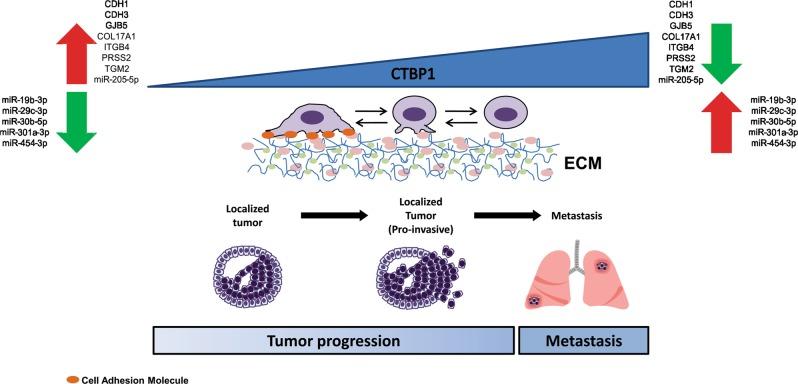
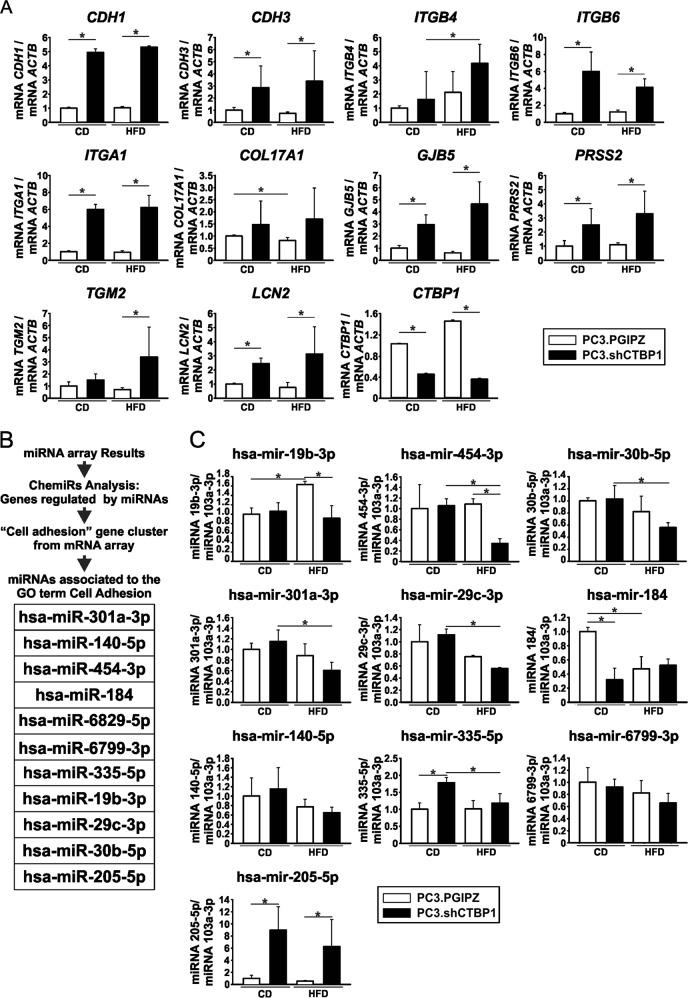
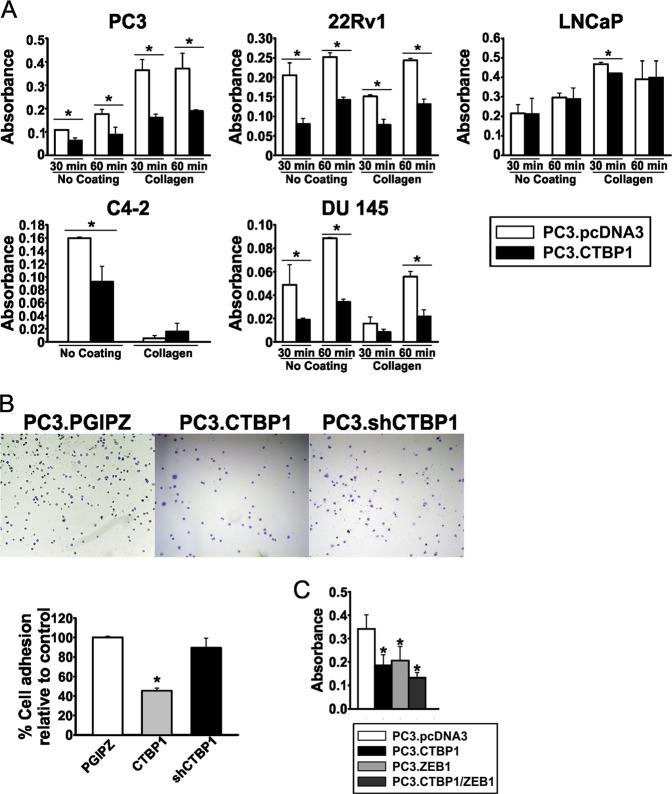
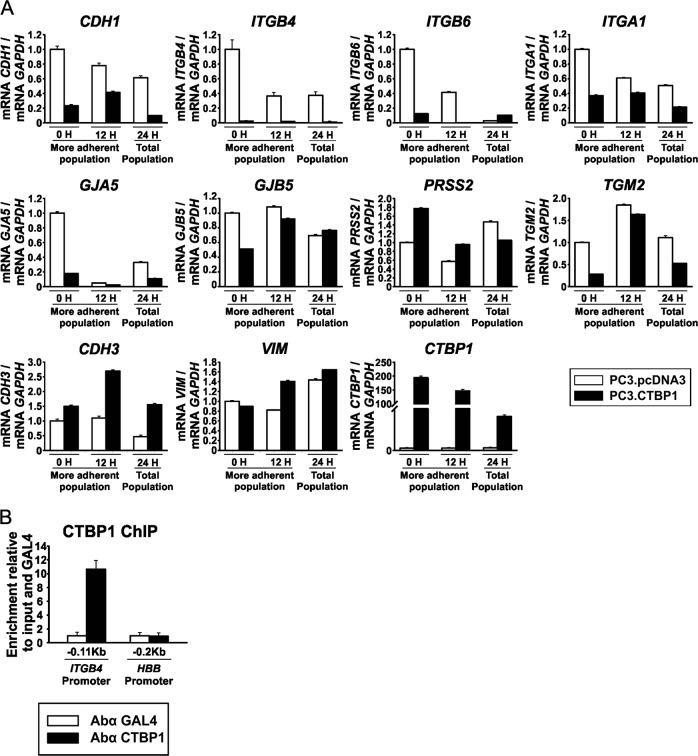
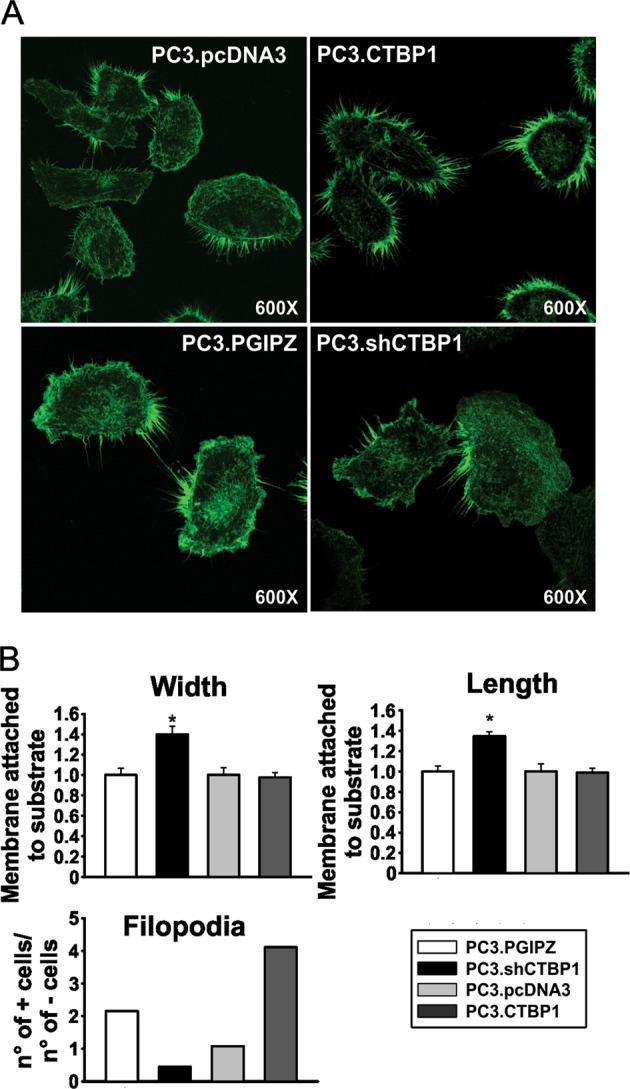
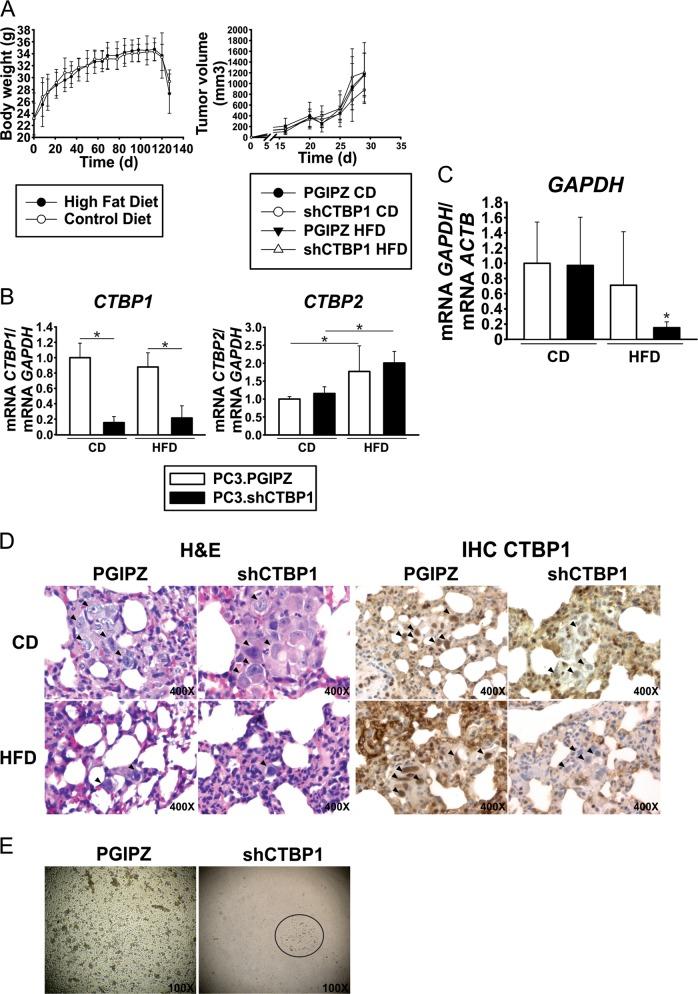
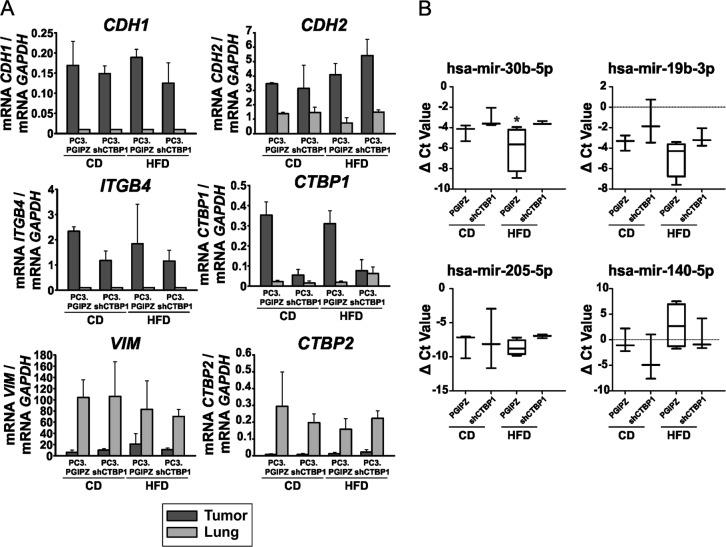
About 20% of prostate cancer (PCa) patients progress to metastatic disease. Metabolic syndrome (MeS) is a pathophysiological disorder that increases PCa risk and aggressiveness. C-terminal binding protein (CTBP1) is a transcriptional corepressor that is activated by high-fat diet (HFD). Previously, our group established a MeS/PCa mice model that identified CTBP1 as a novel link associating both diseases. Here, we integrated in vitro (prostate tumor cell lines) and in vivo (MeS/PCa NSG mice) models with molecular and cell biology techniques to investigate MeS/CTBP1 impact over PCa progression, particularly over cell adhesion, mRNA/miRNA expression and PCa spontaneous metastasis development. We found that CTBP1/MeS regulated expression of genes relevant to cell adhesion and PCa progression, such as cadherins, integrins, connexins, and miRNAs in PC3 xenografts. CTBP1 diminished PCa cell adhesion, membrane attachment to substrate and increased filopodia number by modulating gene expression to favor a mesenchymal phenotype. NSG mice fed with HFD and inoculated with CTBP1-depleted PC3 cells, showed a decreased number and size of lung metastases compared to control. Finally, CTBP1 and HFD reduce hsa-mir-30b-5p plasma levels in mice. This study uncovers for the first time the role of CTBP1/MeS in PCa progression and its molecular targets.
大约 20%的前列腺癌 (PCa) 患者会发展为转移性疾病。代谢综合征 (MeS) 是一种增加 PCa 风险和侵袭性的病理生理紊乱。C 端结合蛋白 (CTBP1) 是一种转录共抑制因子,可被高脂肪饮食 (HFD) 激活。此前,我们的研究小组建立了一种 MeS/PCa 小鼠模型,该模型确定 CTBP1 是一种将两种疾病联系起来的新型纽带。在这里,我们整合了体外(前列腺肿瘤细胞系)和体内(MeS/PCa NSG 小鼠)模型,结合分子和细胞生物学技术,研究 MeS/CTBP1 对 PCa 进展的影响,特别是对细胞黏附、mRNA/miRNA 表达和 PCa 自发转移发展的影响。我们发现 CTBP1/MeS 调节了与细胞黏附以及 PCa 进展相关的基因的表达,例如在 PC3 异种移植物中黏附素、整合素、连接蛋白和 miRNA。CTBP1 通过调节基因表达来减少 PCa 细胞黏附、细胞膜与基质的附着,并增加丝状伪足的数量,从而有利于间充质表型。用 HFD 喂养并接种 CTBP1 耗尽的 PC3 细胞的 NSG 小鼠与对照组相比,肺转移的数量和大小减少。最后,CTBP1 和 HFD 降低了小鼠血浆中的 hsa-mir-30b-5p 水平。这项研究首次揭示了 CTBP1/MeS 在 PCa 进展及其分子靶标中的作用。
 Zotero 插件