
热休克蛋白 70 激活的自然杀伤细胞与 PD-1 抑制联合应用显著提高胶质母细胞瘤和肺癌的临床前模型的总生存率。
Hsp70-Activated NK Cells in Combination With PD-1 Inhibition Significantly Increase Overall Survival in Preclinical Models of Glioblastoma and Lung Cancer.
机构信息
Radiation Immuno-Oncology, Center for Translational Cancer Research, TUM (TranslaTUM), Munich, Germany.
Institute of Cytology of the Russian Academy of Sciences (RAS), St. Petersburg, Russia.
出版信息
Front Immunol. 2019 Mar 22;10:454. doi: 10.3389/fimmu.2019.00454. eCollection 2019.
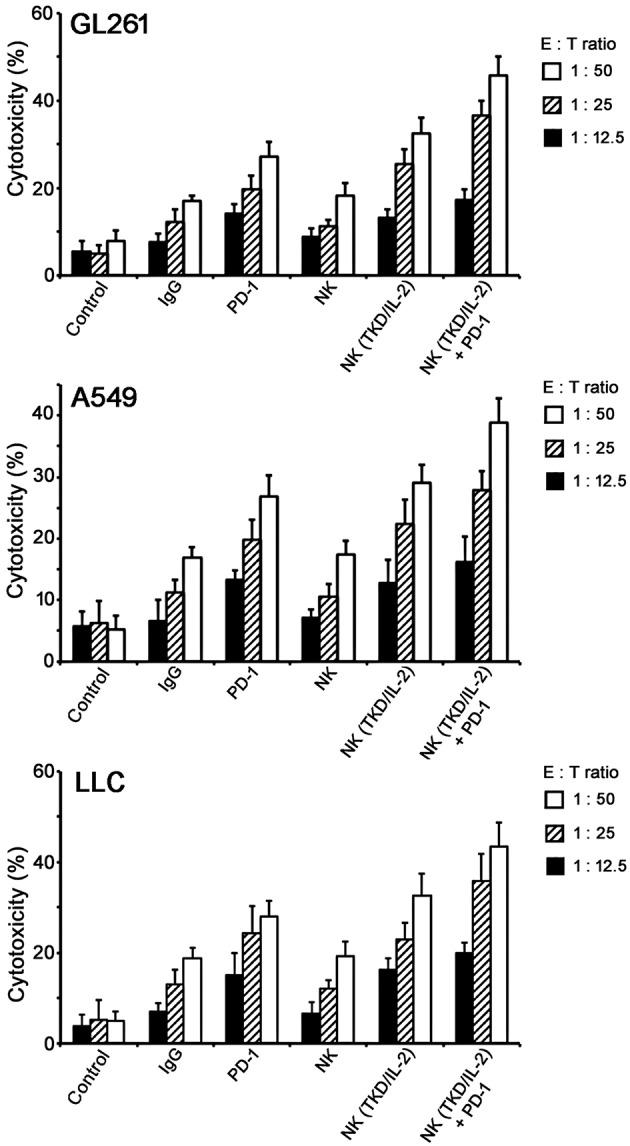
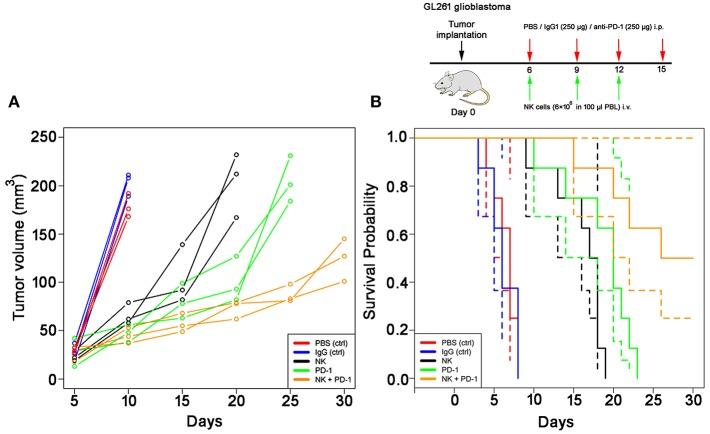
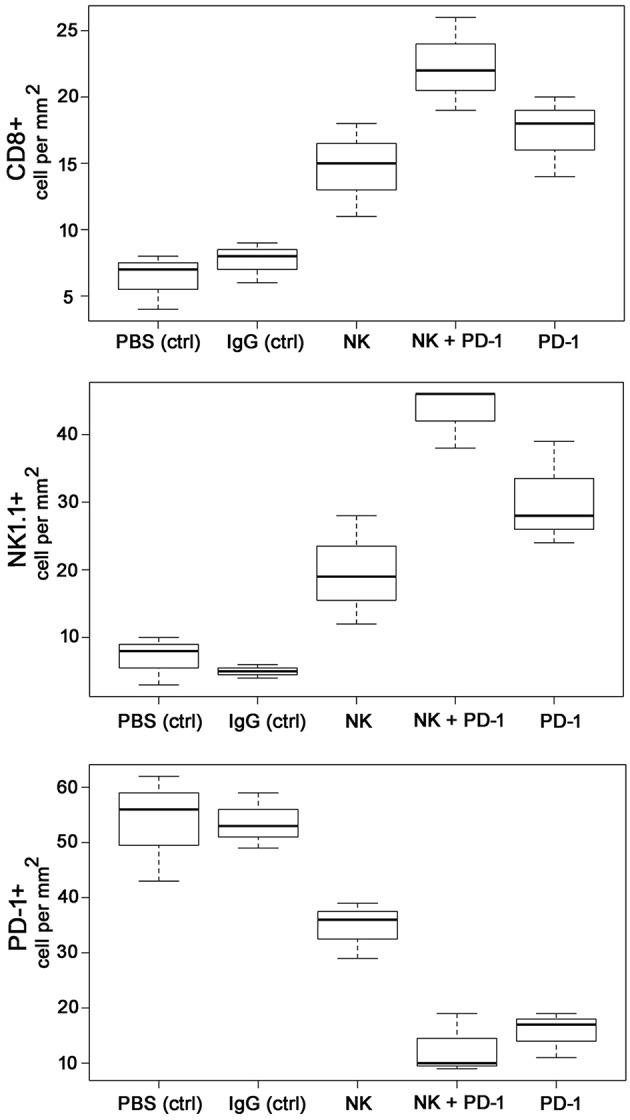
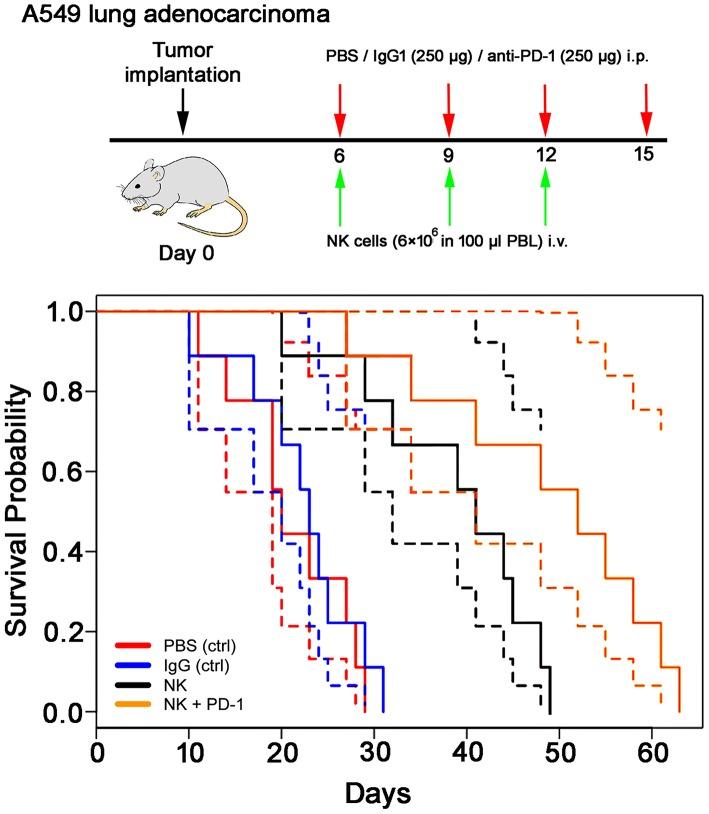
Heat shock protein 70 (Hsp70) which is expressed on the plasma membrane of highly aggressive tumors including non-small cell lung carcinoma and glioblastoma multiforme serves as a target for Hsp70-targeting NK cells. Herein, we aimed to investigate the antitumor effects of a combined therapy consisting of Hsp70-peptide TKD/IL-2-activated NK cells in combination with mouse/human anti-PD-1 antibody in a syngeneic glioblastoma and a xenograft lung cancer mouse model. Mice with membrane Hsp70 positive syngeneic GL261 glioblastoma or human xenograft A549 lung tumors were sham-treated with PBS or injected with TKD/IL-2-activated mouse/human NK cells and mouse/human PD-1 antibody either as a single regimen or in combination. Tumor volume was assessed by MR scanning and tumor-infiltrating CD8 T, NK, and PD-1 cells were quantified by immunohistochemistry (IHC). We could show that the adoptive transfer of TKD/IL-2-activated mouse NK cells or the inhibition of PD-1 resulted in tumor growth delay and an improved overall survival (OS) in a syngeneic glioblastoma mouse model. A combination of both therapies was well-tolerated and significantly more effective with respect to both outcome parameters than either of the single regimens. A combined treatment in a xenograft lung cancer model showed identical effects in immunodeficient mice bearing human lung cancer after adoptive transfer of TKD/IL-2-activated human effector cells and a human PD-1 antibody. Tumor control was associated with a massive infiltration with CD8 T and NK cells in both tumor models and a decreased in PD-1 expression on immune effector cells. In summary, a combined approach consisting of activated NK cells and anti-PD-1 therapy is safe and results in a long-term tumor control which is accompanied by a massive tumor immune cell infiltration in 2 preclinical tumor models.
热休克蛋白 70(Hsp70)在包括非小细胞肺癌和多形性胶质母细胞瘤在内的高度侵袭性肿瘤的质膜上表达,可作为 Hsp70 靶向 NK 细胞的靶点。在此,我们旨在研究包含 Hsp70 肽 TKD/IL-2 激活的 NK 细胞与鼠/人抗 PD-1 抗体联合治疗在同基因胶质母细胞瘤和异种移植肺癌小鼠模型中的抗肿瘤作用。用 PBS 假处理膜 Hsp70 阳性同基因 GL261 胶质母细胞瘤或人异种移植 A549 肺癌小鼠,或单独或联合注射 TKD/IL-2 激活的鼠/人 NK 细胞和鼠/人 PD-1 抗体。通过磁共振扫描评估肿瘤体积,并通过免疫组织化学(IHC)定量肿瘤浸润的 CD8 T、NK 和 PD-1 细胞。我们可以证明,在同基因胶质母细胞瘤小鼠模型中,过继转移 TKD/IL-2 激活的鼠 NK 细胞或抑制 PD-1 可导致肿瘤生长延迟和总体生存(OS)改善。与任何单一方案相比,两种疗法的联合治疗耐受性良好,在这两个结果参数方面均更有效。在免疫缺陷小鼠中,在过继转移 TKD/IL-2 激活的人效应细胞和人 PD-1 抗体后,异种移植肺癌模型中联合治疗具有相同的效果,在该模型中,携带人肺癌的小鼠。肿瘤控制与两种肿瘤模型中 CD8 T 和 NK 细胞的大量浸润以及免疫效应细胞上 PD-1 表达的降低有关。总之,由激活的 NK 细胞和抗 PD-1 治疗组成的联合方法是安全的,可导致长期肿瘤控制,同时在 2 种临床前肿瘤模型中伴有大量肿瘤免疫细胞浸润。


 Zotero 插件