
用于增强从水溶液中去除致癌染料的聚苯胺包覆氧化石墨烯@钛酸锶纳米立方纳米复合材料的合成
Synthesis of Polyaniline-Coated Graphene Oxide@SrTiO₃ Nanocube Nanocomposites for Enhanced Removal of Carcinogenic Dyes from Aqueous Solution.
作者信息
Shahabuddin Syed, Sarih Norazilawati Muhamad, Afzal Kamboh Muhammad, Rashidi Nodeh Hamid, Mohamad Sharifah
机构信息
Polymer Research Laboratory, Chemistry Department, Faculty of Science, University of Malaya, Kuala Lumpur 50603, Malaysia.
Department of Chemistry, Faculty of Science, University of Tehran, Tehran 14174, Iran.
出版信息
Polymers (Basel). 2016 Sep 2;8(9):305. doi: 10.3390/polym8090305.
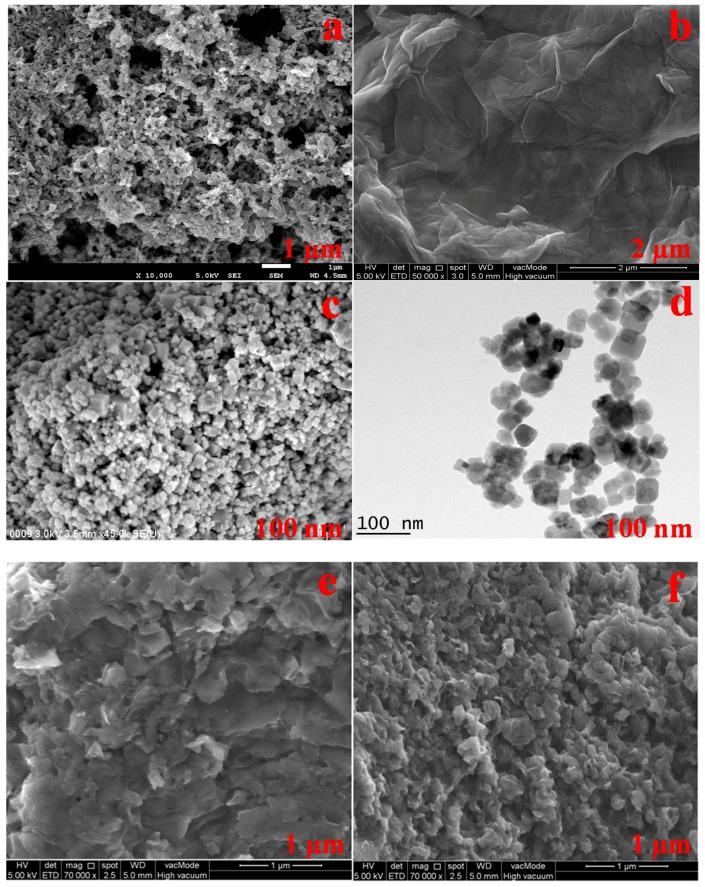
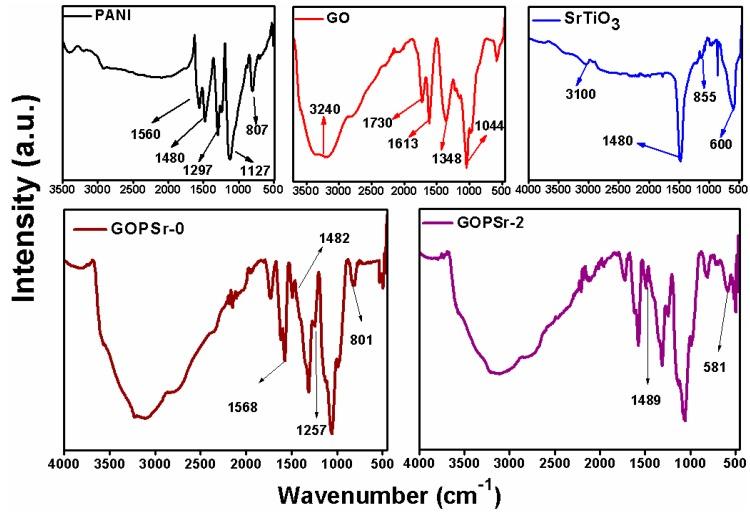
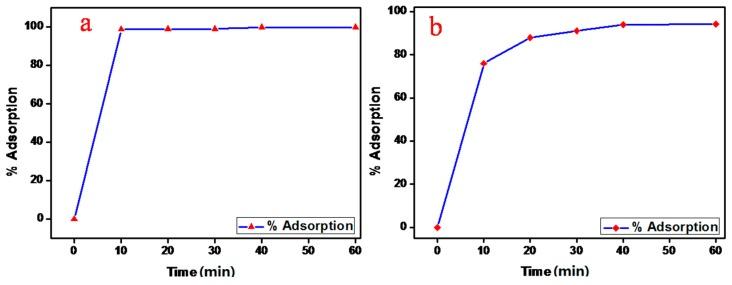
The present investigation highlights the synthesis of polyaniline (PANI)-coated graphene oxide doped with SrTiO₃ nanocube nanocomposites through facile in situ oxidative polymerization method for the efficient removal of carcinogenic dyes, namely, the cationic dye methylene blue (MB) and the anionic dye methyl orange (MO). The presence of oxygenated functional groups comprised of hydroxyl and epoxy groups in graphene oxide (GO) and nitrogen-containing functionalities such as imine groups and amine groups in polyaniline work synergistically to impart cationic and anionic nature to the synthesised nanocomposite, whereas SrTiO₃ nanocubes act as spacers aiding in segregation of GO sheets, thereby increasing the effective surface area of nanocomposite. The synthesised nanocomposites were characterised by field emission scanning electron microscopy (FESEM), transmission electron microscopy (TEM), thermogravimetric analysis (TGA), X-ray diffraction (XRD), and Fourier transform infrared spectroscopy (FTIR). The adsorption efficiencies of graphene oxide (GO), PANI homopolymer, and SrTiO₃ nanocubes-doped nanocomposites were assessed by monitoring the adsorption of methylene blue and methyl orange dyes from aqueous solution. The adsorption efficiency of nanocomposites doped with SrTiO₃ nanocubes were found to be of higher magnitude as compared with undoped nanocomposite. Moreover, the nanocomposite with 2 wt % SrTiO₃ with respect to graphene oxide demonstrated excellent adsorption behaviour with 99% and 91% removal of MB and MO, respectively, in a very short duration of time.
本研究重点介绍了通过简便的原位氧化聚合法合成掺有SrTiO₃纳米立方体的聚苯胺(PANI)包覆氧化石墨烯纳米复合材料,用于高效去除致癌染料,即阳离子染料亚甲基蓝(MB)和阴离子染料甲基橙(MO)。氧化石墨烯(GO)中由羟基和环氧基组成的含氧官能团与聚苯胺中含氮官能团(如亚胺基和胺基)协同作用,赋予合成的纳米复合材料阳离子和阴离子性质,而SrTiO₃纳米立方体充当间隔物,有助于GO片层的分离,从而增加纳米复合材料的有效表面积。通过场发射扫描电子显微镜(FESEM)、透射电子显微镜(TEM)、热重分析(TGA)、X射线衍射(XRD)和傅里叶变换红外光谱(FTIR)对合成的纳米复合材料进行了表征。通过监测水溶液中亚甲基蓝和甲基橙染料的吸附情况,评估了氧化石墨烯(GO)、聚苯胺均聚物和掺有SrTiO₃纳米立方体的纳米复合材料的吸附效率。发现掺有SrTiO₃纳米立方体的纳米复合材料的吸附效率比未掺杂的纳米复合材料更高。此外,相对于氧化石墨烯含有2 wt% SrTiO₃的纳米复合材料在非常短的时间内分别对MB和MO表现出99%和91%的去除率,具有优异的吸附性能。







 Zotero 插件