
氧化应激:神经退行性疾病的关键调节因子。
Oxidative Stress: A Key Modulator in Neurodegenerative Diseases.
机构信息
Nucleic Acids Research Lab, Department of Chemistry, University of Delhi (North Campus), Delhi 110007, India.
Department of Chemistry, Ramjas College, University of Delhi, Delhi 110007, India.
出版信息
Molecules. 2019 Apr 22;24(8):1583. doi: 10.3390/molecules24081583.
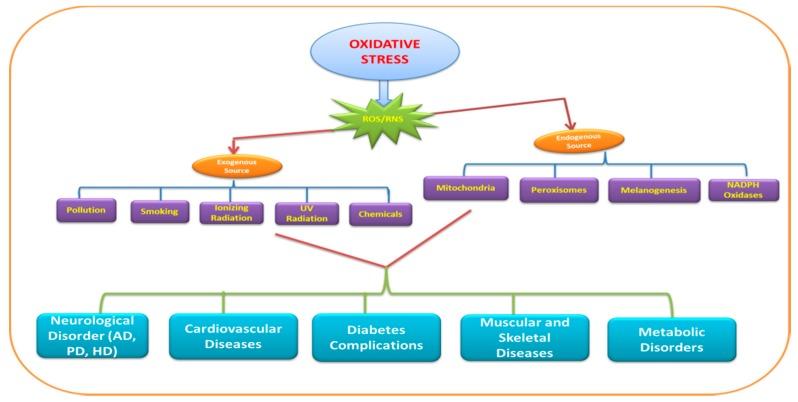
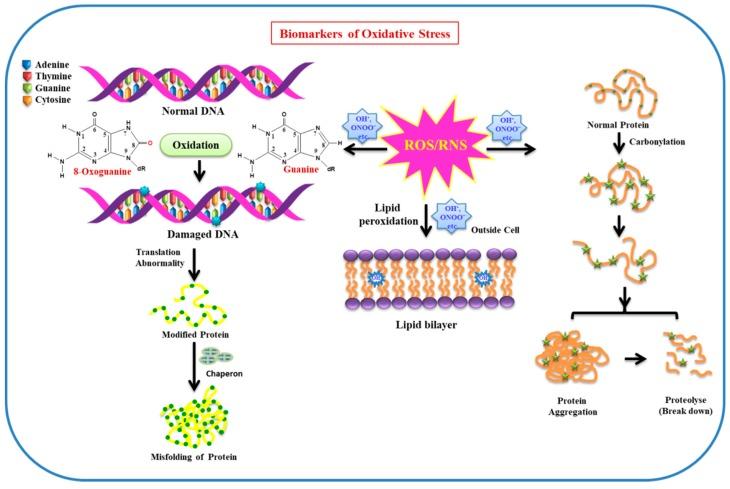
Oxidative stress is proposed as a regulatory element in ageing and various neurological disorders. The excess of oxidants causes a reduction of antioxidants, which in turn produce an oxidation-reduction imbalance in organisms. Paucity of the antioxidant system generates oxidative-stress, characterized by elevated levels of reactive species (oxygen, hydroxyl free radical, and so on). Mitochondria play a key role in ATP supply to cells via oxidative phosphorylation, as well as synthesis of essential biological molecules. Various redox reactions catalyzed by enzymes take place in the oxidative phosphorylation process. An inefficient oxidative phosphorylation may generate reactive oxygen species (ROS), leading to mitochondrial dysfunction. Mitochondrial redox metabolism, phospholipid metabolism, and proteolytic pathways are found to be the major and potential source of free radicals. A lower concentration of ROS is essential for normal cellular signaling, whereas the higher concentration and long-time exposure of ROS cause damage to cellular macromolecules such as DNA, lipids and proteins, ultimately resulting in necrosis and apoptotic cell death. Normal and proper functioning of the central nervous system (CNS) is entirely dependent on the chemical integrity of brain. It is well established that the brain consumes a large amount of oxygen and is highly rich in lipid content, becoming prone to oxidative stress. A high consumption of oxygen leads to excessive production of ROS. Apart from this, the neuronal membranes are found to be rich in polyunsaturated fatty acids, which are highly susceptible to ROS. Various neurodegenerative diseases such as Parkinson's disease (PD), Alzheimer's disease (AD), Huntington's disease (HD), and amyotrophic lateral sclerosis (ALS), among others, can be the result of biochemical alteration (due to oxidative stress) in bimolecular components. There is a need to understand the processes and role of oxidative stress in neurodegenerative diseases. This review is an effort towards improving our understanding of the pivotal role played by OS in neurodegenerative disorders.
氧化应激被认为是衰老和各种神经紊乱的调节因素。氧化剂的过剩会导致抗氧化剂的减少,从而导致生物体的氧化还原失衡。抗氧化系统的缺乏会产生氧化应激,其特征是反应性物质(氧、羟基自由基等)水平升高。线粒体通过氧化磷酸化为细胞提供 ATP 供应,并合成必需的生物分子,在氧化磷酸化过程中发生各种由酶催化的氧化还原反应。氧化磷酸化效率低下可能会产生活性氧物种 (ROS),导致线粒体功能障碍。线粒体氧化还原代谢、磷脂代谢和蛋白水解途径被发现是自由基的主要和潜在来源。较低浓度的 ROS 对于正常的细胞信号传递是必要的,而较高浓度和长时间暴露的 ROS 会导致细胞大分子如 DNA、脂质和蛋白质的损伤,最终导致坏死和凋亡性细胞死亡。中枢神经系统 (CNS) 的正常和适当功能完全依赖于大脑的化学完整性。众所周知,大脑消耗大量氧气,并且富含脂质,容易受到氧化应激的影响。大量氧气的消耗导致 ROS 的过度产生。除此之外,神经元膜富含多不饱和脂肪酸,容易受到 ROS 的影响。各种神经退行性疾病,如帕金森病 (PD)、阿尔茨海默病 (AD)、亨廷顿病 (HD) 和肌萎缩侧索硬化症 (ALS) 等,可能是由于双分子成分的生化改变(由于氧化应激)所致。需要了解氧化应激在神经退行性疾病中的作用和过程。这篇综述是为了增进我们对 OS 在神经退行性疾病中所起关键作用的理解。



 Zotero 插件