
多模式干预对 2 型糖尿病伴功能性障碍的老年人的效果。
Effectiveness of a multimodal intervention in functionally impaired older people with type 2 diabetes mellitus.
机构信息
Servicio de Geriatría, Hospital Universitario de Getafe, Madrid, Spain.
Foundation for Biomedical Research-Hospital Universitario de Getafe, Madrid, Spain.
出版信息
J Cachexia Sarcopenia Muscle. 2019 Aug;10(4):721-733. doi: 10.1002/jcsm.12432. Epub 2019 Apr 23.
BACKGROUND
Type 2 diabetes, a highly prevalent chronic disease, is associated with increasing frailty and functional decline in older people. We aimed to evaluate the effectiveness of a multimodal intervention on functional performance in frail and pre-frail participants aged ≥70 years with type 2 diabetes mellitus.
METHODS
The MID-Frail study was a cluster-randomized multicenter clinical trial conducted in 74 trial sites across seven European countries. The trial recruited 964 participants who were aged >70 years [mean age in intervention group, 78.4 (SD 5.6) years, 49.2% male and 77.6 (SD 5.29) years, 52.4% male in usual care group], with type diabetes mellitus and determined to be frail or pre-frail using Fried's frailty phenotype. Participants were allocated by trial site to follow either usual care (UCG) or intervention procedures (IG). Intervention group participants received a multimodal intervention composed of (i) an individualized and progressive resistance exercise programme for 16 weeks; (ii) a structured diabetes and nutritional educational programme over seven sessions; and (iii) Investigator-linked training to ensure optimal diabetes care. Short Physical Performance Battery (SPPB) scores were used to assess change in functional performance at 12 months between the groups. An analysis of the cost-effectiveness of the intervention was undertaken using the incremental cost-effectiveness ratio (ICER). Secondary outcomes included mortality, hospitalization, institutionalization, quality of life, burden on caregivers, the frequency and severity of hypoglycaemia episodes, and the cost-effectiveness of the intervention.
RESULTS
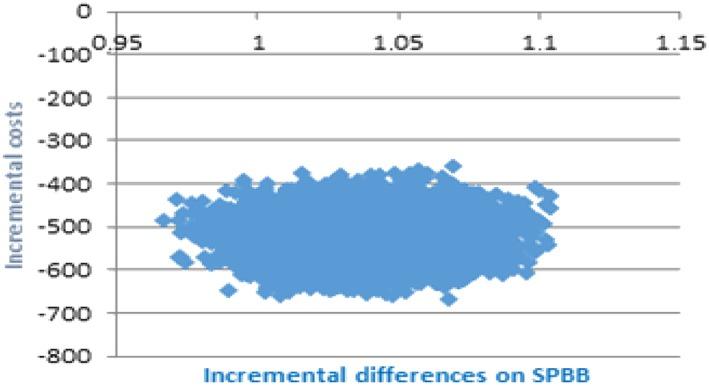
After 12 months, IG participants had mean SPPB scores 0.85 points higher than those in the UCG (95% CI, 0.44 to 1.26, P < 0.0001). Dropouts were higher in frail participants and in the intervention group, but significant differences in SPPB between treatment groups remained consistent after sensitivity analysis. Estimates suggest a mean saving following intervention of 428.02 EUR (2016) per patient per year, with ICER analysis indicating a consistent benefit of the described health care intervention over usual care. No statistically significant differences between groups were detected in any of the other secondary outcomes.
CONCLUSIONS
We have demonstrated that a 12 month structured multimodal intervention programme across several clinical settings in different European countries leads to a clinically relevant and cost-effective improvement in the functional status of older frail and pre-frail participants with type 2 diabetes mellitus.
背景
2 型糖尿病是一种高发的慢性疾病,会导致老年人虚弱和功能下降。本研究旨在评估一种多模式干预措施对 2 型糖尿病、年龄≥70 岁的虚弱和衰弱前期患者的功能表现的有效性。
方法
MID-Frail 研究是一项在 7 个欧洲国家的 74 个试验点进行的集群随机多中心临床试验。该试验共招募了 964 名参与者,他们的年龄均>70 岁[干预组平均年龄为 78.4(5.6)岁,男性占 49.2%,对照组平均年龄为 77.6(5.29)岁,男性占 77.6%],患有 2 型糖尿病,并用 Fried 衰弱表型确定为衰弱或衰弱前期。参与者按照试验点被随机分配到常规护理组(UCG)或干预组(IG)。干预组参与者接受了一项多模式干预措施,包括(i)16 周的个体化和渐进式抗阻运动计划;(ii)7 次结构化的糖尿病和营养教育计划;(iii)调查员相关培训,以确保最佳的糖尿病护理。在 12 个月时,使用简短身体表现测试(SPPB)评分评估两组之间功能表现的变化。使用增量成本效益比(ICER)对干预的成本效益进行了分析。次要结局包括死亡率、住院率、机构化、生活质量、照顾者负担、低血糖发作的频率和严重程度,以及干预的成本效益。
结果
12 个月后,IG 组参与者的 SPPB 评分平均比 UCG 组高 0.85 分(95%CI,0.44 至 1.26,P<0.0001)。在虚弱的参与者和干预组中,脱落率较高,但在敏感性分析后,治疗组之间的 SPPB 差异仍然显著。估计干预后,每位患者每年可节省 428.02 欧元(2016 年),ICER 分析表明,与常规护理相比,该描述的医疗保健干预具有一致的益处。在其他次要结局中,两组之间未检测到统计学上的显著差异。
结论
我们已经证明,在不同欧洲国家的多个临床环境中进行为期 12 个月的结构化多模式干预方案,可以使 2 型糖尿病虚弱和衰弱前期的老年患者的功能状态得到临床相关且具有成本效益的改善。

 Zotero 插件