
‘查尔斯顿灰’西瓜基因组,美国主要西瓜栽培品种,以及美国国家植物种质系统西瓜收集品系 1365 份的遗传特征。
Genome of 'Charleston Gray', the principal American watermelon cultivar, and genetic characterization of 1,365 accessions in the U.S. National Plant Germplasm System watermelon collection.
机构信息
Boyce Thompson Institute, Cornell University, Ithaca, NY, USA.
Department of Biology, West Virginia State University, Institute, WV, USA.
出版信息
Plant Biotechnol J. 2019 Dec;17(12):2246-2258. doi: 10.1111/pbi.13136. Epub 2019 May 7.
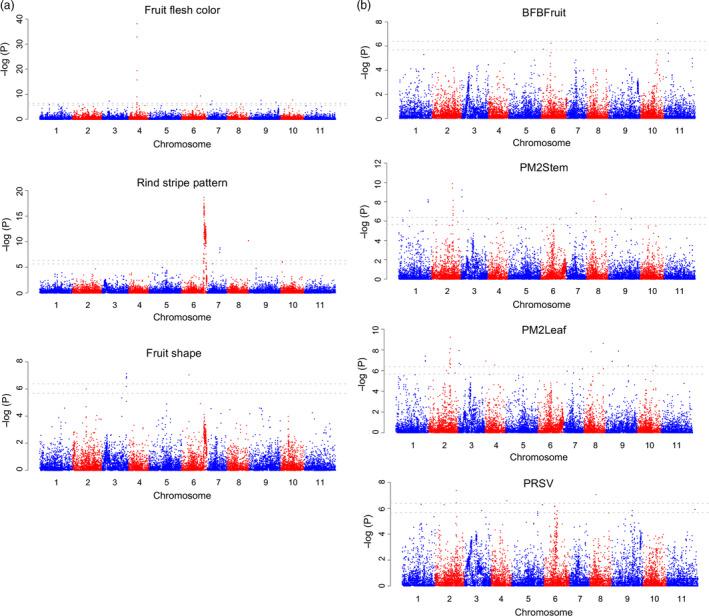
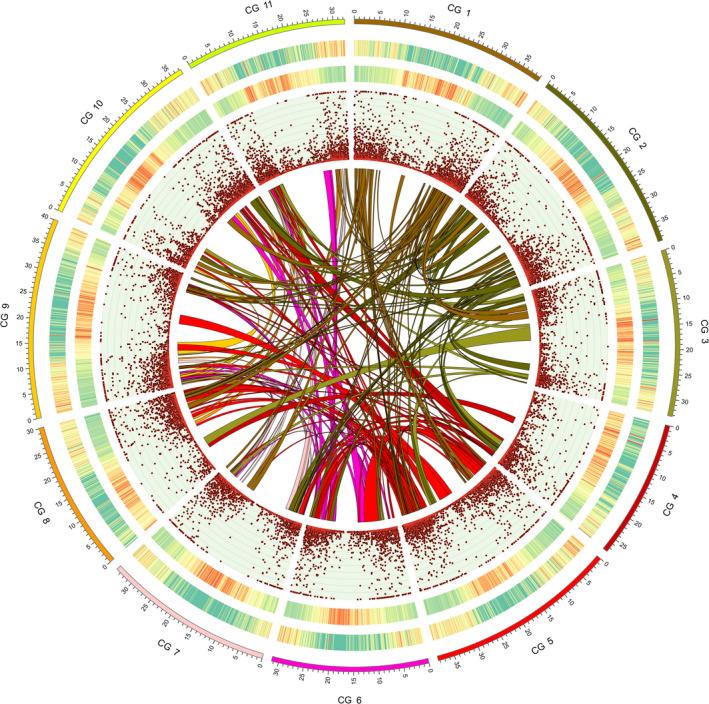
Years of selection for desirable fruit quality traits in dessert watermelon (Citrullus lanatus) has resulted in a narrow genetic base in modern cultivars. Development of novel genomic and genetic resources offers great potential to expand genetic diversity and improve important traits in watermelon. Here, we report a high-quality genome sequence of watermelon cultivar 'Charleston Gray', a principal American dessert watermelon, to complement the existing reference genome from '97103', an East Asian cultivar. Comparative analyses between genomes of 'Charleston Gray' and '97103' revealed genomic variants that may underlie phenotypic differences between the two cultivars. We then genotyped 1365 watermelon plant introduction (PI) lines maintained at the U.S. National Plant Germplasm System using genotyping-by-sequencing (GBS). These PI lines were collected throughout the world and belong to three Citrullus species, C. lanatus, C. mucosospermus and C. amarus. Approximately 25 000 high-quality single nucleotide polymorphisms (SNPs) were derived from the GBS data using the 'Charleston Gray' genome as the reference. Population genomic analyses using these SNPs discovered a close relationship between C. lanatus and C. mucosospermus and identified four major groups in these two species correlated to their geographic locations. Citrullus amarus was found to have a distinct genetic makeup compared to C. lanatus and C. mucosospermus. The SNPs also enabled identification of genomic regions associated with important fruit quality and disease resistance traits through genome-wide association studies. The high-quality 'Charleston Gray' genome and the genotyping data of this large collection of watermelon accessions provide valuable resources for facilitating watermelon research, breeding and improvement.
多年来对理想果实品质性状的选择导致现代品种中西瓜(Citrullus lanatus)的遗传基础狭窄。新型基因组和遗传资源的开发为扩大西瓜的遗传多样性和改良重要性状提供了巨大潜力。在这里,我们报告了一个名为“Charleston Gray”的西瓜品种的高质量基因组序列,这是美国主要的甜点西瓜品种,与东亚品种“97103”的现有参考基因组互补。“Charleston Gray”和“97103”基因组之间的比较分析揭示了可能导致两个品种表型差异的基因组变异。然后,我们使用基于测序的基因型分析(GBS)对美国国家植物种质系统保存的 1365 个西瓜植物引种(PI)系进行了基因型分析。这些 PI 系来自世界各地,属于三个苦瓜属物种,即 C. lanatus、C. mucosospermus 和 C. amarus。使用“Charleston Gray”基因组作为参考,从 GBS 数据中衍生出大约 25000 个高质量的单核苷酸多态性(SNP)。使用这些 SNP 进行的群体基因组分析发现,C. lanatus 和 C. mucosospermus 之间存在密切的关系,并在这两个物种中确定了与地理位置相关的四个主要群体。与 C. lanatus 和 C. mucosospermus 相比,C. amarus 具有独特的遗传组成。SNP 还通过全基因组关联研究鉴定了与重要果实品质和抗病性性状相关的基因组区域。高质量的“Charleston Gray”基因组和这个大型西瓜种质资源的基因型数据为促进西瓜研究、育种和改良提供了有价值的资源。


 Zotero 插件