
基于卷积神经网络、离散小波变换和长短时记忆网络的肝脏和脑肿瘤分类新方法。
A Novel Method for Classifying Liver and Brain Tumors Using Convolutional Neural Networks, Discrete Wavelet Transform and Long Short-Term Memory Networks.
机构信息
Computer Using Department, Besni Vocational School, Adıyaman University, Adıyaman 02300, Turkey.
Software Engineering Department, Technology Faculty, Fırat University, Elazığ 23000, Turkey.
出版信息
Sensors (Basel). 2019 Apr 28;19(9):1992. doi: 10.3390/s19091992.
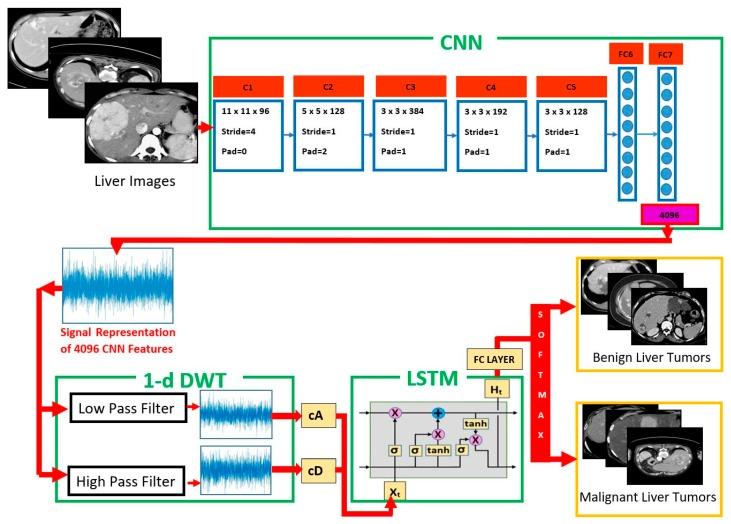
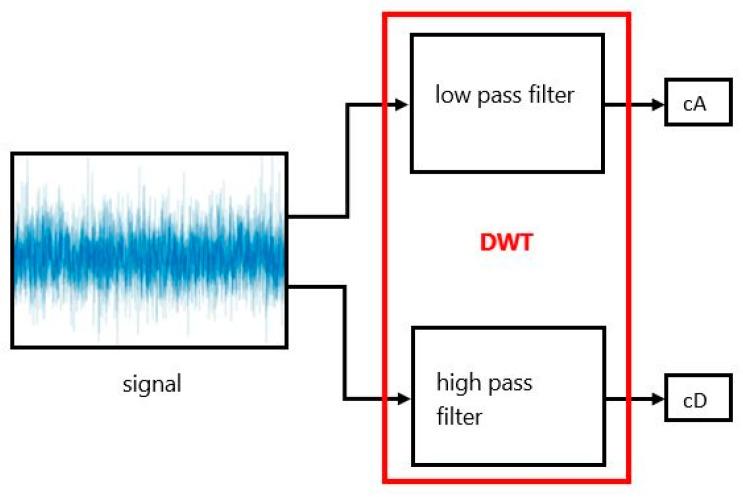
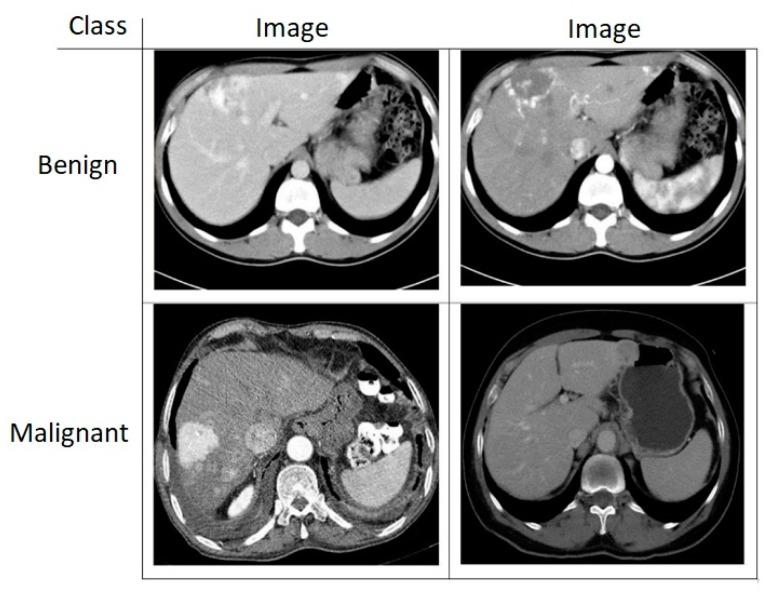
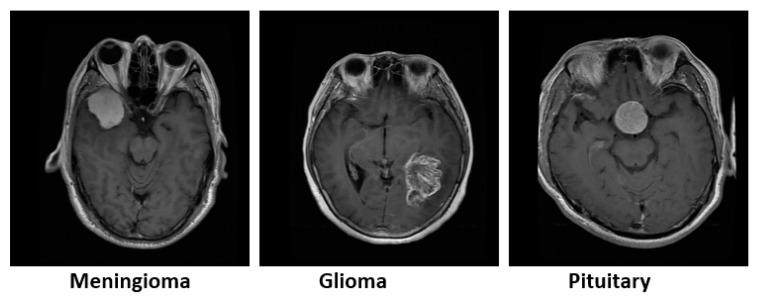
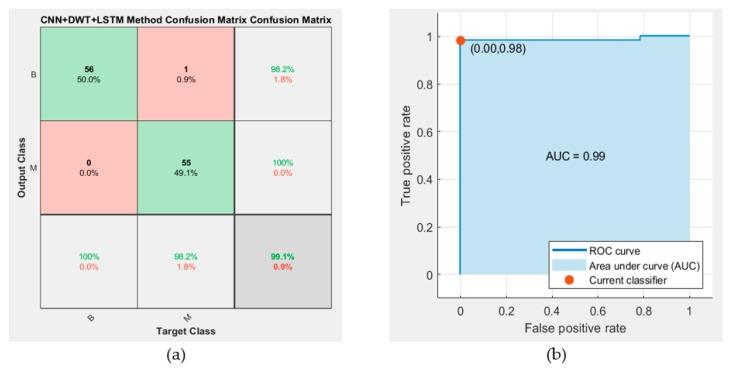
Rapid classification of tumors that are detected in the medical images is of great importance in the early diagnosis of the disease. In this paper, a new liver and brain tumor classification method is proposed by using the power of convolutional neural network (CNN) in feature extraction, the power of discrete wavelet transform (DWT) in signal processing, and the power of long short-term memory (LSTM) in signal classification. A CNN-DWT-LSTM method is proposed to classify the computed tomography (CT) images of livers with tumors and to classify the magnetic resonance (MR) images of brains with tumors. The proposed method classifies liver tumors images as benign or malignant and then classifies brain tumor images as meningioma, glioma, and pituitary. In the hybrid CNN-DWT-LSTM method, the feature vector of the images is obtained from pre-trained AlexNet CNN architecture. The feature vector is reduced but strengthened by applying the single-level one-dimensional discrete wavelet transform (1-D DWT), and it is classified by training with an LSTM network. Under the scope of the study, images of 56 benign and 56 malignant liver tumors that were obtained from Fırat University Research Hospital were used and a publicly available brain tumor dataset were used. The experimental results show that the proposed method had higher performance than classifiers, such as K-nearest neighbors (KNN) and support vector machine (SVM). By using the CNN-DWT-LSTM hybrid method, an accuracy rate of 99.1% was achieved in the liver tumor classification and accuracy rate of 98.6% was achieved in the brain tumor classification. We used two different datasets to demonstrate the performance of the proposed method. Performance measurements show that the proposed method has a satisfactory accuracy rate at the liver tumor and brain tumor classifying.
快速分类在医学图像中检测到的肿瘤在疾病的早期诊断中非常重要。在本文中,通过使用卷积神经网络(CNN)在特征提取、离散小波变换(DWT)在信号处理、长短期记忆(LSTM)在信号分类中的能力,提出了一种新的肝脑肿瘤分类方法。提出了一种 CNN-DWT-LSTM 方法,用于对有肿瘤的 CT 肝脏图像进行分类,对有肿瘤的磁共振(MR)脑图像进行分类。所提出的方法将肝肿瘤图像分类为良性或恶性,然后将脑肿瘤图像分类为脑膜瘤、神经胶质瘤和垂体瘤。在混合 CNN-DWT-LSTM 方法中,从预先训练的 AlexNet CNN 架构获得图像的特征向量。通过应用单级一维离散小波变换(1-D DWT)对特征向量进行降维和增强,然后通过 LSTM 网络进行训练进行分类。在研究范围内,使用了来自 Firat 大学研究医院的 56 个良性和 56 个恶性肝肿瘤的图像和一个公开可用的脑肿瘤数据集。实验结果表明,与 K 最近邻(KNN)和支持向量机(SVM)等分类器相比,所提出的方法具有更高的性能。通过使用 CNN-DWT-LSTM 混合方法,在肝肿瘤分类中达到了 99.1%的准确率,在脑肿瘤分类中达到了 98.6%的准确率。我们使用了两个不同的数据集来证明所提出方法的性能。性能测量表明,所提出的方法在肝肿瘤和脑肿瘤分类中具有令人满意的准确率。




 Zotero 插件