
鉴定视网膜钠钾-ATP 酶上与视蛋白结合的位点。
Identification of the retinoschisin-binding site on the retinal Na/K-ATPase.
机构信息
Institute of Human Genetics, University of Regensburg, Regensburg, Germany.
Institute of Biophysics and Physical Biochemistry, University of Regensburg, Regensburg, Germany.
出版信息
PLoS One. 2019 May 2;14(5):e0216320. doi: 10.1371/journal.pone.0216320. eCollection 2019.
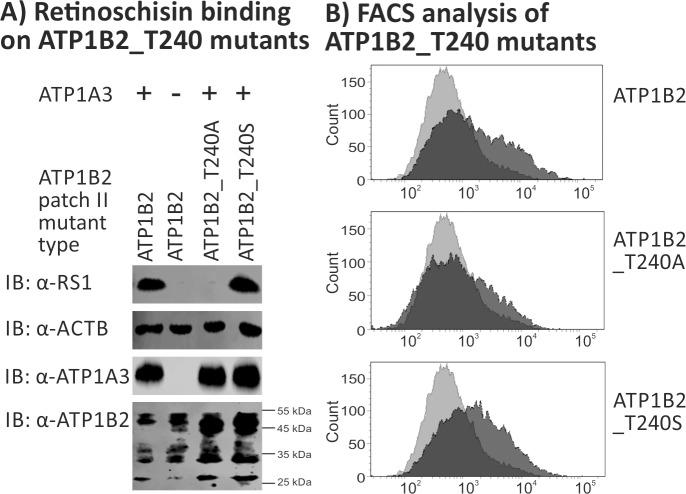
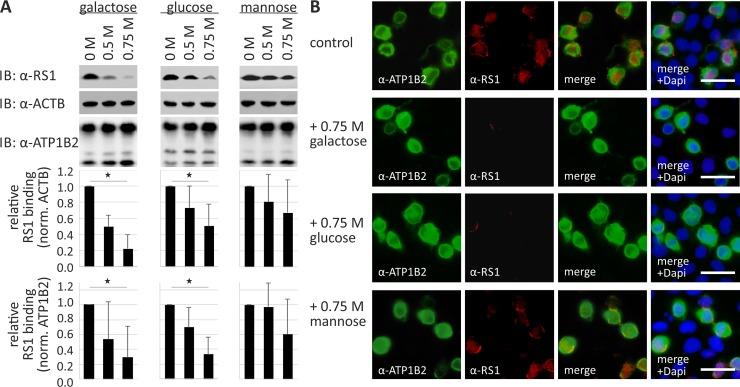
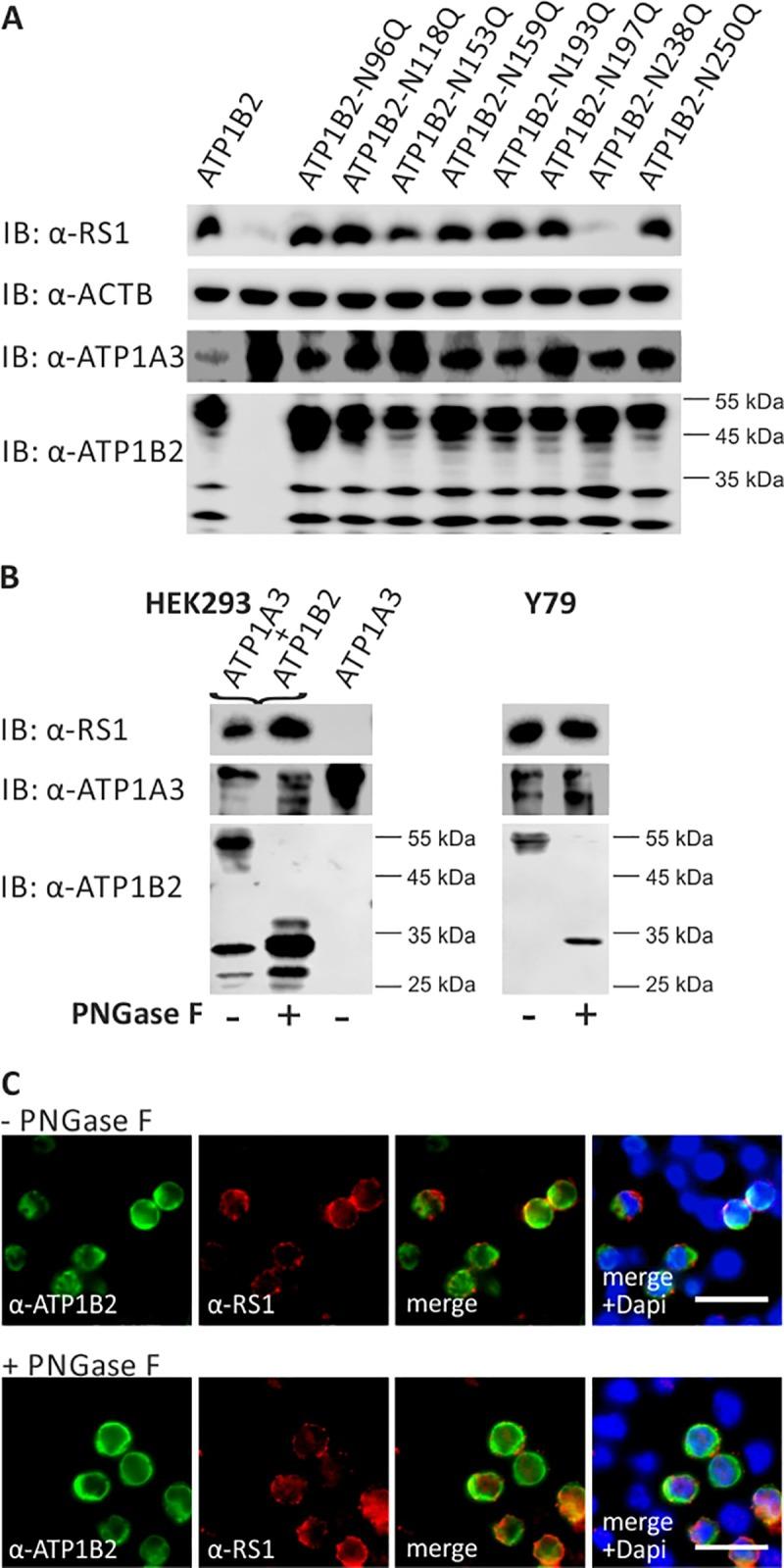
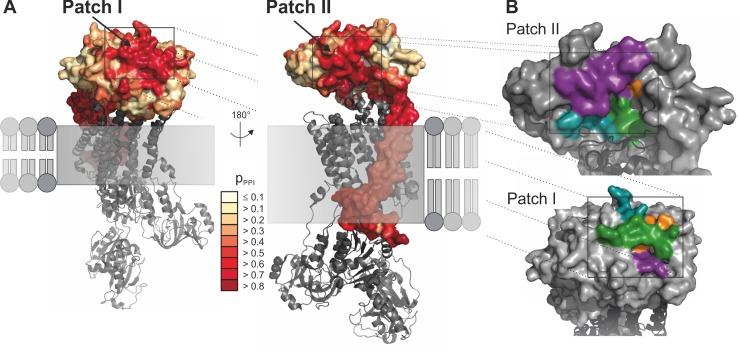
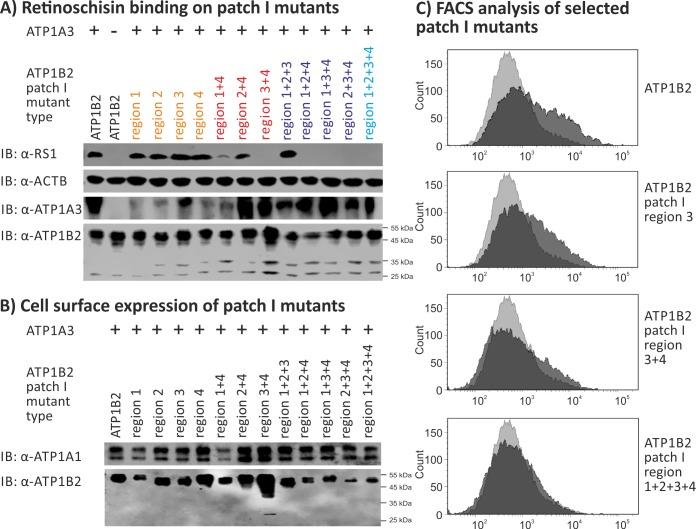
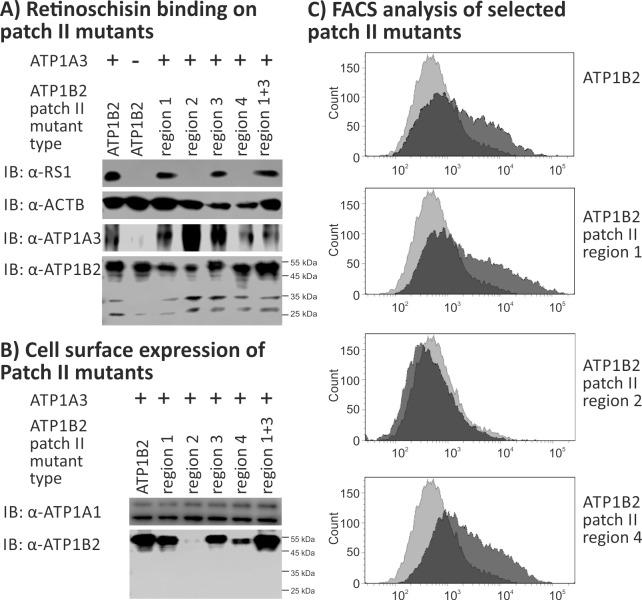
X-linked juvenile retinoschisis (XLRS) is a hereditary retinal dystrophy, caused by mutations in the RS1 gene which encodes the secreted protein retinoschisin. In recent years, several molecules have been proposed to interact with retinoschisin, including the retinal Na/K-ATPase, L-voltage gated Ca2+ channels, and specific sugars. We recently showed that the retinal Na/K-ATPase consisting of subunits ATP1A3 and ATP1B2 is essential for anchoring retinoschisin to plasma membranes and identified the glycosylated ATP1B2 subunit as the direct interaction partner for retinoschisin. We now aimed to precisely map the retinoschisin binding domain(s) in ATP1B2. In general, retinoschisin binding was not affected after selective elimination of individual glycosylation sites via site-directed mutagenesis as well as after full enzymatic deglycosylation of ATP1B2. Applying the interface prediction tool PresCont, two putative protein-protein interaction patches ("patch I" and "patch II") consisting each of four hydrophobic amino acid stretches on the ATP1B2 surface were identified. These were consecutively altered by site-directed mutagenesis. Functional assays with the ATP1B2 patch mutants identified patch II and, specifically, the associated amino acid at position 240 (harboring a threonine in ATP1B2) as crucial for retinoschisin binding to ATP1B2. These and previous results led us to suggest an induced-fit binding mechanism for the interaction between retinoschisin and the Na/K-ATPase, which is dependent on threonine 240 in ATP1B2 allowing the accommodation of hyperflexible retinoschisin spikes by the associated protein-protein interaction patch on ATP1B2.
X 连锁青少年性视网膜劈裂症(XLRS)是一种遗传性视网膜营养不良,由 RS1 基因的突变引起,该基因编码分泌蛋白视网膜蛋白聚糖。近年来,有几种分子被提出与视网膜蛋白聚糖相互作用,包括视网膜 Na/K-ATP 酶、L-电压门控 Ca2+通道和特定的糖。我们最近表明,由 ATP1A3 和 ATP1B2 亚基组成的视网膜 Na/K-ATP 酶对于将视网膜蛋白聚糖锚定在质膜上是必不可少的,并确定糖基化的 ATP1B2 亚基是与视网膜蛋白聚糖的直接相互作用伙伴。我们现在的目标是精确定位 ATP1B2 中与视网膜蛋白聚糖结合的(多个)结构域。一般来说,通过定点突变选择性消除单个糖基化位点后,以及在 ATP1B2 完全酶糖基化后,视网膜蛋白聚糖的结合没有受到影响。应用界面预测工具 PresCont,在 ATP1B2 表面上确定了两个由四个疏水性氨基酸片段组成的假定蛋白-蛋白相互作用斑块(“斑块 I”和“斑块 II”)。这些依次通过定点突变进行改变。对 ATP1B2 斑块突变体的功能测定确定了斑块 II,特别是与位置 240 相关的氨基酸(在 ATP1B2 中含有苏氨酸)对于视网膜蛋白聚糖与 ATP1B2 的结合至关重要。这些和以前的结果使我们提出了一种诱导契合结合机制,用于视网膜蛋白聚糖与 Na/K-ATP 酶之间的相互作用,该机制依赖于 ATP1B2 中的苏氨酸 240,允许相关的蛋白-蛋白相互作用斑块在 ATP1B2 上容纳超柔性的视网膜蛋白聚糖刺。
 Zotero 插件