
一种在医疗保健中进行肺炎分类的高效深度学习方法。
An Efficient Deep Learning Approach to Pneumonia Classification in Healthcare.
机构信息
Department of Computer Engineering, Dongseo University, Busan, Republic of Korea.
Division of Computer Engineering, Dongseo University, Busan, Republic of Korea.
出版信息
J Healthc Eng. 2019 Mar 27;2019:4180949. doi: 10.1155/2019/4180949. eCollection 2019.
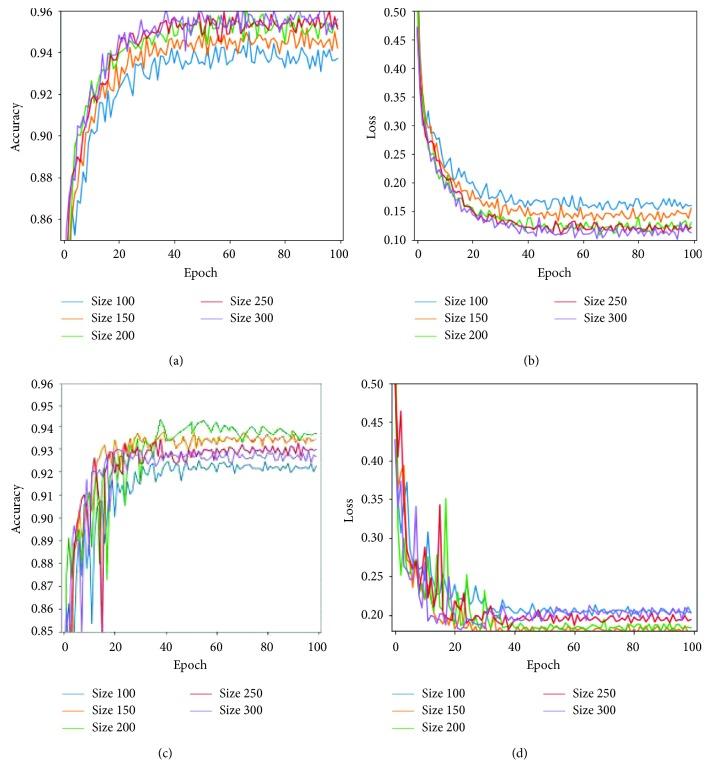
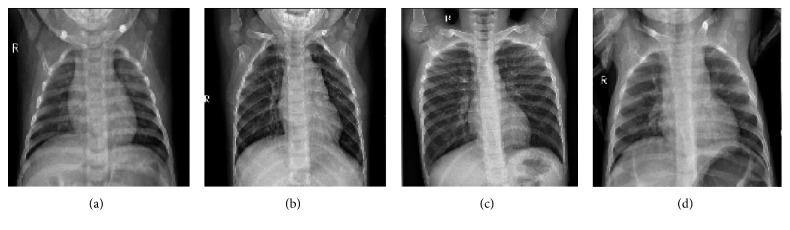
This study proposes a convolutional neural network model trained from scratch to classify and detect the presence of pneumonia from a collection of chest X-ray image samples. Unlike other methods that rely solely on transfer learning approaches or traditional handcrafted techniques to achieve a remarkable classification performance, we constructed a convolutional neural network model from scratch to extract features from a given chest X-ray image and classify it to determine if a person is infected with pneumonia. This model could help mitigate the reliability and interpretability challenges often faced when dealing with medical imagery. Unlike other deep learning classification tasks with sufficient image repository, it is difficult to obtain a large amount of pneumonia dataset for this classification task; therefore, we deployed several data augmentation algorithms to improve the validation and classification accuracy of the CNN model and achieved remarkable validation accuracy.
本研究提出了一种从头开始训练的卷积神经网络模型,用于从胸部 X 射线图像样本集中分类和检测肺炎的存在。与其他仅依赖迁移学习方法或传统手工技术来实现出色分类性能的方法不同,我们从头开始构建了一个卷积神经网络模型,从给定的胸部 X 射线图像中提取特征,并对其进行分类,以确定一个人是否感染了肺炎。该模型有助于缓解处理医学图像时经常面临的可靠性和可解释性挑战。与其他具有足够图像库的深度学习分类任务不同,很难为这个分类任务获得大量的肺炎数据集;因此,我们部署了几种数据增强算法来提高 CNN 模型的验证和分类准确性,并取得了显著的验证准确性。


 Zotero 插件