
自噬在神经退行性疾病中的作用及其机制。
Mechanisms and roles of mitophagy in neurodegenerative diseases.
机构信息
Department of Pharmacology, College of Pharmaceutical Science, Soochow University, Suzhou, China.
Department of Pathology, Stanford University School of Medicine, Stanford, California.
出版信息
CNS Neurosci Ther. 2019 Jul;25(7):859-875. doi: 10.1111/cns.13140. Epub 2019 May 2.
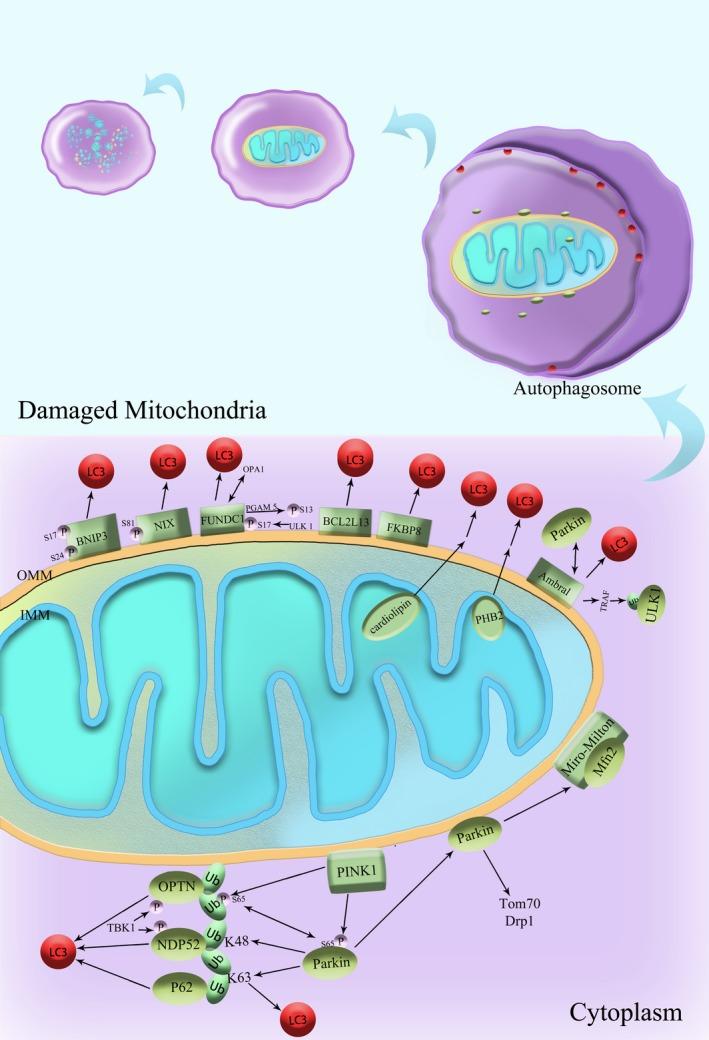
Mitochondria are double-membrane-encircled organelles existing in most eukaryotic cells and playing important roles in energy production, metabolism, Ca buffering, and cell signaling. Mitophagy is the selective degradation of mitochondria by autophagy. Mitophagy can effectively remove damaged or stressed mitochondria, which is essential for cellular health. Thanks to the implementation of genetics, cell biology, and proteomics approaches, we are beginning to understand the mechanisms of mitophagy, including the roles of ubiquitin-dependent and receptor-dependent signals on damaged mitochondria in triggering mitophagy. Mitochondrial dysfunction and defective mitophagy have been broadly associated with neurodegenerative diseases. This review is aimed at summarizing the mechanisms of mitophagy in higher organisms and the roles of mitophagy in the pathogenesis of neurodegenerative diseases. Although many studies have been devoted to elucidating the mitophagy process, a deeper understanding of the mechanisms leading to mitophagy defects in neurodegenerative diseases is required for the development of new therapeutic interventions, taking into account the multifactorial nature of diseases and the phenotypic heterogeneity of patients.
线粒体是一种双层膜包围的细胞器,存在于大多数真核细胞中,在能量产生、代谢、Ca 缓冲和细胞信号转导中发挥重要作用。线粒体自噬是自噬选择性降解线粒体。线粒体自噬可以有效地清除受损或应激的线粒体,这对细胞健康至关重要。由于遗传学、细胞生物学和蛋白质组学方法的实施,我们开始理解线粒体自噬的机制,包括泛素依赖性和受体依赖性信号在损伤线粒体引发线粒体自噬中的作用。线粒体功能障碍和线粒体自噬缺陷与神经退行性疾病广泛相关。本综述旨在总结高等生物中线粒体自噬的机制以及线粒体自噬在神经退行性疾病发病机制中的作用。尽管许多研究致力于阐明线粒体自噬过程,但为了开发新的治疗干预措施,需要更深入地了解导致神经退行性疾病中线粒体自噬缺陷的机制,同时要考虑到疾病的多因素性质和患者的表型异质性。
 Zotero 插件