
绞股蓝皂苷及其磷酸化衍生物对鸭胚肝细胞抵御鸭甲型肝炎病毒1型(DHAV-1)感染的肝细胞保护作用评估。
Assessment of the hepatocyte protective effects of gypenoside and its phosphorylated derivative against DHAV-1 infection on duck embryonic hepatocytes.
作者信息
Du Hongxu, Bai Jingying, Wang Jinli, He Miao, Xiong Wen, Yuan Wenjuan, Qiao Mingyu, Ming Ke, Wu Yi, Wang Deyun, Hu Yuanliang, Liu Jiaguo
机构信息
Institute of Traditional Chinese Veterinary Medicine and MOE Joint International Research Laboratory of Animal Health and Food Safety, College of Veterinary Medicine, Nanjing Agricultural University, Nanjing, 210095, People's Republic of China.
出版信息
BMC Vet Res. 2019 May 7;15(1):134. doi: 10.1186/s12917-019-1891-z.
BACKGROUND
Duck viral hepatitis (DVH) is an acute disease of young ducklings with no effective veterinary drugs for treatment. Gynostemma pentaphyllum is a well-known traditional Chinese medicine that plays an important role in the treatment of various diseases. Gypenoside (GP), one of the main ingredients of Gynostemma pentaphyllum, was reported with good hepatoprotective effects. However, its low solubility limits its application in the clinics. To improve its solubility and bioactivity, a phosphorylated derivative of gypenoside (pGP) was prepared by the sodium trimetaphosphate-sodium tripolyphosphate (STMP-STPP) method. An infrared spectroscopy method was applied to analyse the structures of GP and pGP. Then, a methyl thiazolyl tetrazolium (MTT) colorimetric assay was applied to study the hepatocyte protective efficacy of these two drugs against duck hepatitis A virus type 1 (DHAV-1) infection, and qPCR, TUNEL labelling and flow cytometry methods were used to study the relevant hepatocyte protective in vitro.
RESULTS
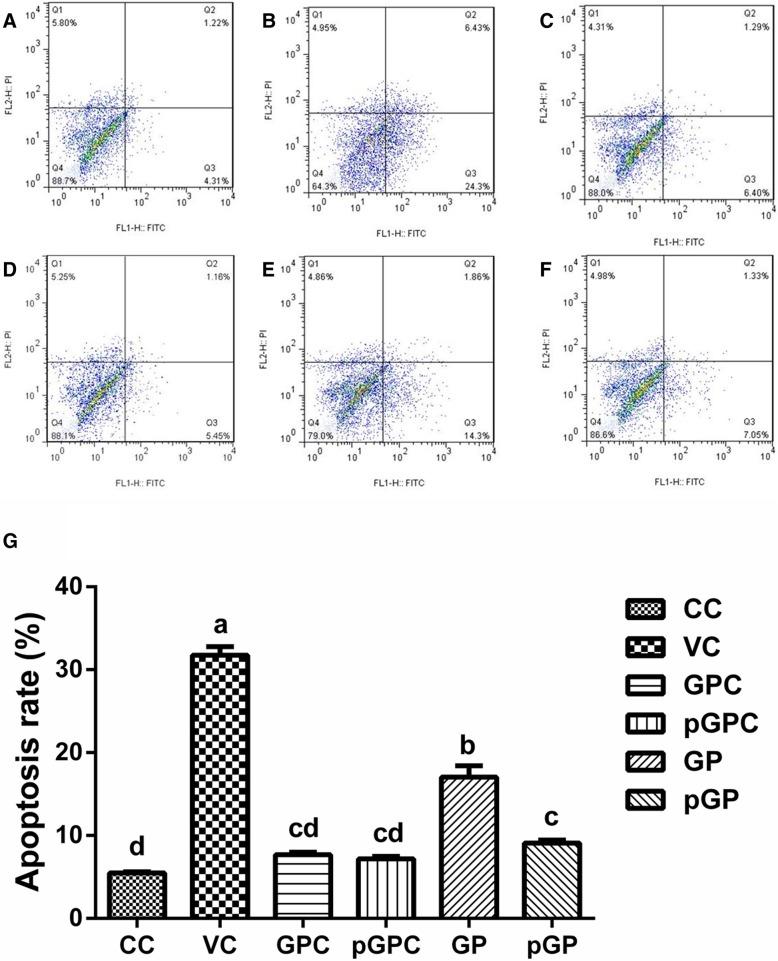
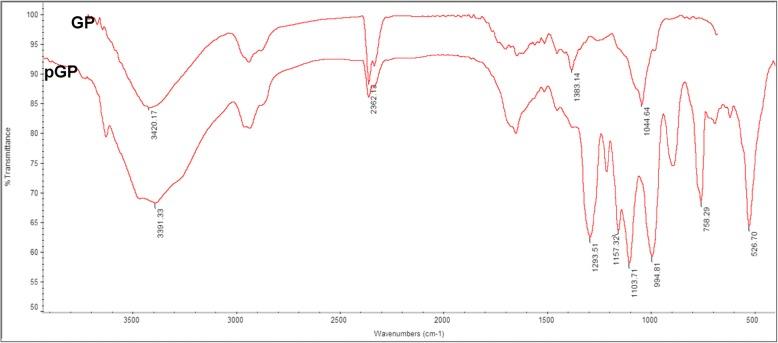
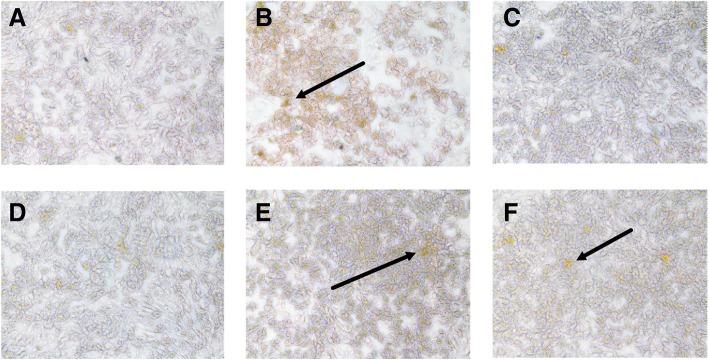
The infrared spectroscopy detection results showed that the phosphorylation modification of GP was successful. The MTT colorimetric assay results showed that both GP and pGP possessed good hepatocyte protective efficacy in vitro, and pGP performed better than GP when the drug was added before or after virus inoculation. Furthermore, the qPCR results revealed that both drugs could effectively inhibit the adsorption (when adding GP and pGP pre-virus inoculation), replication and release of DHAV-1, and the viral inhibition rate of pGP was greater than that of GP. The subsequent TUNEL labelling and flow cytometry assays showed that both GP and pGP could significantly inhibit duck embryo hepatocyte apoptosis induced by DHAV-1, and the inhibition effect of pGP was much stronger than that of GP.
CONCLUSIONS
GP exerts good hepatocyte protective efficacy not only by inhibiting the proliferation of DHAV-1 but also by inhibiting duck embryonic hepatocyte apoptosis induced by DHAV-1, and phosphorylation modification significantly improves the antiviral and the anti-apoptotic effects of GP. Therefore, pGP has the potential to be developed into a novel drug against DHAV-1 infection.
背景
鸭病毒性肝炎(DVH)是幼鸭的一种急性疾病,目前尚无有效的治疗兽药。绞股蓝是一种著名的传统中药,在治疗各种疾病中发挥着重要作用。绞股蓝皂苷(GP)是绞股蓝的主要成分之一,据报道具有良好的肝保护作用。然而,其低溶解度限制了它在临床上的应用。为了提高其溶解度和生物活性,采用三偏磷酸钠-三聚磷酸钠(STMP-STPP)法制备了绞股蓝皂苷的磷酸化衍生物(pGP)。应用红外光谱法分析了GP和pGP的结构。然后,采用甲基噻唑基四氮唑(MTT)比色法研究这两种药物对1型鸭甲型肝炎病毒(DHAV-1)感染的肝细胞保护作用,并采用qPCR、TUNEL标记和流式细胞术方法研究相关的体外肝细胞保护作用。
结果
红外光谱检测结果表明GP的磷酸化修饰成功。MTT比色法结果表明,GP和pGP在体外均具有良好的肝细胞保护作用,在病毒接种前或接种后添加药物时,pGP的效果优于GP。此外,qPCR结果显示,两种药物均可有效抑制DHAV-1的吸附(病毒接种前添加GP和pGP时)、复制和释放,且pGP的病毒抑制率大于GP。随后的TUNEL标记和流式细胞术分析表明,GP和pGP均可显著抑制DHAV-1诱导的鸭胚肝细胞凋亡,且pGP的抑制作用远强于GP。
结论
GP不仅通过抑制DHAV-1的增殖,还通过抑制DHAV-1诱导的鸭胚肝细胞凋亡发挥良好的肝细胞保护作用,磷酸化修饰显著提高了GP的抗病毒和抗凋亡作用。因此,pGP有潜力开发成为一种抗DHAV-1感染的新型药物。

 Zotero 插件