
社区卫生工作者主导的多媒体干预措施以提高南亚裔妇女的宫颈癌筛查参与率:一项群组随机、等待名单对照试验的研究方案。
A community health worker-led multimedia intervention to increase cervical cancer screening uptake among South Asian women: study protocol for a cluster randomized wait-list controlled trial.
机构信息
The Nethersole School of Nursing, Faculty of Medicine, The Chinese University of Hong Kong, Room 824, Esther Lee Building, Hong Kong, People's Republic of China.
出版信息
Trials. 2019 May 14;20(1):270. doi: 10.1186/s13063-019-3378-4.
BACKGROUND
Marked ethnic disparities on cervical cancer screening have been observed among South Asian women. Multiple barriers, such as language difficulties, poor access to screening services, values, and beliefs, were identified. Multimedia interventions led by community health workers (CHWs) would likely reduce screening disparities and increase cervical screening uptake among South Asian women. This study aims to assess the effects of a CHW-led multimedia intervention on the uptake of cervical cancer screening among South Asian women.
METHODS
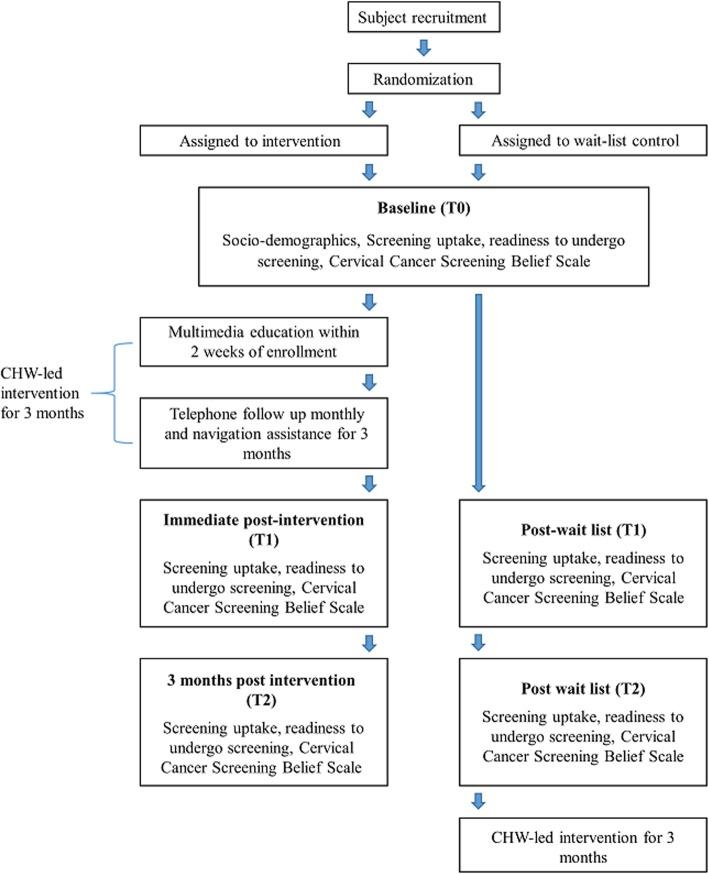
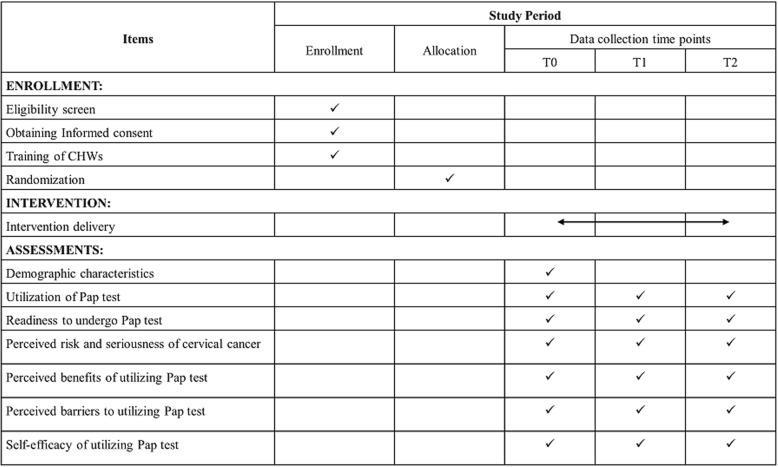
This study is a cluster randomized wait-list controlled trial. A total of 408 South Asian women from Pakistan, India or Nepal will be recruited from six ethnic minority associations. Each association will be randomized to one of the two arms: an intervention arm (n = 3) that will undergo immediate treatment (CHW-led multimedia intervention) or a wait-list control arm (n = 3) that will receive delayed treatment. Each recruited CHW will be allocated to either arm according to the association she is affiliated with. The intervention arm will receive a CHW-led intervention comprising two components: multimedia education, and monthly telephone follow-up and navigation assistance. Participants in the control arm (n = 3) will be offered the CHW-led intervention after those in the intervention arm have completed the intervention. The primary outcome measure is the uptake of cervical cancer screening. Secondary outcomes include readiness to undergo screening and beliefs regarding cervical cancer screening. Outcomes assessments will be performed at baseline, immediately after, and 3 months after completion of the intervention.
DISCUSSION
The results of this study will potentially provide significant practical implications for addressing the needs and increasing the uptake of cervical cancer screening among South Asian women.
TRIAL REGISTRATION
Chinese Clinical Trial Registry, ChiCTR1800017227 . Registered on 18 July 2018.
背景
南亚女性的宫颈癌筛查存在明显的种族差异。已经确定了多种障碍,例如语言困难、筛查服务获取困难、价值观和信念等。由社区卫生工作者(CHW)领导的多媒体干预措施可能会减少筛查差异,并提高南亚女性的宫颈癌筛查率。本研究旨在评估 CHW 主导的多媒体干预对南亚女性宫颈癌筛查率的影响。
方法
这是一项集群随机等待名单对照试验。总共将从六个少数民族协会招募 408 名来自巴基斯坦、印度或尼泊尔的南亚女性。每个协会将随机分配到两个手臂之一:干预手臂(n=3)将立即接受治疗(由 CHW 主导的多媒体干预)或等待名单对照组(n=3)将延迟治疗。根据她所属的协会,每个招募的 CHW 将被分配到其中一个手臂。干预手臂将接受由 CHW 主导的干预,包括两个部分:多媒体教育和每月电话随访和导航协助。对照组(n=3)的参与者将在干预组完成干预后提供 CHW 主导的干预。主要结局指标是宫颈癌筛查的采用率。次要结局指标包括接受筛查的准备情况和对宫颈癌筛查的信念。将在基线、干预后立即和干预完成后 3 个月进行结果评估。
讨论
这项研究的结果可能会为满足南亚女性的需求和提高宫颈癌筛查率提供重要的实际意义。
试验注册
中国临床试验注册中心,ChiCTR1800017227。注册于 2018 年 7 月 18 日。

 Zotero 插件