
一种由LL-37和BMAP-27组成的新型杂合肽的设计与表征。
Design and characterization of a new hybrid peptide from LL-37 and BMAP-27.
作者信息
Al Tall Yara, Abualhaijaa Ahmad, Alsaggar Mohammad, Almaaytah Ammar, Masadeh Majed, Alzoubi Karem H
机构信息
Department of Pharmaceutical Technology.
Department of Clinical Pharmacy, Faculty of Pharmacy, Jordan University of Science and Technology, Irbid, Jordan.
出版信息
Infect Drug Resist. 2019 Apr 30;12:1035-1045. doi: 10.2147/IDR.S199473. eCollection 2019.
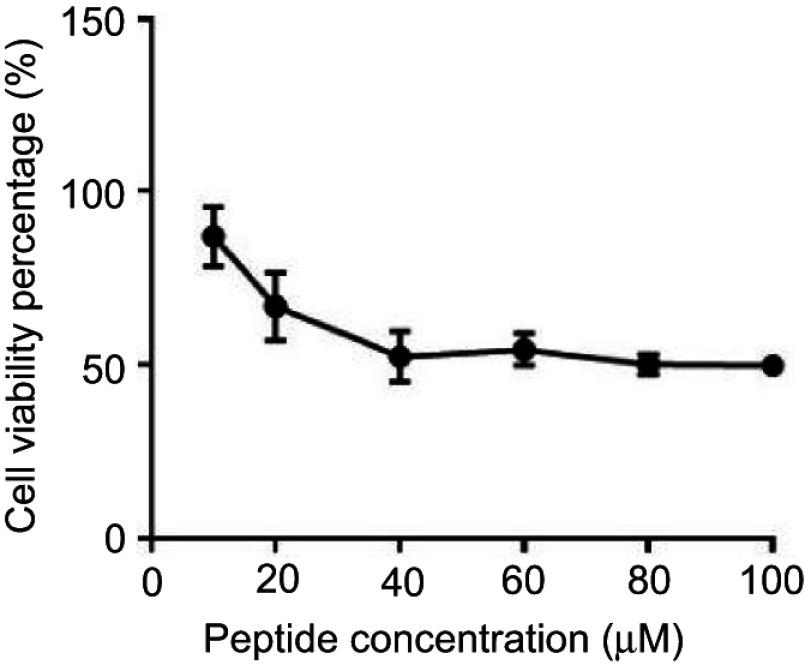
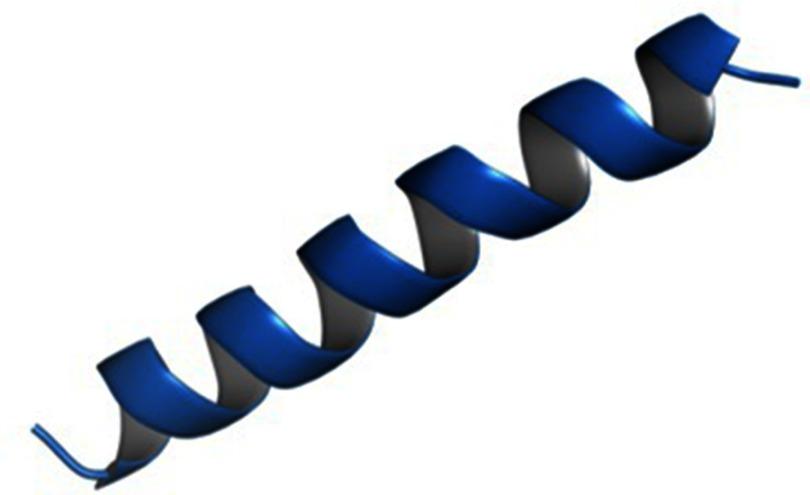
The world is heading to a post-antibiotic era where the treatment of bacterial infections will not be possible even with well-known last-line antibiotics. Unfortunately, the emergence of multidrug resistant bacterial strains is uncontrollable, and the humanity will face a life-threatening fate unless new antimicrobial agents with new bacterial target sites are promptly developed. Herein, we design a hybrid antimicrobial peptide (B1) from helical parts taken from the parent peptides: LL-37 and BMAP-27. The purpose of this design is to improve the potency and enhance the toxicity profile of the parent peptides. Rational design was used to hybridize two antimicrobial peptides, in which two helical parts from the bovine analog BMAP-27, and the human cathelicidin LL-37 were used to generate a novel peptide (B1). The physicochemical properties were checked using in silico methods. The antimicrobial activities were tested against nine control and resistant strains of Gram-positive and Gram-negative bacteria. On the other hand, the antibiofilm activities were tested against four resistant strains. The cytotoxicity on mammalian cells was tested using HEK293, and the hemolysis activity was also investigated on human blood. Finally, synergistic studies were performed with four conventional antibiotics against four resistant strains of Gram-positive and Gram-negative bacteria. The new peptide B1 exhibited broad-spectrum activities against all tested strains. The concentration against planktonic cells ranged between 10 and 20 µM. However, 40-60 µM were needed to eradicate the biofilms. B1 showed reduced toxicity toward mammalian cells with minimal hemolysis risk. On the other hand, the synergistic studies showed improved activities for the combined conventional antibiotics with a huge reduction in their minimum inhibitory concentration values. The concentrations of B1 peptide combined with the tested antibiotics were also decreased markedly down to 0.5 µM in some cases. B1 is a hybrid peptide from two cathelicidin peptides. It showed an improved activity compared to parent peptides. The hybridization was successful in this study. It generated a new potent broad-spectrum antimicrobial. The toxicity profile was improved, and the synergism with the convention antibiotics showed promising results.
世界正走向一个后抗生素时代,届时即使使用著名的最后一线抗生素,也无法治疗细菌感染。不幸的是,多重耐药细菌菌株的出现无法控制,除非迅速开发出具有新细菌靶点的新型抗菌剂,否则人类将面临危及生命的命运。在此,我们从亲本肽LL-37和BMAP-27的螺旋部分设计了一种杂合抗菌肽(B1)。这种设计的目的是提高亲本肽的效力并改善其毒性特征。采用合理设计将两种抗菌肽进行杂交,其中来自牛类似物BMAP-27和人cathelicidin LL-37的两个螺旋部分用于生成一种新型肽(B1)。使用计算机方法检查其理化性质。针对9种革兰氏阳性和革兰氏阴性细菌的对照菌株和耐药菌株测试了抗菌活性。另一方面,针对4种耐药菌株测试了抗生物膜活性。使用HEK293测试了对哺乳动物细胞的细胞毒性,并对人血进行了溶血活性研究。最后,针对4种革兰氏阳性和革兰氏阴性细菌的耐药菌株,与4种传统抗生素进行了协同研究。新肽B1对所有测试菌株均表现出广谱活性。对浮游细胞的作用浓度范围为10至20μM。然而,根除生物膜需要40 - 60μM。B1对哺乳动物细胞的毒性降低,溶血风险最小。另一方面,协同研究表明,联合使用传统抗生素时活性有所提高,其最低抑菌浓度值大幅降低。在某些情况下,B1肽与测试抗生素联合使用时的浓度也显著降低至0.5μM。B1是一种来自两种cathelicidin肽的杂合肽。与亲本肽相比,它表现出更高的活性。本研究中的杂交是成功的。它产生了一种新的强效广谱抗菌剂。毒性特征得到改善,与传统抗生素的协同作用显示出有希望的结果。

 Zotero 插件