
蛋白质糖基化与肿瘤微环境改变驱动癌症特征
Protein Glycosylation and Tumor Microenvironment Alterations Driving Cancer Hallmarks.
作者信息
Peixoto Andreia, Relvas-Santos Marta, Azevedo Rita, Santos Lúcio Lara, Ferreira José Alexandre
机构信息
Experimental Pathology and Therapeutics Group, Portuguese Institute of Oncology, Porto, Portugal.
Institute of Biomedical Sciences Abel Salazar, University of Porto, Porto, Portugal.
出版信息
Front Oncol. 2019 May 14;9:380. doi: 10.3389/fonc.2019.00380. eCollection 2019.
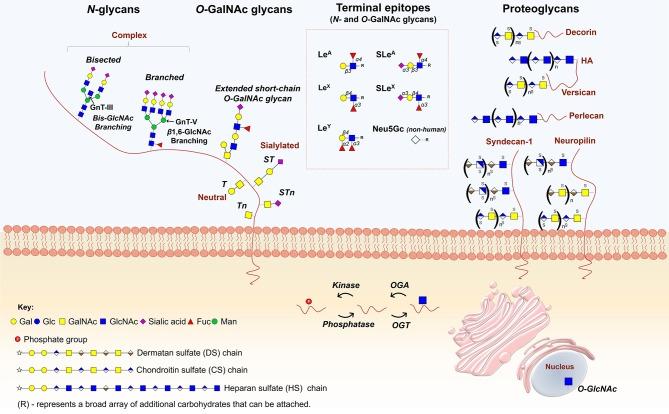
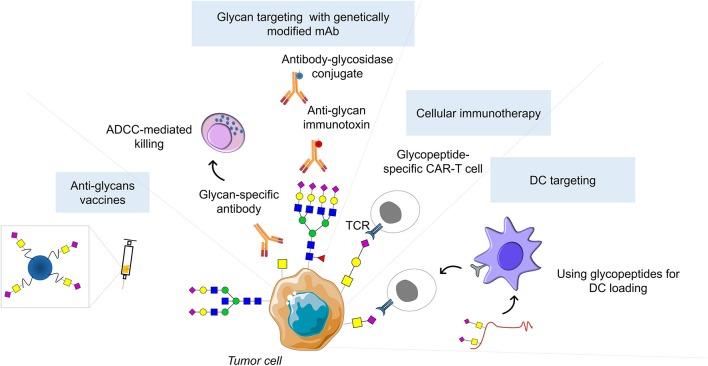
Decades of research have disclosed a plethora of alterations in protein glycosylation that decisively impact in all stages of disease and ultimately contribute to more aggressive cell phenotypes. The biosynthesis of cancer-associated glycans and its reflection in the glycoproteome is driven by microenvironmental cues and these events act synergistically toward disease evolution. Such intricate crosstalk provides the molecular foundations for the activation of relevant oncogenic pathways and leads to functional alterations driving invasion and disease dissemination. However, it also provides an important source of relevant glyco(neo)epitopes holding tremendous potential for clinical intervention. Therefore, we highlight the transversal nature of glycans throughout the currently accepted cancer hallmarks, with emphasis on the crosstalk between glycans and the tumor microenvironment stromal components. Focus is also set on the pressing need to include glycans and glycoconjugates in comprehensive panomics models envisaging molecular-based precision medicine capable of improving patient care. We foresee that this may provide the necessary rationale for more comprehensive studies and molecular-based intervention.
数十年的研究揭示了蛋白质糖基化的大量改变,这些改变在疾病的各个阶段都具有决定性影响,并最终导致更具侵袭性的细胞表型。癌症相关聚糖的生物合成及其在糖蛋白质组中的反映是由微环境线索驱动的,这些事件协同作用推动疾病进展。这种复杂的相互作用为相关致癌途径的激活提供了分子基础,并导致驱动侵袭和疾病传播的功能改变。然而,它也提供了重要的相关糖(新)表位来源,具有巨大的临床干预潜力。因此,我们强调聚糖在当前公认的癌症特征中的横向性质,重点是聚糖与肿瘤微环境基质成分之间的相互作用。还重点关注迫切需要将聚糖和糖缀合物纳入全面的泛组学模型,以实现基于分子的精准医学,从而改善患者护理。我们预计,这可能为更全面的研究和基于分子的干预提供必要的理论依据。


 Zotero 插件