
通过肠道细菌及其基因映射人类微生物组药物代谢。
Mapping human microbiome drug metabolism by gut bacteria and their genes.
机构信息
Department of Microbial Pathogenesis and Microbial Sciences Institute, Yale University School of Medicine, New Haven, CT, USA.
Department of Biology, Institute of Molecular Systems Biology, ETH Zurich, Zurich, Switzerland.
出版信息
Nature. 2019 Jun;570(7762):462-467. doi: 10.1038/s41586-019-1291-3. Epub 2019 Jun 3.
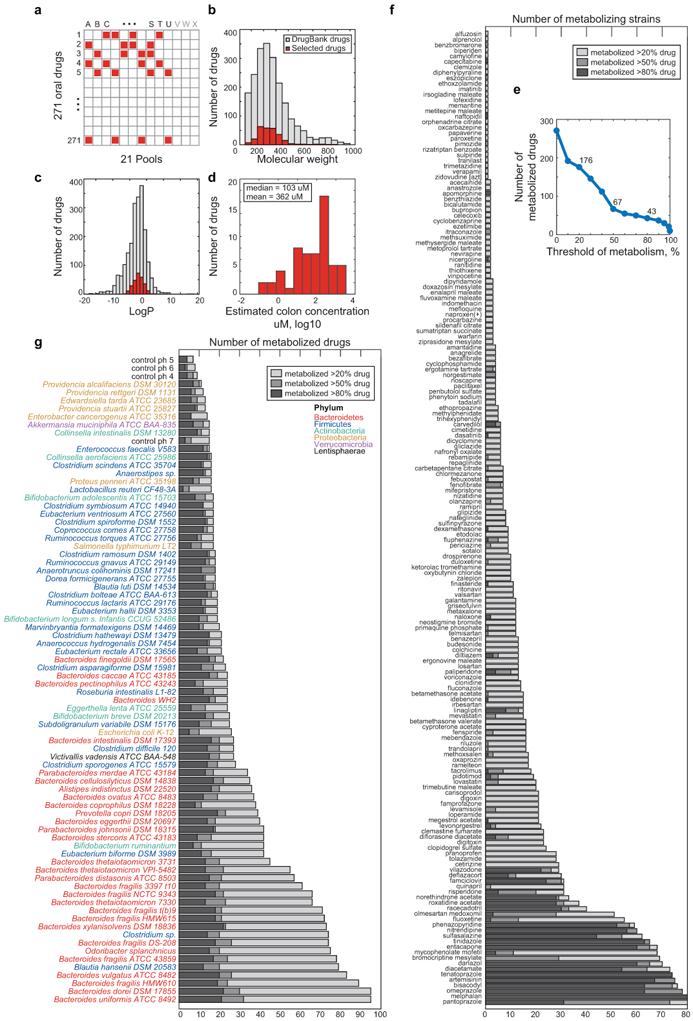
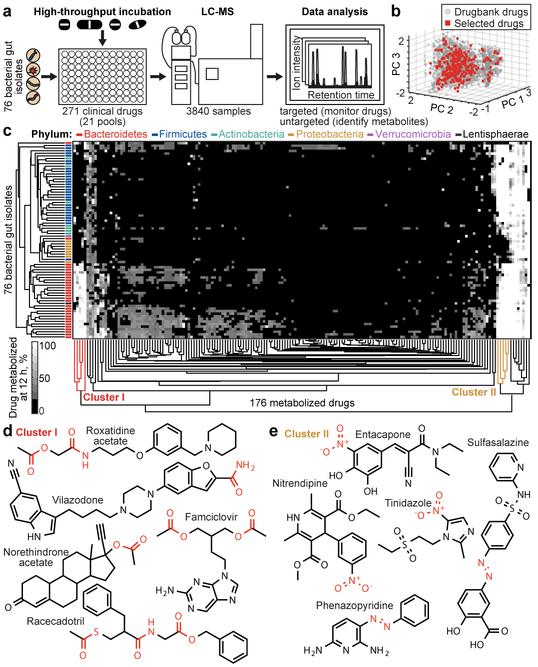
Individuals vary widely in their responses to medicinal drugs, which can be dangerous and expensive owing to treatment delays and adverse effects. Although increasing evidence implicates the gut microbiome in this variability, the molecular mechanisms involved remain largely unknown. Here we show, by measuring the ability of 76 human gut bacteria from diverse clades to metabolize 271 orally administered drugs, that many drugs are chemically modified by microorganisms. We combined high-throughput genetic analyses with mass spectrometry to systematically identify microbial gene products that metabolize drugs. These microbiome-encoded enzymes can directly and substantially affect intestinal and systemic drug metabolism in mice, and can explain the drug-metabolizing activities of human gut bacteria and communities on the basis of their genomic contents. These causal links between the gene content and metabolic activities of the microbiota connect interpersonal variability in microbiomes to interpersonal differences in drug metabolism, which has implications for medical therapy and drug development across multiple disease indications.
个体对药物的反应差异很大,这可能导致治疗延误和不良反应,既危险又昂贵。尽管越来越多的证据表明肠道微生物组与这种变异性有关,但涉及的分子机制在很大程度上仍不清楚。在这里,我们通过测量来自不同进化枝的 76 种人类肠道细菌代谢 271 种口服药物的能力,表明许多药物被微生物化学修饰。我们将高通量基因分析与质谱相结合,系统地鉴定了微生物代谢药物的基因产物。这些微生物组编码的酶可以直接并显著影响小鼠的肠道和全身药物代谢,并且可以根据其基因组含量解释人类肠道细菌和群落的药物代谢活性。微生物组基因含量和代谢活性之间的这种因果关系将微生物组中的个体间变异性与药物代谢中的个体间差异联系起来,这对多个疾病指征的医学治疗和药物开发都具有重要意义。





 Zotero 插件