
童年逆境对吸烟和职业暴露与肺功能关联的调节作用;英国家庭纵向研究(UKHLS)的横断面分析。
The moderating effect of childhood disadvantage on the associations between smoking and occupational exposure and lung function; a cross sectional analysis of the UK Household Longitudinal Study (UKHLS).
机构信息
Institute for Social and Economic Research (ISER), University of Essex, Wivenhoe Park, Colchester, CO4 3SQ, UK.
LSE Health, London School of Economics and Political Science (LSE), Cowdray House, Houghton Street, London, WC2A 2AE, UK.
出版信息
BMC Public Health. 2019 Jun 4;19(1):690. doi: 10.1186/s12889-019-7039-z.
BACKGROUND
Lung function is lower in people with disadvantaged socio-economic position (SEP) and is associated with hazardous health behaviours and exposures. The associations are likely to be interactive, for example, exposure to socially patterned environmental tobacco smoke (ETS) in childhood is associated with an increased effect of smoking in adulthood. We hypothesise that disadvantaged childhood SEP increases susceptibility to the effects of hazards in adulthood for lung function. We test whether disadvantaged childhood SEP moderates smoking, physical activity, obesity, occupational exposures, ETS and air pollution's associations with lung function.
METHODS
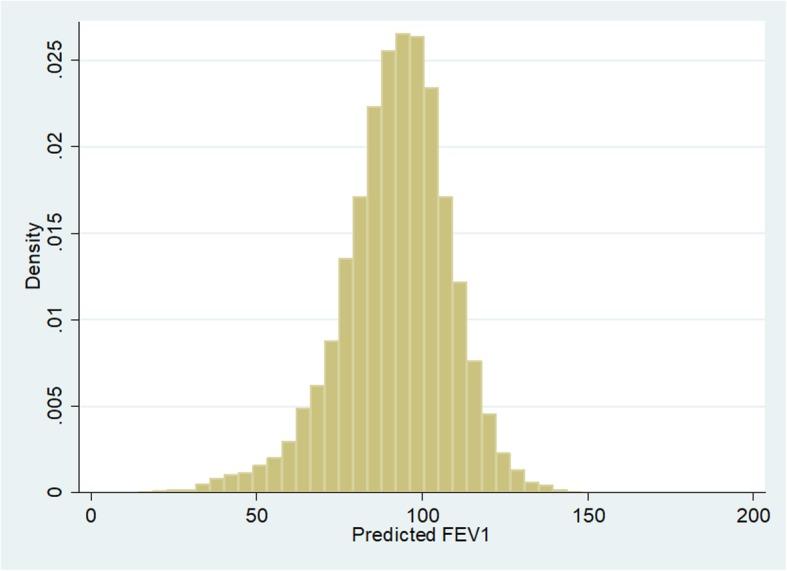
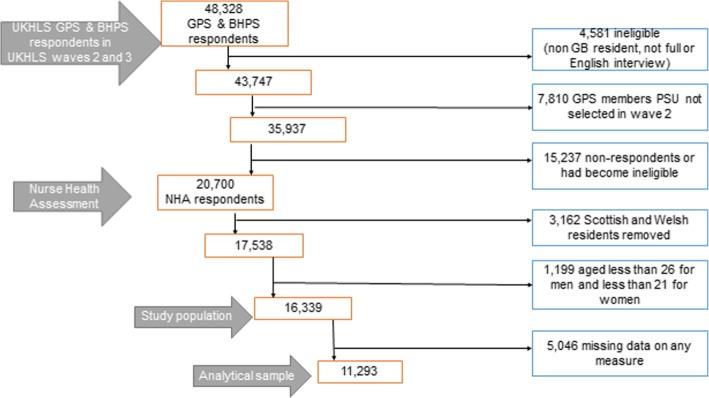
Data are from the Nurse Health Assessment (NHA) in waves two and three of the United Kingdom Household Longitudinal Study (UKHLS). Analysis is restricted to English residents aged at least 20 for women and 25 for men, producing a study population of 16,339. Lung function is measured with forced expiratory volume in the first second (FEV) and standardised to the percentage of expected FEV for a healthy non-smoker of equivalent age, gender, height and ethnicity (FEV%). Using STATA 14, a mixed linear model was fitted with interaction terms between childhood SEP and health behaviours and occupational exposures. Cross level interactions tested whether childhood SEP moderated household ETS and neighbourhood air pollution's associations with FEV%.
RESULTS
SEP, smoking, physical activity, obesity, occupational exposures and air pollution were associated with lung function. Interaction terms indicated a significantly stronger negative association between disadvantaged childhood SEP and currently smoking (coefficient -6.47 %, 95% confidence intervals (CI): 9.51 %, 3.42 %) as well as with formerly smoking and occupational exposures. Significant interactions were not found with physical activity, obesity, ETS and air pollution.
CONCLUSION
The findings suggest that disadvantaged SEP in childhood may make people's lung function more susceptible to the negative effects of smoking and occupational exposures in adulthood. This is important as those most likely to encounter these exposures are at greater risk to their effects. Policy to alleviate this inequality requires intervention in health behaviours through public health campaigns and in occupational health via health and safety legislation.
背景
社会经济地位(SEP)较低的人群肺功能较低,并且与危险的健康行为和暴露有关。这些关联可能是相互作用的,例如,儿童时期接触社会模式的环境烟草烟雾(ETS)与成年后吸烟的影响增加有关。我们假设,童年时期的社会经济地位低下会增加成年后患肺部功能障碍的易感性。我们测试了社会经济地位低下的童年时期是否会调节吸烟、体力活动、肥胖、职业暴露、ETS 和空气污染与肺功能的关联。
方法
数据来自英国家庭纵向研究(UKHLS)的第二和第三波护士健康评估(NHA)。分析仅限于年龄至少为 20 岁的女性和 25 岁的男性的英国居民,产生了一个由 16339 人组成的研究人群。使用 STATA 14,通过混合线性模型拟合了儿童时期 SEP 与健康行为和职业暴露之间的交互项。交叉水平交互项测试了儿童时期 SEP 是否调节了家庭 ETS 和邻里空气污染与 FEV%的关联。
结果
SEP、吸烟、体力活动、肥胖、职业暴露和空气污染与肺功能有关。交互项表明,社会经济地位低下的童年时期与当前吸烟(系数-6.47%,95%置信区间[CI]:9.51%,3.42%)以及以前吸烟和职业暴露之间存在显著负相关。没有发现与体力活动、肥胖、ETS 和空气污染之间存在显著交互作用。
结论
这些发现表明,童年时期的社会经济地位低下可能使人们的肺功能更容易受到成年后吸烟和职业暴露的负面影响。这很重要,因为那些最有可能接触到这些暴露的人面临更大的风险。减轻这种不平等的政策需要通过公共卫生运动干预健康行为,并通过健康和安全立法干预职业健康。
 Zotero 插件