
阿根廷中部地区犊牛隐孢子虫感染的流行情况及腹泻犊牛 GP60 亚型分析。
Prevalence of Cryptosporidium parvum in dairy calves and GP60 subtyping of diarrheic calves in central Argentina.
机构信息
Departamento de Patología Animal, Universidad Nacional de Río Cuarto, Ruta 36 Km.602, Río Cuarto, Córdoba, Argentina.
Consejo Nacional de Investigaciones Científico y Técnicas (CONICET), Buenos Aires, Argentina.
出版信息
Parasitol Res. 2019 Jul;118(7):2079-2086. doi: 10.1007/s00436-019-06366-y. Epub 2019 Jun 11.
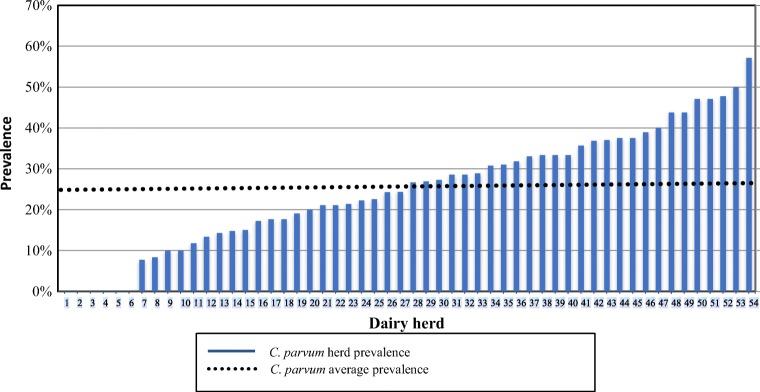
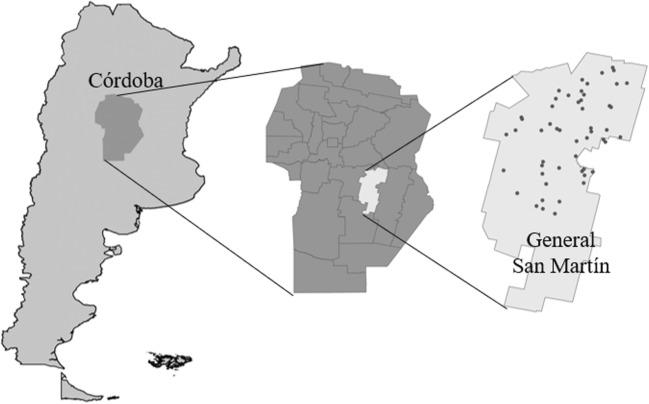
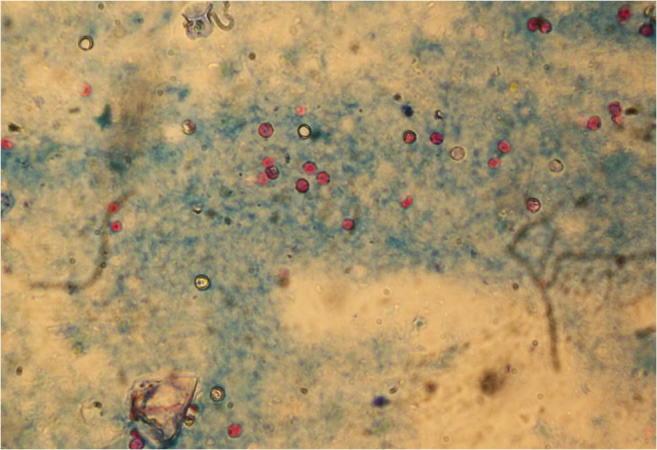
Cryptosporidiosis of calves is caused by the enteroprotozoan Cryptosporidium spp. The disease results in intense diarrhea of calves associated with substantial economic losses in dairy farming worldwide. The aim of this study was to determine calf, herd, and within-herd Cryptosporidium prevalence and identify Cryptosporidium species and subtypes in calves with diarrhea in intensive dairy herds in central Argentina. A total of 1073 fecal samples were collected from 54 randomly selected dairy herds. Cryptosporidium-oocysts were isolated and concentrated from fecal samples using formol-ether and detected by light microscopy with the modified Ziehl-Neelsen technique. Overall prevalence of oocyst-excreting calves was found to be 25.5% (274/1073) (95% C.I. 22.9; 28.1%). Of the herds studied, 89% (48/54) included at least one infected calf, whereas within-herd prevalence ranged from the absence of infection to 57% (20/35). A highly significant association was found between the presence of diarrhea and C. parvum infection (χ = 55.89, p < 0.001). For species determination, genomic DNA isolated from oocyst-positive fecal samples was subjected to PCR-RFLP of the 18S rRNA gene resulting exclusively in Cryptosporidium parvum identification. C. parvum isolates of calves displaying diarrhea and high rate of excretion of oocysts were subtyped by PCR amplification and direct sequencing of the 60 kDa glycoprotein (GP60) gene. Altogether five GP60 subtypes, designated IIaA18G1R1, IIaA20G1R1, IIaA21G1R1, IIaA22G1R1, and IIaA24G1R1 were identified. Interestingly, IIaA18G1R1 and IIaA20G1R1 were predominant in calves with diarrhea and high infection intensity. Notably, IIaA24G1R1 represents a novel, previously unrecognized C. parvum subtype. The subtype IIaA18G1R1, frequently found in this study, is strongly implicated in zoonotic transmission. These results suggest that calves might be an important source for human cryptosporidiosis in Argentina.
犊牛隐孢子虫病由肠道原生动物隐孢子虫属引起。这种疾病会导致犊牛出现严重腹泻,并在全球奶牛养殖业中造成巨大的经济损失。本研究的目的是确定阿根廷中部集约化奶牛场腹泻犊牛的隐孢子虫属、牛群和牛场内流行率,并鉴定隐孢子虫种和亚型。从 54 个随机选择的奶牛场采集了 1073 份粪便样本。使用福尔马林乙醚从粪便样本中分离和浓缩隐孢子虫卵囊,并使用改良的齐尔-尼尔森技术通过光学显微镜进行检测。结果显示,卵囊排放犊牛的总体流行率为 25.5%(274/1073)(95%置信区间 22.9%;28.1%)。在所研究的牛群中,89%(48/54)至少有一头感染的犊牛,而牛场内流行率从无感染到 57%(20/35)不等。腹泻的存在与小隐孢子虫感染之间存在显著相关性(χ=55.89,p<0.001)。为了确定种属,从卵囊阳性粪便样本中提取基因组 DNA,进行 18S rRNA 基因的 PCR-RFLP,结果仅鉴定出小隐孢子虫。对显示腹泻和高卵囊排泄率的腹泻犊牛的小隐孢子虫分离株进行 60 kDa 糖蛋白(GP60)基因的 PCR 扩增和直接测序,共鉴定出 5 种 GP60 亚型,分别命名为 IIaA18G1R1、IIaA20G1R1、IIaA21G1R1、IIaA22G1R1 和 IIaA24G1R1。有趣的是,IIaA18G1R1 和 IIaA20G1R1 在腹泻和高感染强度的犊牛中占优势。值得注意的是,IIaA24G1R1 是一种新型的、以前未被识别的小隐孢子虫亚型。本研究中经常发现的 IIaA18G1R1 强烈暗示了其在人畜共患病传播中的作用。这些结果表明,犊牛可能是阿根廷人类隐孢子虫病的重要传染源。
 Zotero 插件