
使癌细胞缺乏谷氨酰胺:打破魔咒还是制造一个饥饿的怪物?
Starve Cancer Cells of Glutamine: Break the Spell or Make a Hungry Monster?
作者信息
Jiang Jie, Srivastava Sankalp, Zhang Ji
机构信息
Herman B Wells Center for Pediatric Research, Indiana University School of Medicine, Indianapolis, IN 46202, USA.
Department of Biochemistry and Molecular Biology, Indiana University School of Medicine, Indianapolis, IN 46202, USA.
出版信息
Cancers (Basel). 2019 Jun 11;11(6):804. doi: 10.3390/cancers11060804.
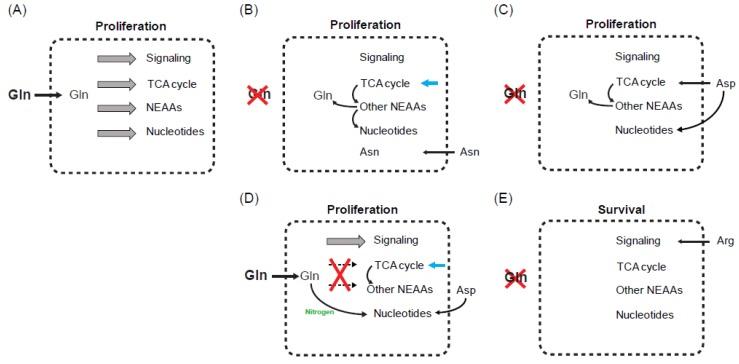
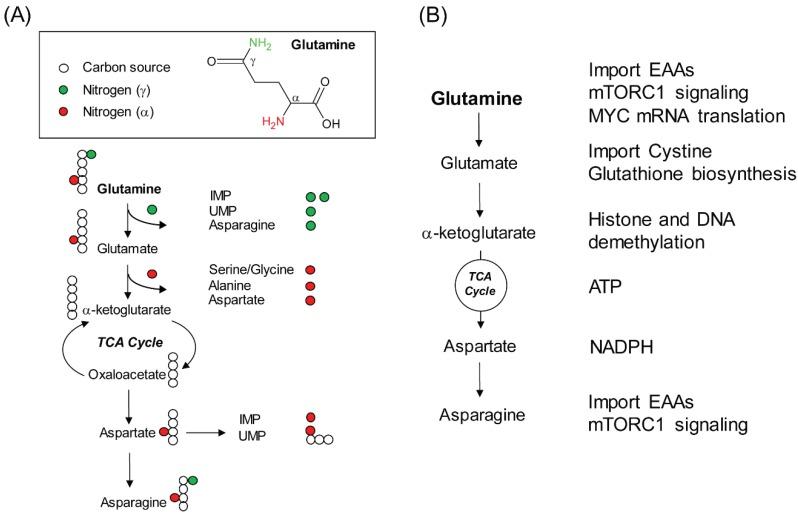
Distinct from normal differentiated tissues, cancer cells reprogram nutrient uptake and utilization to accommodate their elevated demands for biosynthesis and energy production. A hallmark of these types of reprogramming is the increased utilization of, and dependency on glutamine, a nonessential amino acid, for cancer cell growth and survival. It is well-accepted that glutamine is a versatile biosynthetic substrate in cancer cells beyond its role as a proteinogenic amino acid. In addition, accumulating evidence suggests that glutamine metabolism is regulated by many factors, including tumor origin, oncogene/tumor suppressor status, epigenetic alternations and tumor microenvironment. However, despite the emerging understanding of why cancer cells depend on glutamine for growth and survival, the contribution of glutamine metabolism to tumor progression under physiological conditions is still under investigation, partially because the level of glutamine in the tumor environment is often found low. Since targeting glutamine acquisition and utilization has been proposed to be a new therapeutic strategy in cancer, it is central to understand how tumor cells respond and adapt to glutamine starvation for optimized therapeutic intervention. In this review, we first summarize the diverse usage of glutamine to support cancer cell growth and survival, and then focus our discussion on the influence of other nutrients on cancer cell adaptation to glutamine starvation as well as its implication in cancer therapy.
与正常分化组织不同,癌细胞会重新编程营养物质的摄取和利用,以满足其对生物合成和能量产生不断增加的需求。这些类型的重编程的一个标志是,癌细胞生长和存活对非必需氨基酸谷氨酰胺的利用率增加且依赖性增强。人们普遍认为,谷氨酰胺在癌细胞中是一种多功能的生物合成底物,其作用超出了作为蛋白质氨基酸的范畴。此外,越来越多的证据表明,谷氨酰胺代谢受多种因素调控,包括肿瘤起源、癌基因/肿瘤抑制基因状态、表观遗传改变和肿瘤微环境。然而,尽管对于癌细胞为何依赖谷氨酰胺生长和存活的认识不断加深,但在生理条件下谷氨酰胺代谢对肿瘤进展的作用仍在研究中,部分原因是肿瘤环境中的谷氨酰胺水平通常较低。由于靶向谷氨酰胺的摄取和利用已被提议作为癌症的一种新治疗策略,了解肿瘤细胞如何应对和适应谷氨酰胺饥饿以进行优化的治疗干预至关重要。在这篇综述中,我们首先总结谷氨酰胺支持癌细胞生长和存活的多种用途,然后重点讨论其他营养物质对癌细胞适应谷氨酰胺饥饿的影响及其在癌症治疗中的意义。
 Zotero 插件