
共刺激分子和免疫检查点在不同亚群的树突状细胞上呈差异性表达。
Costimulatory Molecules and Immune Checkpoints Are Differentially Expressed on Different Subsets of Dendritic Cells.
机构信息
Department of Medical Biotechnologies and Translational Medicine, University of Milan, Milan, Italy.
Lab of Clinical and Experimental Immunology, Humanitas Clinical and Research Center, Rozzano, Italy.
出版信息
Front Immunol. 2019 Jun 11;10:1325. doi: 10.3389/fimmu.2019.01325. eCollection 2019.
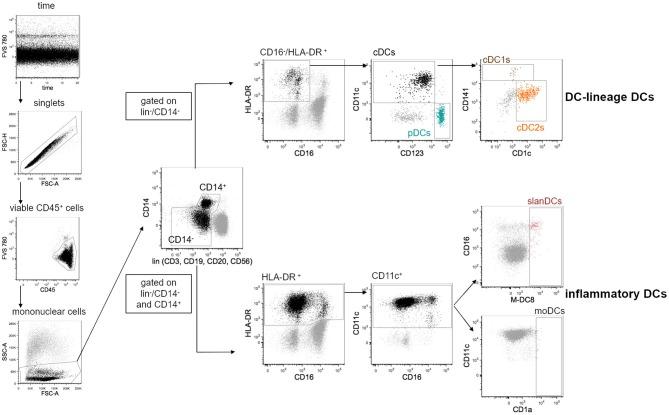
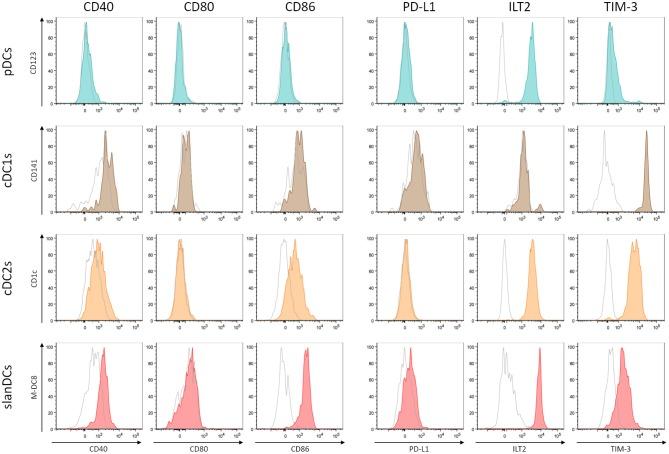
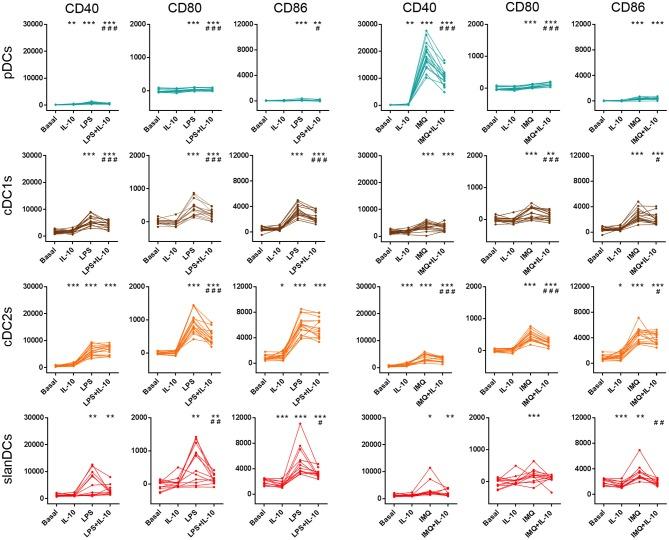
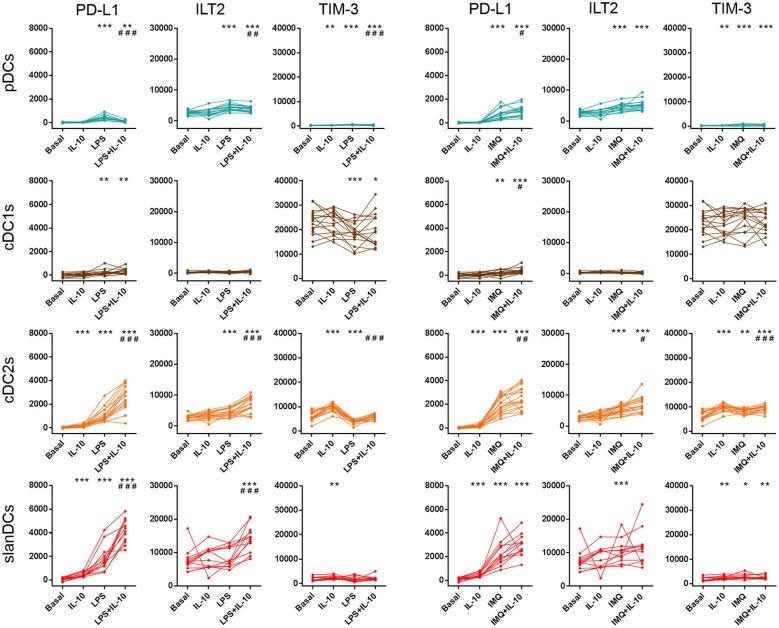
Dendritic cells (DCs) play a crucial role in initiating and shaping immune responses. The effects of DCs on adaptive immune responses depend partly on functional specialization of distinct DC subsets, and partly on the activation state of DCs, which is largely dictated by environmental signals. Fully activated immunostimulatory DCs express high levels of costimulatory molecules, produce pro-inflammatory cytokines, and stimulate T cell proliferation, whereas tolerogenic DCs express low levels of costimulatory molecules, produce immunomodulatory cytokines and impair T cell proliferation. Relevant to the increasing use of immune checkpoint blockade in cancer treatment, signals generated from inhibitory checkpoint molecules on DC surface may also contribute to the inhibitory properties of tolerogenic DCs. Yet, our knowledge on the expression of inhibitory molecules on human DC subsets is fragmentary. Therefore, in this study, we investigated the expression of three immune checkpoints on peripheral blood DC subsets, in basal conditions and upon exposure to pro-inflammatory and anti-inflammatory stimuli, by using a flow cytometric panel that allows a direct comparison of the activatory/inhibitory phenotype of DC-lineage and inflammatory DC subsets. We demonstrated that functionally distinct DC subsets are characterized by differential expression of activatory and inhibitory molecules, and that cDC1s in particular are endowed with a unique immune checkpoint repertoire characterized by high TIM-3 expression, scarce PD-L1 expression and lack of ILT2. Notably, this unique cDC1 repertoire was subverted in a group of patients with myelodysplastic syndromes included in the study. Applied to the characterization of DCs in the tumor microenvironment, this panel has the potential to provide valuable information to be used for investigating the role of DC subsets in cancer, guiding DC-targeting treatments, and possibly identifying predictive biomarkers for clinical response to cancer immunotherapy.
树突状细胞 (DCs) 在启动和塑造免疫反应中发挥着关键作用。DCs 对适应性免疫反应的影响部分取决于不同 DC 亚群的功能特化,部分取决于 DCs 的激活状态,而 DCs 的激活状态在很大程度上取决于环境信号。完全激活的免疫刺激型 DC 表达高水平的共刺激分子,产生促炎细胞因子,并刺激 T 细胞增殖,而耐受性 DC 表达低水平的共刺激分子,产生免疫调节细胞因子并抑制 T 细胞增殖。与免疫检查点阻断在癌症治疗中的应用日益增加相关的是,DC 表面抑制性检查点分子产生的信号也可能有助于耐受性 DC 的抑制特性。然而,我们对人 DC 亚群上抑制性分子的表达的了解是零碎的。因此,在这项研究中,我们通过流式细胞术面板研究了外周血 DC 亚群在基础条件下和暴露于促炎和抗炎刺激物时三种免疫检查点的表达,该面板允许直接比较 DC 谱系和炎症性 DC 亚群的激活/抑制表型。我们证明了功能不同的 DC 亚群具有不同的激活和抑制分子表达特征,特别是 cDC1 具有独特的免疫检查点谱,其特征是 TIM-3 表达高、PD-L1 表达低且缺乏 ILT2。值得注意的是,在纳入研究的一组骨髓增生异常综合征患者中,这种独特的 cDC1 谱被颠覆。应用于肿瘤微环境中 DC 的表征,该面板有可能提供有价值的信息,用于研究 DC 亚群在癌症中的作用、指导针对 DC 的治疗,并可能确定对癌症免疫治疗临床反应的预测生物标志物。



 Zotero 插件