
《2018年炎症性肠病在加拿大的影响:患有炎症性肠病的儿童和青少年》
The Impact of Inflammatory Bowel Disease in Canada 2018: Children and Adolescents with IBD.
作者信息
Carroll Matthew W, Kuenzig M Ellen, Mack David R, Otley Anthony R, Griffiths Anne M, Kaplan Gilaad G, Bernstein Charles N, Bitton Alain, Murthy Sanjay K, Nguyen Geoffrey C, Lee Kate, Cooke-Lauder Jane, Benchimol Eric I
机构信息
Canadian Gastro-Intestinal Epidemiology Consortium Ottawa, Canada.
Division of Gastroenterology, Hepatology and Nutrition, Department of Pediatrics, University of Alberta, Edmonton, Alberta, Canada.
出版信息
J Can Assoc Gastroenterol. 2019 Feb;2(Suppl 1):S49-S67. doi: 10.1093/jcag/gwy056. Epub 2018 Nov 2.
UNLABELLED
Canada has among the highest rates of childhood-onset IBD in the world. Over 7000 children and youth under 18 years old are living with IBD in Canada, and 600 to 650 children under 16 years old are diagnosed annually. While the peak age of onset of IBD is highest in the second and third decades of life, over the past two decades incidence has risen most rapidly in children under 5 years old. The treatment of children with IBD presents important challenges including therapeutic choices, risk of adverse events to medications, psychosocial impact on the child and family, increased cost of health care and the implications of the transition from pediatric to adult care. Despite the unique circumstances faced by children and their families, there is a lack of research to help understand the causes of the rising incidence and the best therapies for children with IBD. Scientific evidence-and specifically clinical trials of pharmaceuticals-are too often extrapolated from adult research. Health care providers must strive to understand the unique impact of childhood-onset IBD on patients and families, while researchers must expand work to address the important needs of this growing patient population.
HIGHLIGHTS
In 2018, there are over 7000 children and youth under 18 years old living with IBD in Canada, and 600 to 650 young children (under 16 years) diagnosed every year.The number of children in Canada living with IBD is growing rapidly, increasing 50% in the first decade of the 21st century.Inflammatory bowel disease is still rare in children younger than 5 years of age, but it is occurring in such young children more often than in the past.Children with IBD are different from adults. For example, delayed growth, extent of disease and difficulties encountered during adolescence are all unique to the pediatric experience.We must consider the psychosocial well-being of both children and their families, given that caring for a child with IBD can affect the global functioning of families.Treatment approaches in children sometimes differ from those in adults. However, to date, all effective therapies in adults have also been effective in children. There is great need for clinical trials of new therapies in children so that they have equal access to emerging treatments and optimal pediatric dosing can be established.
KEY SUMMARY POINTS
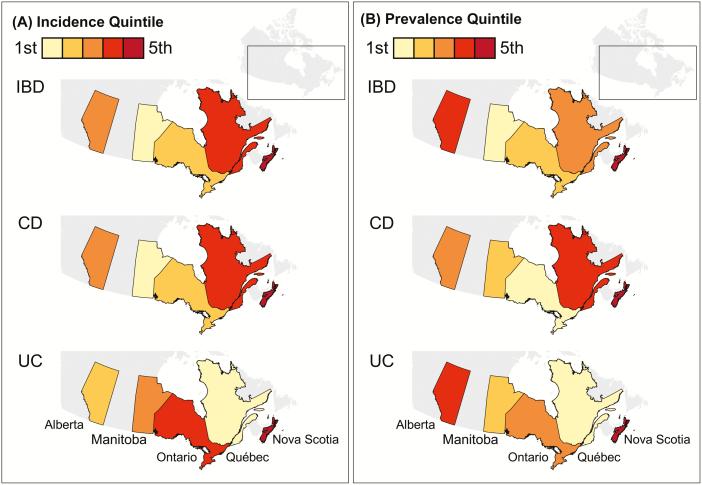
Rates of new diagnoses in children under 16 years old were increasing most rapidly in Ontario (increased 5.8% per year) and Quebec (increased 2.8% per year).Nova Scotia has the highest rate of pediatric IBD, with lower rates in Quebec and Ontario. However, even Ontario and Quebec have higher rates of pediatric IBD than most countries in the world.Inflammatory bowel disease is caused by the interaction between genes, environmental risk factors, the microbiome and the immune system. Since children experience shorter exposures and possibly fewer environmental risk factors, the interaction between these risk factors and genes may be stronger with childhood-onset IBD.The microbiome is mostly established in early childhood and is affected by a number of factors such as environment, diet, pregnancy/delivery factors and antibiotic use. Changing the microbiome to a healthier state may prevent the disease and may also be a novel therapeutic target to treat active inflammation in children with IBD.Children with IBD are different from adults. They are more likely to have extensive involvement of their intestines, especially in ulcerative colitis, and are at risk for growth impairment, osteoporosis, and psychosocial difficulties affecting their families.Children with IBD may incur more direct health costs for treatment of their IBD compared with adults. However, this is not universally true for all children because those who are very young at diagnosis (2 to 6 years old) may have milder disease or respond better to medications. This may result in decreased use of the health system, fewer hospitalizations and less risk of surgery than older children and adolescents.The choice of treatments for children with IBD may be different from that of adults. It is important to consider pediatric-specific disease considerations. Delayed growth, deficient bone development, psychosocial well-being of the child and family, disease extent, disease severity and risk of poor outcomes during transition from pediatric to adult health care are all important considerations when choosing the best treatment for children and adolescents.While the medications used are similar in children and adults with IBD, research to assess the effectiveness and safety of these medications in children (especially very young children) is sparse.Children with IBD may be more responsive to treatment than adults because they are more likely to have inflammatory (rather than stricturing) disease. Therefore, treating the inflammation earlier in the course of disease may prevent long-term complications such as strictures, obstruction, need for surgery and need for hospitalization.Some medications used in IBD have unique or more pronounced risks in children compared with adults. For example, chronic prednisone use is associated with growth impairment and stunting in children. Anti-TNF biologics are the only medications proven to improve growth in children with Crohn's disease and should be considered early in the course of disease in patients with severe IBD or those with marked growth impairment at the time of diagnosis.Some medications are used differently, depending on the sex of the patient. For example, azathioprine (with or without biologics) is associated with hepatosplenic T cell lymphoma (and other forms of lymphoma) in adolescent and young adult males more often than females. Methotrexate is associated with birth defects in the growing fetus and therefore should be avoided in adolescent and adult women of child-bearing age who are not using two or more forms of birth control.A small group of children, typically presenting in the first two years of life, have single-gene mutations that cause an IBD-like bowel disease and also immune system dysfunction. These patients may not respond to traditional IBD medications and may require therapies such as bone marrow transplant. Canada is leading research efforts to investigate, diagnose and treat this small group of very vulnerable children.Inflammatory bowel disease (especially when it is active) can affect school attendance, social interactions, concentration and learning. Schools should be aware of the implications of IBD and make allowances for these factors in children with active inflammation and symptoms to optimize their chances of academic and social success.
GAPS IN KNOWLEDGE AND FUTURE RESEARCH DIRECTIONS
We have limited knowledge on what causes IBD in children and why rates are rising most rapidly in young children. We must better understand the interaction between genes, the environment, the immune system and the microbiome in order to better prevent and treat the disease.Treatment for infants with IBD-like illnesses and single-gene mutations is limited. Future research should work towards identifying these children and learning how best to treat them.There are few clinical trials for biologics in children, and most exclude very young children. Support for such trials is important to understand whether the treatments work, how they should optimally be given and whether they are safe for young children with IBD.Considering the effectiveness of dietary therapies for children with Crohn's disease (exclusive enteral nutrition), we should work to understand how diet affects intestinal inflammation and the microbiome in order to better use dietary therapies to treat IBD.Health services researchers, health care providers and policy-makers should work together to understand why variation in the access to treatment and medical care of children with IBD exists. We must work together to improve the quality of care provided to these children and ensure they have the highest quality of care.Psychosocial implications of IBD in children and their families are of importance to long-term and overall well-being. Children with a chronic, incurable disease are at risk for mental illness associated with their disease. We should design interventions to improve the psychosocial status, mental health and quality of life of children with IBD and their families.While nonlive immunizations are safe for children with IBD, we must understand how to improve their effectiveness in children who are immunosuppressed. While the peak onset of IBD occurs in the second or third decades of life, the frequency of new diagnoses in younger children is rising rapidly. In Canada, the fastest growing group of newly diagnosed people with IBD are children aged under 5 years (termed 'very early onset [VEO] IBD). These young children have not been included in clinical trials of new medications, resulting in a lack of scientific evidence of safety and effectiveness of treatments in this group, and clinical experience has shown that they do not respond to usual medications used for the majority of children with IBD. Providing children with IBD with high-quality care and social support also poses other challenges to care providers, families and the health system. This section will focus on the unique challenges facing Canadian children with IBD. A complete overview of the objectives, working committees and methodology of creating the report can be found in the supplemental file, Technical Document.
未标注
加拿大是全球儿童期起病的炎症性肠病(IBD)发病率最高的国家之一。加拿大有超过7000名18岁以下的儿童和青少年患有IBD,每年有600至650名16岁以下的儿童被诊断出患有该病。虽然IBD的发病高峰年龄在二三十岁,但在过去二十年中,5岁以下儿童的发病率增长最为迅速。IBD患儿的治疗面临诸多重要挑战,包括治疗选择、药物不良事件风险、对儿童及其家庭的心理社会影响、医疗保健成本增加以及从儿科护理过渡到成人护理的影响。尽管儿童及其家庭面临着独特的情况,但缺乏相关研究来帮助了解发病率上升的原因以及IBD患儿的最佳治疗方法。科学证据——尤其是药物的临床试验——往往是从成人研究中推断出来的。医疗保健提供者必须努力了解儿童期起病的IBD对患者及其家庭的独特影响,而研究人员则必须扩大工作范围,以满足这一不断增长的患者群体的重要需求。
重点
2018年,加拿大有超过7000名18岁以下的儿童和青少年患有IBD,每年有600至650名幼儿(16岁以下)被诊断出患有该病。加拿大患有IBD的儿童数量正在迅速增长,在21世纪的第一个十年中增加了50%。炎症性肠病在5岁以下的儿童中仍然很少见,但在这些幼儿中发病的频率比过去更高。患有IBD的儿童与成人不同。例如,生长发育迟缓、疾病范围以及青春期遇到的困难都是儿科患者所特有的。鉴于照顾患有IBD的儿童会影响家庭的整体功能,我们必须考虑儿童及其家庭的心理社会福祉。儿童的治疗方法有时与成人不同。然而,迄今为止,所有在成人中有效的疗法在儿童中也同样有效。非常需要针对儿童的新疗法进行临床试验,以便他们能够平等地获得新兴治疗方法,并确定最佳的儿科用药剂量。
关键总结要点
16岁以下儿童的新诊断率在安大略省增长最为迅速(每年增长5.8%),在魁北克省增长速度为每年2.8%。新斯科舍省的儿科IBD发病率最高,魁北克省和安大略省的发病率较低。然而,即使是安大略省和魁北克省,其儿科IBD发病率也高于世界上大多数国家。炎症性肠病是由基因、环境风险因素、微生物群和免疫系统之间的相互作用引起的。由于儿童接触环境风险因素的时间较短,且可能接触的因素较少,因此这些风险因素与基因之间的相互作用在儿童期起病的IBD中可能更强。微生物群大多在幼儿期建立,并受到多种因素的影响,如环境、饮食、妊娠/分娩因素和抗生素使用。将微生物群转变为更健康的状态可能预防疾病,也可能成为治疗IBD患儿活动性炎症的新治疗靶点。患有IBD的儿童与成人不同。他们的肠道更容易广泛受累,尤其是在溃疡性结肠炎中,并且有生长发育受损、骨质疏松以及影响其家庭的心理社会困难的风险。与成人相比,患有IBD的儿童可能因治疗IBD而产生更多的直接医疗费用。然而,并非所有儿童都是如此,因为那些在诊断时非常年幼(2至6岁)的儿童可能病情较轻或对药物反应更好。这可能导致医疗系统的使用减少、住院次数减少以及手术风险低于年龄较大的儿童和青少年。IBD患儿的治疗选择可能与成人不同。考虑儿科特定的疾病因素很重要。生长发育迟缓、骨骼发育不足、儿童及其家庭的心理社会福祉、疾病范围、疾病严重程度以及从儿科医疗保健过渡到成人医疗保健期间不良结局的风险,都是为儿童和青少年选择最佳治疗方法时的重要考虑因素。虽然IBD患儿和成人使用的药物相似,但评估这些药物在儿童(尤其是非常年幼的儿童)中的有效性和安全性的研究很少。患有IBD的儿童可能比成人对治疗反应更敏感,因为他们更有可能患有炎症性(而非狭窄性)疾病。因此,在疾病过程中尽早治疗炎症可能预防长期并发症,如狭窄、梗阻、手术需求和住院需求。与成人相比,IBD中使用的一些药物在儿童中具有独特或更明显的风险。例如,长期使用泼尼松与儿童生长发育受损和发育迟缓有关。抗TNF生物制剂是唯一被证明能改善克罗恩病患儿生长的药物,对于患有严重IBD或诊断时生长明显受损的患者,应在疾病过程早期考虑使用。一些药物的使用因患者性别而异。例如,硫唑嘌呤(无论是否联合生物制剂)在青少年和年轻成年男性中比女性更常与肝脾T细胞淋巴瘤(以及其他形式的淋巴瘤)相关。甲氨蝶呤与发育中的胎儿出生缺陷有关,因此对于未采取两种或更多种避孕措施的育龄期青少年和成年女性应避免使用。一小部分儿童,通常在生命的头两年发病,具有单基因突变,导致类似IBD的肠道疾病以及免疫系统功能障碍。这些患者可能对传统的IBD药物无反应,可能需要进行骨髓移植等治疗。加拿大正在牵头开展研究工作,以调查、诊断和治疗这一小群非常脆弱的儿童。炎症性肠病(尤其是在活动期)会影响上学出勤率、社交互动、注意力和学习。学校应该意识到IBD的影响,并为患有活动性炎症和症状的儿童考虑这些因素,以优化他们在学业和社交方面取得成功的机会。
知识差距和未来研究方向
我们对儿童IBD的病因以及为何在幼儿中发病率增长最为迅速了解有限。我们必须更好地理解基因、环境、免疫系统和微生物群之间的相互作用,以便更好地预防和治疗该疾病。针对患有IBD样疾病和单基因突变的婴儿的治疗方法有限。未来的研究应致力于识别这些儿童,并了解如何最好地治疗他们。针对儿童生物制剂的临床试验很少,而且大多数试验排除了非常年幼的儿童。支持此类试验对于了解这些治疗方法是否有效、应如何最佳给药以及对患有IBD的幼儿是否安全非常重要。考虑到饮食疗法对克罗恩病患儿(全肠内营养)的有效性,我们应该努力了解饮食如何影响肠道炎症和微生物群,以便更好地利用饮食疗法治疗IBD。卫生服务研究人员、医疗保健提供者和政策制定者应共同努力,了解IBD患儿在获得治疗和医疗保健方面存在差异的原因。我们必须共同努力提高为这些儿童提供的护理质量,并确保他们获得最高质量的护理。IBD对儿童及其家庭的心理社会影响对长期和整体福祉至关重要。患有慢性、不治之症的儿童有患与疾病相关的精神疾病的风险。我们应该设计干预措施,以改善患有IBD的儿童及其家庭的心理社会状况、心理健康和生活质量。虽然非活疫苗对患有IBD的儿童是安全的,但我们必须了解如何提高其在免疫抑制儿童中的有效性。虽然IBD的发病高峰出现在二三十岁,但年幼儿童的新诊断频率正在迅速上升。在加拿大,新诊断出患有IBD的人群中增长最快的是5岁以下的儿童(称为“极早发[VEO]IBD”)。这些年幼儿童未被纳入新药的临床试验,导致缺乏该组治疗安全性和有效性的科学证据,临床经验表明他们对大多数IBD患儿常用的药物无反应。为患有IBD的儿童提供高质量的护理和社会支持也给护理提供者、家庭和卫生系统带来了其他挑战。本节将重点关注加拿大患有IBD的儿童所面临的独特挑战。创建该报告的目标、工作委员会和方法的完整概述可在补充文件《技术文件》中找到。

 Zotero 插件