
用恶性疟原虫进行人体疟疾感染控制实验表明了自然获得性免疫对毒力基因表达的影响。
Controlled human malaria infection with Plasmodium falciparum demonstrates impact of naturally acquired immunity on virulence gene expression.
机构信息
Department of Molecular Parasitology, Bernhard Nocht Institute for Tropical Medicine, Hamburg, Germany.
German Center for Infection Research (DZIF), partner site Hamburg-Borstel-Lübeck-Riems, Germany.
出版信息
PLoS Pathog. 2019 Jul 11;15(7):e1007906. doi: 10.1371/journal.ppat.1007906. eCollection 2019 Jul.
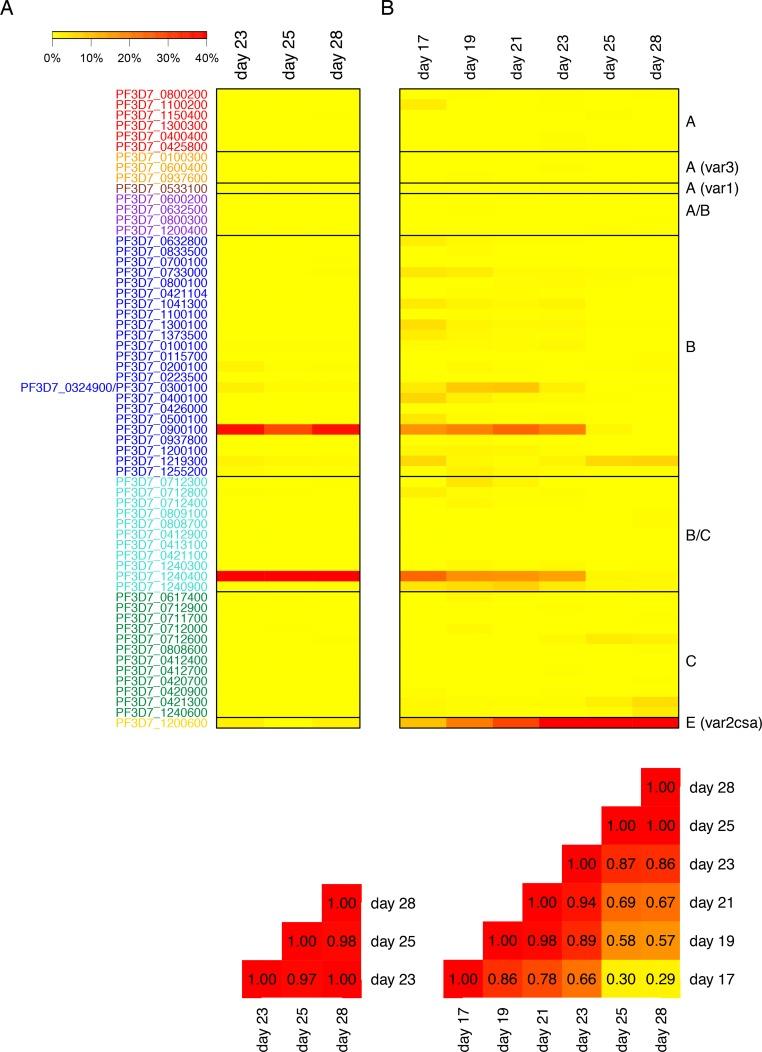
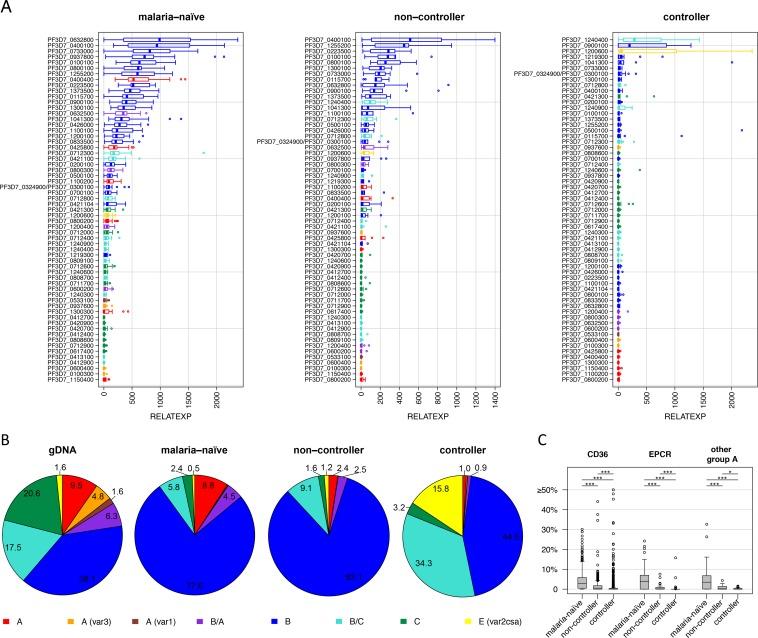
The pathogenesis of Plasmodium falciparum malaria is linked to the variant surface antigen PfEMP1, which mediates tethering of infected erythrocytes to the host endothelium and is encoded by approximately 60 var genes per parasite genome. Repeated episodes of malaria infection result in the gradual acquisition of protective antibodies against PfEMP1 variants. The antibody repertoire is believed to provide a selective pressure driving the clonal expansion of parasites expressing unrecognized PfEMP1 variants, however, due to the lack of experimental in vivo models there is only limited experimental evidence in support of this concept. To get insight into the impact of naturally acquired immunity on the expressed var gene repertoire early during infection we performed controlled human malaria infections of 20 adult African volunteers with life-long malaria exposure using aseptic, purified, cryopreserved P. falciparum sporozoites (Sanaria PfSPZ Challenge) and correlated serological data with var gene expression patterns from ex vivo parasites. Among the 10 African volunteers who developed patent infections, individuals with low antibody levels showed a steep rise in parasitemia accompanied by broad activation of multiple, predominantly subtelomeric var genes, similar to what we previously observed in naïve volunteers. In contrast, individuals with intermediate antibody levels developed asymptomatic infections and the ex vivo parasite populations expressed only few var gene variants, indicative of clonal selection. Importantly, in contrast to parasites from naïve volunteers, expression of var genes coding for endothelial protein C receptor (EPCR)-binding PfEMP1 that are associated with severe childhood malaria was rarely detected in semi-immune adult African volunteers. Moreover, we followed var gene expression for up to six parasite replication cycles and demonstrated for the first time in vivo a shift in the dominant var gene variant. In conclusion, our data suggest that P. falciparum activates multiple subtelomeric var genes at the onset of blood stage infection facilitating rapid expansion of parasite clones which express PfEMP1 variants unrecognized by the host's immune system, thus promoting overall parasite survival in the face of host immunity.
恶性疟原虫疟疾的发病机制与变异表面抗原 PfEMP1 有关,PfEMP1 介导感染的红细胞与宿主内皮细胞的连接,每个寄生虫基因组约编码 60 个 var 基因。反复发生的疟疾感染导致逐渐获得针对 PfEMP1 变体的保护性抗体。抗体库被认为提供了选择压力,推动表达未被宿主免疫系统识别的 PfEMP1 变体的寄生虫的克隆扩增,然而,由于缺乏体内实验模型,仅有有限的实验证据支持这一概念。为了深入了解自然获得性免疫对感染早期表达的 var 基因库的影响,我们对 20 名长期接触疟疾的成年非洲志愿者进行了受控的人类疟疾感染,使用无菌、纯化、冷冻保存的恶性疟原虫孢子(Sanaria PfSPZ Challenge),并将血清学数据与来自体外寄生虫的 var 基因表达模式相关联。在 10 名出现可检测感染的非洲志愿者中,抗体水平较低的个体伴随着广泛激活多个主要位于端粒下的 var 基因,寄生虫血症急剧上升,类似于我们之前在初次感染的志愿者中观察到的情况。相比之下,抗体水平中等的个体发展为无症状感染,体外寄生虫群体仅表达少数 var 基因变体,表明存在克隆选择。重要的是,与初次感染的志愿者中的寄生虫不同,与严重儿童疟疾相关的内皮蛋白 C 受体(EPCR)结合 PfEMP1 的 var 基因表达很少在半免疫的成年非洲志愿者中检测到。此外,我们对 var 基因表达进行了长达 6 个寄生虫复制周期的跟踪,并首次在体内证明了主要 var 基因变体的转变。总之,我们的数据表明,恶性疟原虫在血液期感染开始时激活多个端粒下 var 基因,促进表达宿主免疫系统未识别的 PfEMP1 变体的寄生虫克隆快速扩增,从而在宿主免疫的情况下促进寄生虫的整体存活。


 Zotero 插件