
远程患者监测对临床结局的影响:随机对照试验的最新荟萃分析
Impact of remote patient monitoring on clinical outcomes: an updated meta-analysis of randomized controlled trials.
作者信息
Noah Benjamin, Keller Michelle S, Mosadeghi Sasan, Stein Libby, Johl Sunny, Delshad Sean, Tashjian Vartan C, Lew Daniel, Kwan James T, Jusufagic Alma, Spiegel Brennan M R
机构信息
1Division of Health Services Research, Cedars-Sinai Medical Center, Los Angeles, CA USA.
Cedars-Sinai Center for Outcomes Research and Education (CS-CORE), Los Angeles, CA USA.
出版信息
NPJ Digit Med. 2018 Jan 15;1:20172. doi: 10.1038/s41746-017-0002-4. eCollection 2018.
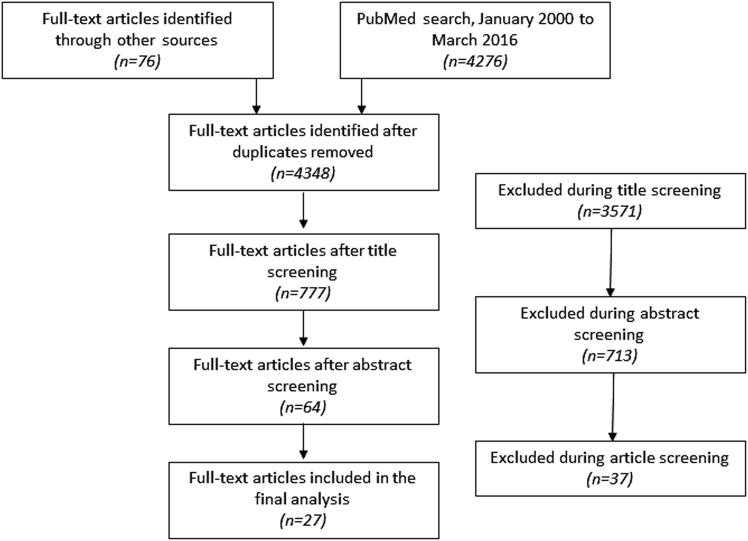
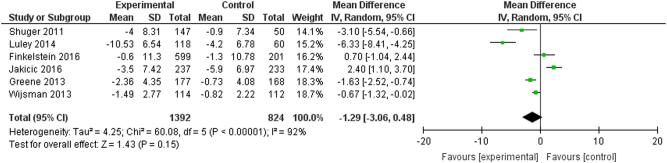
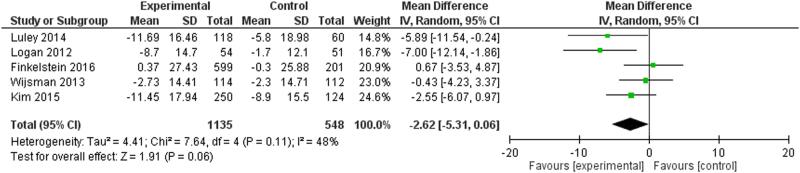
Despite growing interest in remote patient monitoring, limited evidence exists to substantiate claims of its ability to improve outcomes. Our aim was to evaluate randomized controlled trials (RCTs) that assess the effects of using wearable biosensors (e.g. activity trackers) for remote patient monitoring on clinical outcomes. We expanded upon prior reviews by assessing effectiveness across indications and presenting quantitative summary data. We searched for articles from January 2000 to October 2016 in PubMed, reviewed 4,348 titles, selected 777 for abstract review, and 64 for full text review. A total of 27 RCTs from 13 different countries focused on a range of clinical outcomes and were retained for final analysis; of these, we identified 16 high-quality studies. We estimated a difference-in-differences random effects meta-analysis on select outcomes. We weighted the studies by sample size and used 95% confidence intervals (CI) around point estimates. Difference-in-difference point estimation revealed no statistically significant impact of remote patient monitoring on any of six reported clinical outcomes, including body mass index (-0.73; 95% CI: -1.84, 0.38), weight (-1.29; -3.06, 0.48), waist circumference (-2.41; -5.16, 0.34), body fat percentage (0.11; -1.56, 1.34), systolic blood pressure (-2.62; -5.31, 0.06), and diastolic blood pressure (-0.99; -2.73, 0.74). Studies were highly heterogeneous in their design, device type, and outcomes. Interventions based on health behavior models and personalized coaching were most successful. We found substantial gaps in the evidence base that should be considered before implementation of remote patient monitoring in the clinical setting.
尽管对远程患者监测的兴趣日益浓厚,但支持其改善治疗效果的证据仍然有限。我们的目的是评估随机对照试验(RCT),这些试验评估使用可穿戴生物传感器(如活动追踪器)进行远程患者监测对临床结果的影响。我们通过评估不同适应症的有效性并提供定量汇总数据,对先前的综述进行了扩展。我们在PubMed中搜索了2000年1月至2016年10月的文章,审查了4348个标题,选择了777篇进行摘要审查,64篇进行全文审查。共有来自13个不同国家的27项RCT关注一系列临床结果,并被保留用于最终分析;其中,我们确定了16项高质量研究。我们对选定的结果进行了差异-in-差异随机效应荟萃分析。我们根据样本量对研究进行加权,并在点估计周围使用95%置信区间(CI)。差异-in-差异点估计显示,远程患者监测对报告的六项临床结果中的任何一项均无统计学显著影响,包括体重指数(-0.73;95%CI:-1.84,0.38)、体重(-1.29;-3.06,0.48)、腰围(-2.41;-5.16,0.34)、体脂百分比(0.11;-1.56,1.34)、收缩压(-2.62;-5.31,0.06)和舒张压(-0.99;-2.73,0.74)。研究在设计、设备类型和结果方面存在高度异质性。基于健康行为模型和个性化指导的干预最为成功。我们发现证据基础存在重大差距,在临床环境中实施远程患者监测之前应予以考虑。




 Zotero 插件