
长链非编码 RNA SNHG6 通过靶向 ETS1 抑制结直肠癌细胞的增殖和转移,其作用机制与 PI3K/AKT/mTOR 通路有关。
LncRNA SNHG6 inhibits cell proliferation and metastasis by targeting ETS1 via the PI3K/AKT/mTOR pathway in colorectal cancer.
机构信息
Department of Medical Oncology, Cancer Hospital of China Medical University, Liaoning Cancer Hospital and Institute, Shenyang, Liaoning 110042, P.R. China.
出版信息
Mol Med Rep. 2019 Sep;20(3):2541-2548. doi: 10.3892/mmr.2019.10510. Epub 2019 Jul 19.
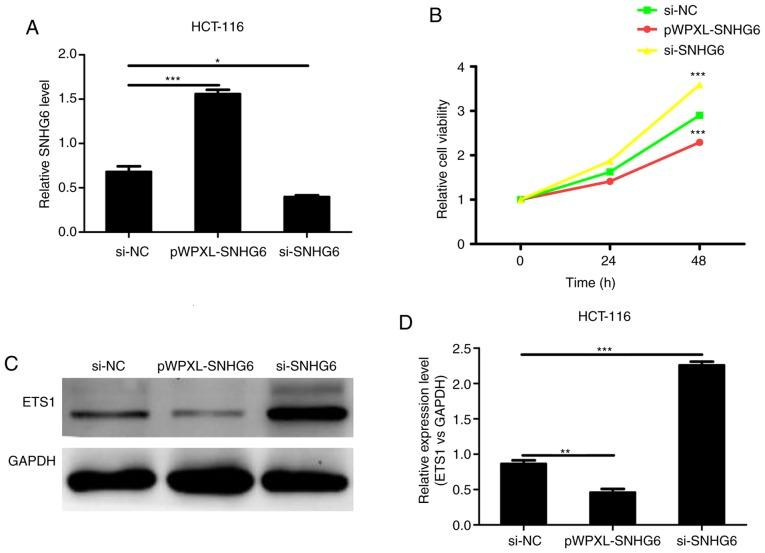
The term 'long non‑coding RNAs' (lncRNAs) refers to all non‑protein coding transcripts >200 nucleotides in length. Dysregulation of lncRNAs has been identified in colorectal cancer, which is one of the more serious types of cancer worldwide, third place in the mortality rates, and is associated with poor prognoses. Novel evidence suggests that lncRNAs serve an important role in regulating the development and progression of colorectal cancer. In the present study, it was demonstrated that SNHG6 expression was downregulated in colorectal cancer tissues by reverse transcription quantitative polymerase chain reaction assays; however, ETS1 expression levels were upregulated. Overexpression of SNHG6 not only inhibited the proliferation of colon cancer cells in vitro by inducing apoptosis, but also inhibited cell proliferation, invasion and migration. The overexpression of SNHG6 inhibited colon cell viability and proliferation by targeting ETS1 through the phosphoinositide 3‑kinase/protein kinase B/mechanistic target of rapamycin signaling pathway. These results suggested that SNHG6 may directly suppress ETS1, which may be one of potential mechanisms through which it inhibits the viability and proliferation of colorectal cancer cells, and it provides novel insight into the carcinogenesis of colorectal cancer. In addition, it may assist in the development of a treatment approach for ETS1‑activated colorectal cancer.
“长链非编码 RNA”(lncRNAs)是指长度大于 200 个核苷酸的所有非蛋白编码转录本。lncRNAs 在结直肠癌中的失调已被确定,结直肠癌是全球较为严重的癌症类型之一,死亡率排名第三,与预后不良相关。新的证据表明,lncRNAs 在调节结直肠癌的发生和发展中起着重要作用。在本研究中,通过逆转录定量聚合酶链反应(RT-qPCR)实验证实 SNHG6 在结直肠癌组织中表达下调,而 ETS1 的表达水平上调。SNHG6 的过表达不仅通过诱导细胞凋亡抑制体外结肠癌细胞的增殖,还抑制细胞增殖、侵袭和迁移。SNHG6 的过表达通过磷酸肌醇 3-激酶/蛋白激酶 B/雷帕霉素靶蛋白信号通路靶向 ETS1 抑制结肠细胞活力和增殖。这些结果表明,SNHG6 可能直接抑制 ETS1,这可能是其抑制结直肠癌细胞活力和增殖的潜在机制之一,为结直肠癌的发生提供了新的见解。此外,它可能有助于开发针对 ETS1 激活的结直肠癌的治疗方法。




 Zotero 插件