
一项针对唇裂三联体的全基因组扫描发现了基因与母亲吸烟之间以及基因与饮酒之间的亲本来源相互作用效应。
A genome-wide scan of cleft lip triads identifies parent-of-origin interaction effects between and maternal smoking, and between and alcohol consumption.
作者信息
Haaland Øystein Ariansen, Romanowska Julia, Gjerdevik Miriam, Lie Rolv Terje, Gjessing Håkon Kristian, Jugessur Astanand
机构信息
Department of Global Public Health and Primary Care, University of Bergen, Bergen, N-5020, Norway.
Computational Biology Unit, University of Bergen, Bergen, N-5020, Norway.
出版信息
F1000Res. 2019 Jun 24;8:960. doi: 10.12688/f1000research.19571.2. eCollection 2019.
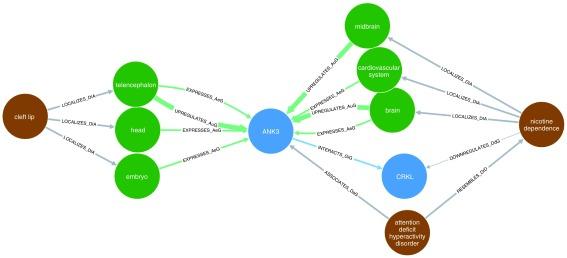
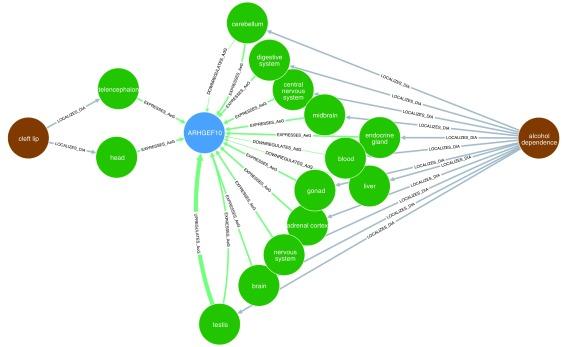
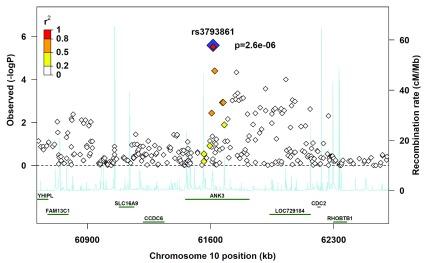
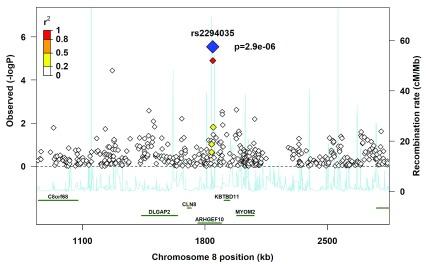
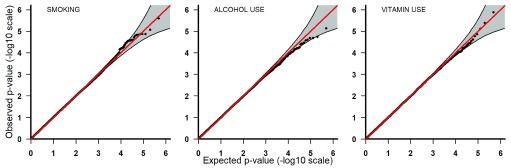
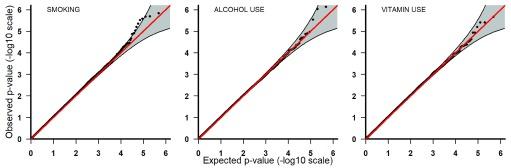
Although both genetic and environmental factors have been reported to influence the risk of isolated cleft lip with or without cleft palate (CL/P), the exact mechanisms behind CL/P are still largely unaccounted for. We recently developed new methods to identify parent-of-origin (PoO) interactions with environmental exposures (PoOxE) and now apply them to data from a genome-wide association study (GWAS) of families with children born with isolated CL/P. Genotypes from 1594 complete triads and 314 dyads (1908 nuclear families in total) with CL/P were available for the current analyses. Of these families, 1024 were Asian, 825 were European and 59 had other ancestries. After quality control, 341,191 SNPs remained from the original 569,244. The exposures were maternal cigarette smoking, use of alcohol, and use of vitamin supplements in the periconceptional period. Our new methodology detects if PoO effects are different across environmental strata and is implemented in the -package Haplin. Among Europeans, there was evidence of a PoOxSmoke effect for with three SNPs (rs3793861, q=0.20, p=2.6e-6; rs7087489, q=0.20, p=3.1e-6; rs4310561, q=0.67, p=4.0e-5) and a PoOxAlcohol effect for with two SNPs (rs2294035, q=0.32, p=2.9e-6; rs4876274, q=0.76, p=1.3e-5). Our results indicate that the detected PoOxE effects have a plausible biological basis, and thus warrant replication in other independent cleft samples. Our demonstration of the feasibility of identifying complex interactions between relevant environmental exposures and PoO effects offers new avenues for future research aimed at unravelling the complex etiology of cleft lip defects.
尽管已有报道称遗传因素和环境因素都会影响单纯性唇裂伴或不伴腭裂(CL/P)的发病风险,但CL/P背后的确切机制仍很大程度上未得到解释。我们最近开发了新方法来识别亲源(PoO)与环境暴露的相互作用(PoOxE),现在将其应用于一项针对有CL/P患儿家庭的全基因组关联研究(GWAS)数据。本分析可获取1594个完整三联体和314个二元组(共1908个核心家庭)有CL/P患儿家庭的基因型。在这些家庭中,1024个是亚洲家庭,825个是欧洲家庭,59个有其他血统。经过质量控制后,原始的569,244个单核苷酸多态性(SNP)中剩下341,191个。暴露因素为孕期吸烟、饮酒以及孕期使用维生素补充剂。我们的新方法可检测PoO效应在不同环境层次中是否存在差异,并已在Haplin软件包中实现。在欧洲人中,有证据表明三个SNP(rs3793861,q = 0.20,p = 2.6×10⁻⁶;rs7087489,q = 0.20,p = 3.1×10⁻⁶;rs4310561,q = 0.67,p = 4.0×10⁻⁵)存在PoO×吸烟效应,两个SNP(rs2294035,q = 0.32,p = 2.9×10⁻⁶;rs4876274,q = 0.76,p = 1.3×10⁻⁵)存在PoO×饮酒效应。我们的结果表明,检测到的PoOxE效应具有合理的生物学基础,因此有必要在其他独立的唇裂样本中进行重复验证。我们证明了识别相关环境暴露与PoO效应之间复杂相互作用的可行性,为未来旨在揭示唇裂缺陷复杂病因的研究提供了新途径。


 Zotero 插件