
通过生物信息学分析鉴定与乙型肝炎病毒相关肝细胞癌相关的重要基因和通路。
Identification of significant gene and pathways involved in HBV-related hepatocellular carcinoma by bioinformatics analysis.
作者信息
Xie Shucai, Jiang Xili, Zhang Jianquan, Xie Shaowei, Hua Yongyong, Wang Rui, Yang Yijun
机构信息
Department of Hepatobiliary Surgery, Haikou People's Hospital/Affiliated Haikou Hospital of Xiangya Medical College, Central South University, Haikou, Hainan, China.
Department of Radiology, The Second People's Hospital of Hunan Province/Brain Hospital of Hunan Province, Changsha, China.
出版信息
PeerJ. 2019 Jul 30;7:e7408. doi: 10.7717/peerj.7408. eCollection 2019.
BACKGROUND
Hepatocellular carcinoma (HCC) is a common malignant tumor affecting the digestive system and causes serious financial burden worldwide. Hepatitis B virus (HBV) is the main causative agent of HCC in China. The present study aimed to investigate the potential mechanisms underlying HBV-related HCC and to identify core biomarkers by integrated bioinformatics analyses.
METHODS
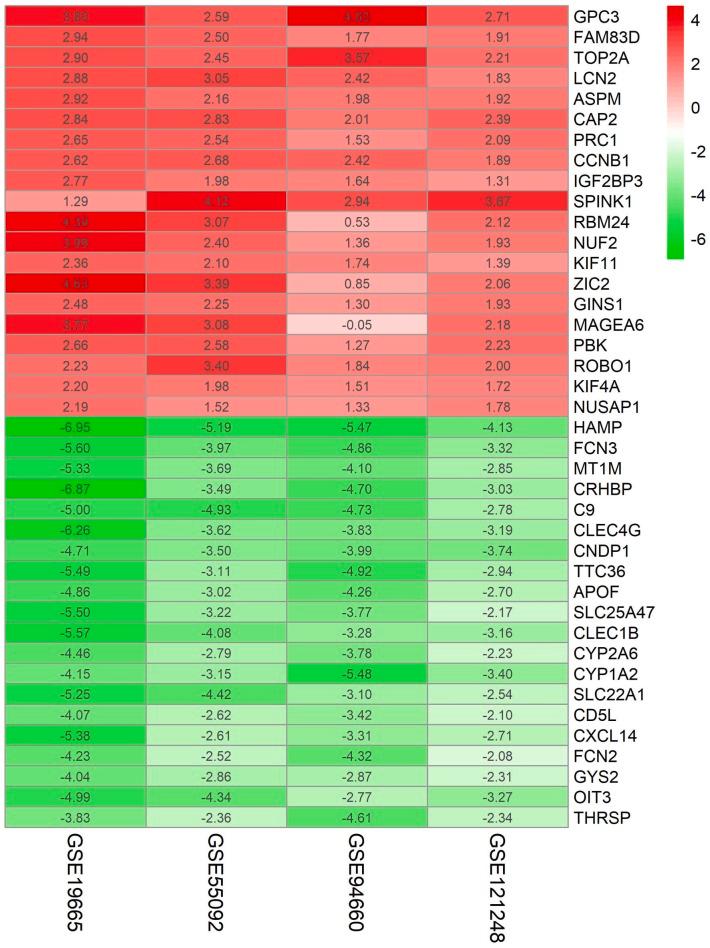
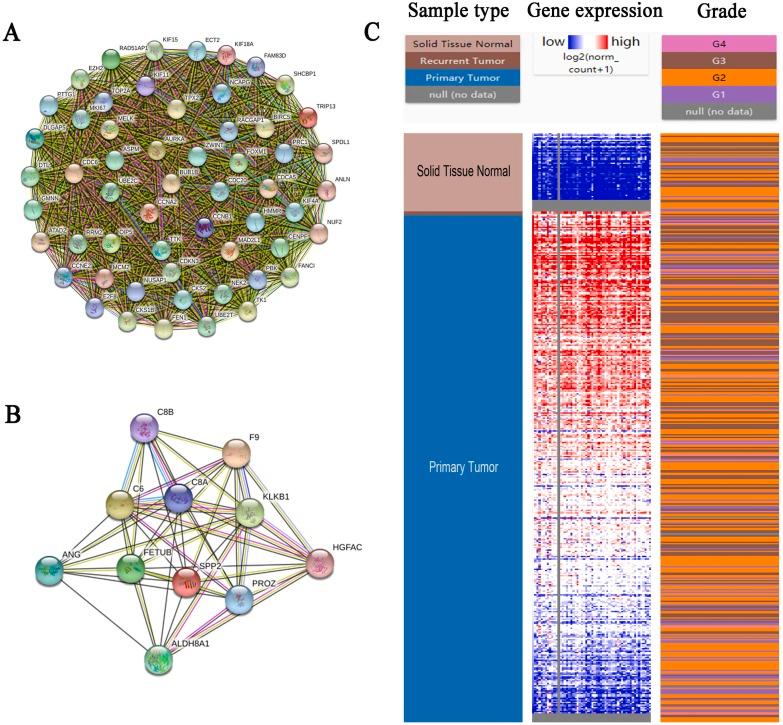
In the present study, HBV-related HCC GSE19665, GSE55092, GSE94660 and GSE121248 expression profiles were downloaded from the Gene Expression Omnibus database. These databases contain data for 299 samples, including 145 HBV-related HCC tissues and 154 non-cancerous tissues (from patients with chronic hepatitis B). The differentially expressed genes (DEGs) from each dataset were integrated and analyzed using the RobustRankAggreg (RRA) method and R software, and the integrated DEGs were identified. Subsequently, the gene ontology (GO) functional annotation and Kyoto Encyclopedia of Genes and Genomes (KEGG) pathway analysis were performed using the DAVID online tool, and the protein-protein interaction (PPI) network was constructed using STRING and visualized using Cytoscape software. Finally, hub genes were identified, and the cBioPortal online platform was used to analyze the association between the expression of hub genes and prognosis in HCC.
RESULTS
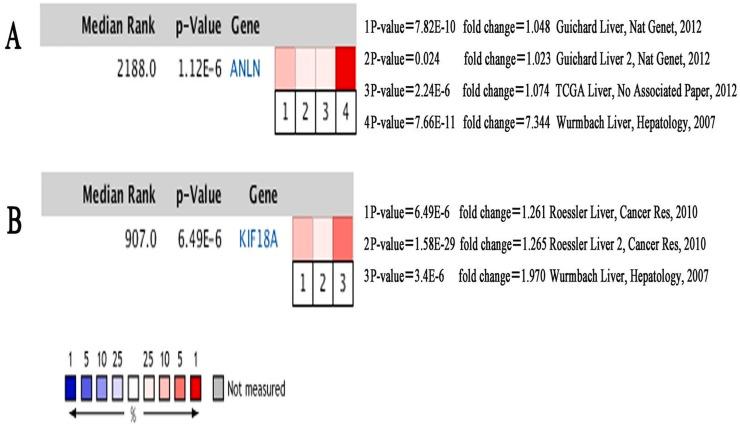
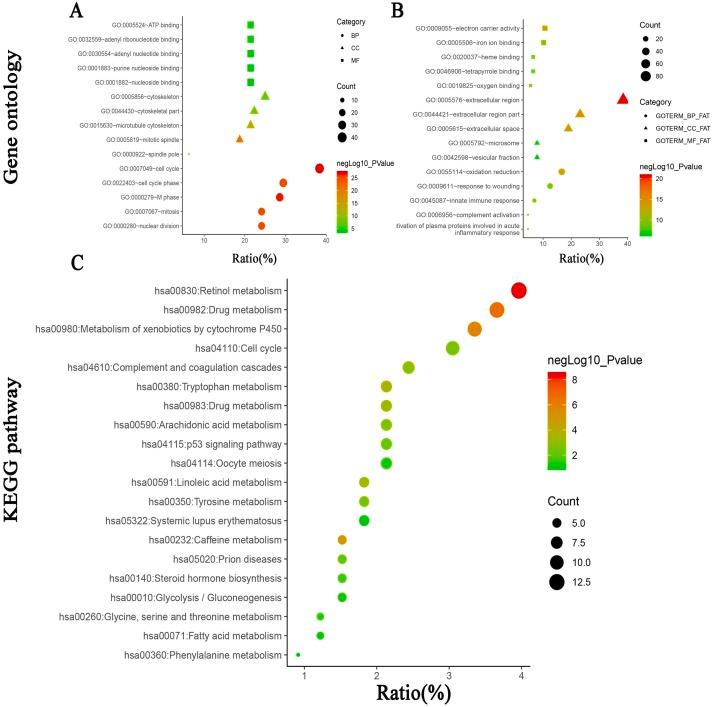
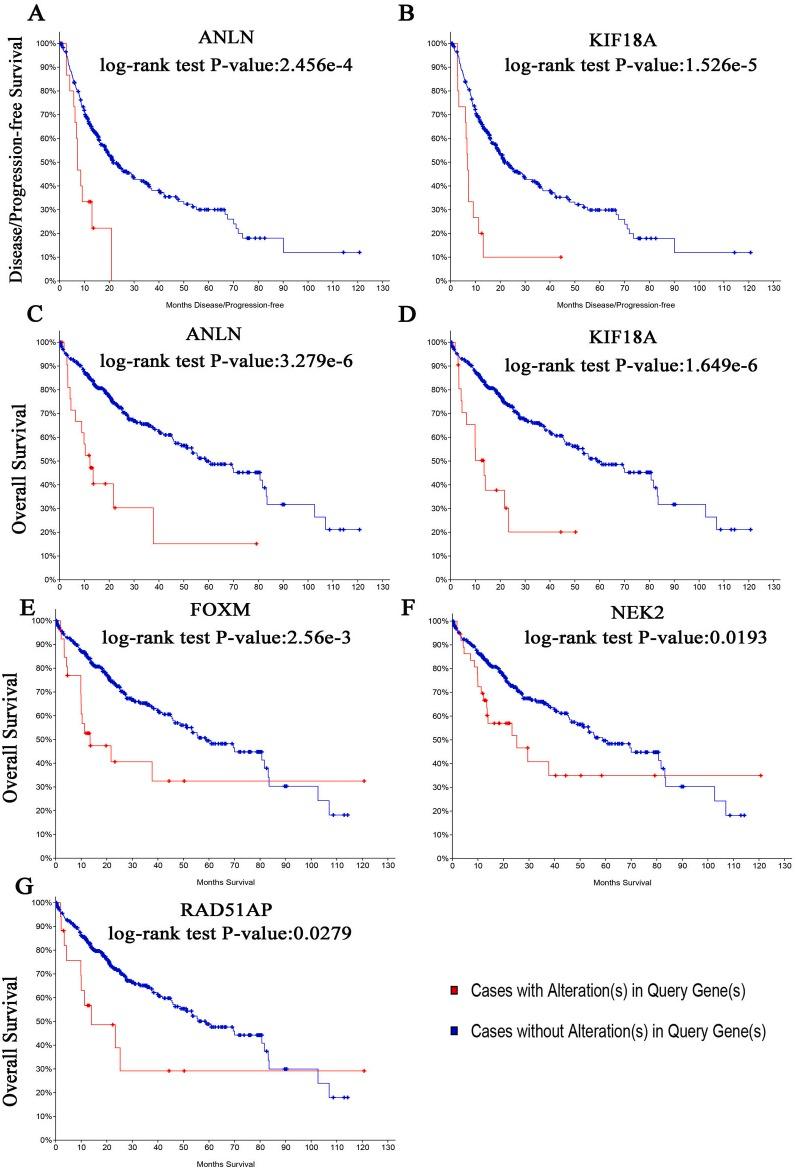
First, 341 DEGs (117 upregulated and 224 downregulated) were identified from the four datasets. Next, GO analysis showed that the upregulated genes were mainly involved in cell cycle, mitotic spindle, and adenosine triphosphate binding. The majority of the downregulated genes were involved in oxidation reduction, extracellular region, and electron carrier activity. Signaling pathway analysis showed that the integrated DEGs shared common pathways in retinol metabolism, drug metabolism, tryptophan metabolism, caffeine metabolism, and metabolism of xenobiotics by cytochrome P450. The integrated DEG PPI network complex comprised 288 nodes, and two important modules with high degree were detected using the MCODE plug-in. The top ten hub genes identified from the PPI network were SHCBP1, FOXM1, KIF4A, ANLN, KIF15, KIF18A, FANCI, NEK2, ECT2, and RAD51AP1. Finally, survival analysis revealed that patients with HCC showing altered ANLN and KIF18A expression profiles showed worse disease-free survival. Nonetheless, patients with FOXM1, NEK2, RAD51AP1, ANLN, and KIF18A alterations showed worse overall survival.
CONCLUSIONS
The present study identified key genes and pathways involved in HBV-related HCC, which improved our understanding of the mechanisms underlying the development and recurrence of HCC and identified candidate targets for the diagnosis and treatment of HBV-related HCC.
背景
肝细胞癌(HCC)是一种常见的影响消化系统的恶性肿瘤,在全球范围内造成严重的经济负担。乙型肝炎病毒(HBV)是中国HCC的主要致病因素。本研究旨在通过综合生物信息学分析探讨HBV相关HCC的潜在机制,并鉴定核心生物标志物。
方法
在本研究中,从基因表达综合数据库下载了HBV相关HCC的GSE19665、GSE55092、GSE94660和GSE121248表达谱。这些数据库包含299个样本的数据,包括145个HBV相关HCC组织和154个非癌组织(来自慢性乙型肝炎患者)。使用稳健排名聚合(RRA)方法和R软件对每个数据集的差异表达基因(DEG)进行整合和分析,并鉴定整合后的DEG。随后,使用DAVID在线工具进行基因本体(GO)功能注释和京都基因与基因组百科全书(KEGG)通路分析,并使用STRING构建蛋白质-蛋白质相互作用(PPI)网络,并用Cytoscape软件进行可视化。最后,鉴定枢纽基因,并使用cBioPortal在线平台分析枢纽基因表达与HCC预后之间的关联。
结果
首先,从四个数据集中鉴定出341个DEG(117个上调和224个下调)。接下来,GO分析表明上调基因主要参与细胞周期、有丝分裂纺锤体和三磷酸腺苷结合。大多数下调基因参与氧化还原、细胞外区域和电子载体活性。信号通路分析表明,整合后的DEG在视黄醇代谢、药物代谢、色氨酸代谢、咖啡因代谢和细胞色素P450对外源生物的代谢中共享共同通路。整合后的DEG PPI网络复合体包含288个节点,使用MCODE插件检测到两个具有高度重要性的模块。从PPI网络中鉴定出的前十个枢纽基因是SHCBP1、FOXM1、KIF4A、ANLN、KIF15、KIF18A、FANCI、NEK2、ECT2和RAD51AP1。最后,生存分析显示,ANLN和KIF18A表达谱改变的HCC患者无病生存期较差。尽管如此,FOXM1、NEK2、RAD51AP1、ANLN和KIF18A改变的患者总生存期较差。
结论
本研究鉴定了与HBV相关HCC相关的关键基因和通路,这提高了我们对HCC发生和复发机制的理解,并鉴定了HBV相关HCC诊断和治疗的候选靶点。


 Zotero 插件