
日本血吸虫雌雄虫在未配对、初始配对和产卵期的差异基因表达,包括 Sjfs800。
Differential gene expression, including Sjfs800, in Schistosoma japonicum females at pre-pairing, initial pairing and oviposition.
机构信息
Department of Microbiology and Parasitology, School of Basic Medical Sciences, Anhui Medical University, 81# Meishan Road, Hefei, 230032, Anhui, People's Republic of China.
Anhui Provincial Laboratory of Microbiology and Parasitology, Anhui Medical University, 81# Meishan Road, Hefei, 230032, Anhui, People's Republic of China.
出版信息
Parasit Vectors. 2019 Aug 23;12(1):414. doi: 10.1186/s13071-019-3672-8.
BACKGROUND
Schistosomiasis is a prevalent but neglected tropical disease caused by parasitic trematodes of the genus Schistosoma, with the primary disease-causing species being S. haematobium, S. mansoni and S. japonicum. Male-female pairing of schistosomes is necessary for sexual maturity and the production of a large number of eggs, which are primarily responsible for schistosomiasis dissemination and pathology.
METHODS
Here, we used microarray hybridization, bioinformatics, quantitative PCR, in situ hybridization and gene silencing assays to identify genes that play critical roles in S. japonicum reproduction biology, particularly in vitellarium development, a process that affects male-female pairing, sexual maturation and subsequent egg production.
RESULTS
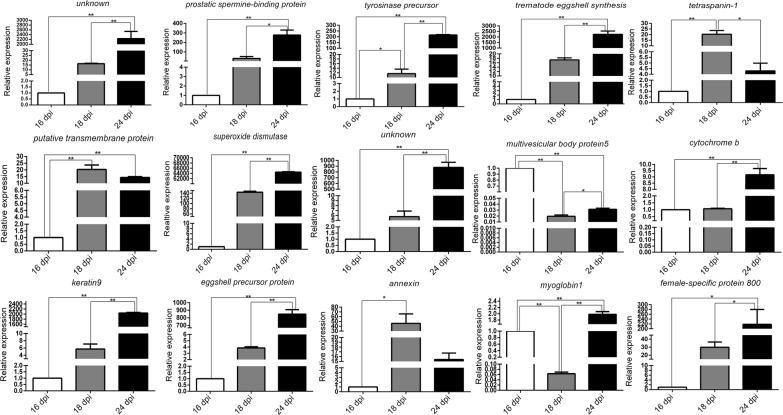
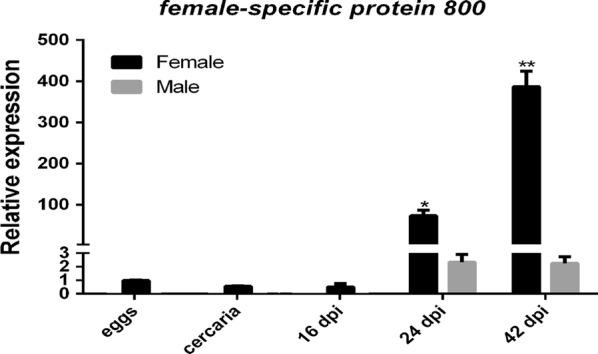
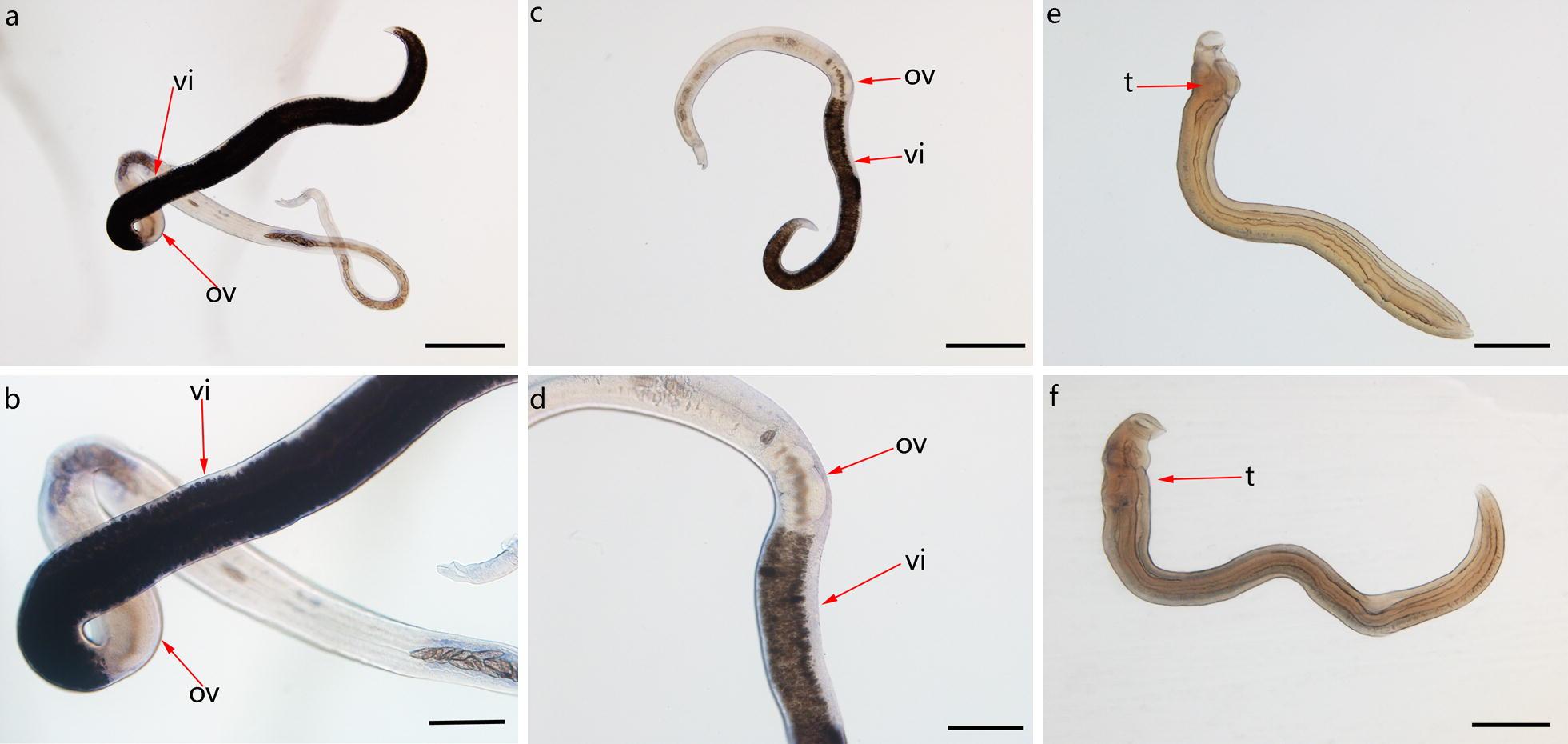
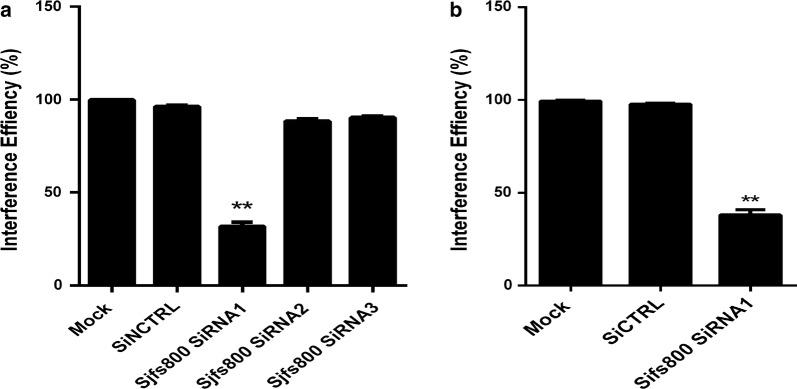
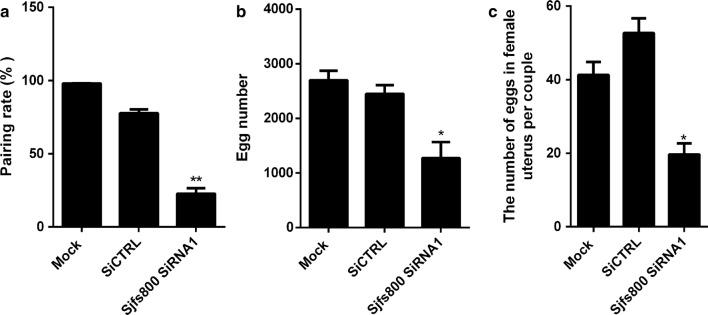
Microarray hybridization analyses generated a comprehensive set of genes differentially transcribed before and after male-female pairing. Although the transcript profiles of females were similar 16 and 18 days after host infection, marked gene expression changes were observed at 24 days. The 30 most abundantly transcribed genes on day 24 included those associated with vitellarium development. Among these, the gene for female-specific 800 (fs800) was substantially upregulated. Our in situ hybridization results in female S. japonicum indicated that Sjfs800 mRNA was observed only in the vitellarium, localized in mature vitelline cells. Knocking down the Sjfs800 gene in female S. japonicum by approximately 60% reduced the number of mature vitelline cells, decreased rates of pairing and oviposition, and decreased the number of eggs produced in each male-female pairing by about 50%.
CONCLUSIONS
These results indicate that Sjfs800 may play a role in vitellarium development and egg production in S. japonicum and suggest that Sjfs800 regulation may provide a novel approach for the prevention or treatment of schistosomiasis.
背景
血吸虫病是一种流行但被忽视的热带病,由寄生的吸虫属血吸虫引起,主要致病物种为埃及血吸虫、曼氏血吸虫和日本血吸虫。雌雄血吸虫配对是性成熟和产生大量卵子的必要条件,而这些卵子主要负责血吸虫病的传播和发病机制。
方法
在这里,我们使用微阵列杂交、生物信息学、定量 PCR、原位杂交和基因沉默测定来鉴定在日本血吸虫生殖生物学中起关键作用的基因,特别是在卵黄腺发育中,该过程影响雌雄配对、性成熟和随后的产卵。
结果
微阵列杂交分析产生了一套在雌雄配对前后差异转录的基因。尽管感染宿主后 16 天和 18 天雌性的转录谱相似,但在 24 天时观察到明显的基因表达变化。第 24 天转录最丰富的 30 个基因包括与卵黄腺发育相关的基因。其中,雌性特异性 800(fs800)基因显著上调。我们在日本血吸虫中的原位杂交结果表明,Sjfs800 mRNA 仅在卵黄腺中观察到,定位于成熟卵黄细胞中。通过基因敲低约 60%,雌性日本血吸虫中的 Sjfs800 基因减少了成熟卵黄细胞的数量,降低了配对和产卵率,并使每对雌雄配对产生的卵子数量减少了约 50%。
结论
这些结果表明,Sjfs800 可能在日本血吸虫的卵黄腺发育和产卵中起作用,并表明 Sjfs800 的调控可能为血吸虫病的预防或治疗提供一种新方法。

 Zotero 插件