
[RuCl(η-芳烃)(芳酰基硫脲)]配合物的合成及其抗癌活性——对人神经母细胞瘤(IMR-32)癌细胞系具有高活性
Synthesis and Anticancer Activity of [RuCl(η-arene)(aroylthiourea)] Complexes-High Activity against the Human Neuroblastoma (IMR-32) Cancer Cell Line.
作者信息
Swaminathan Srividya, Haribabu Jebiti, Kalagatur Naveen Kumar, Konakanchi Ramaiah, Balakrishnan Nithya, Bhuvanesh Nattamai, Karvembu Ramasamy
机构信息
Department of Chemistry, National Institute of Technology, Tiruchirappalli 620015, Tamil Nadu, India.
DRDO-BU-Centre for Life Sciences, Bharathiar Univeristy Campus, Coimbatore 641046, Tamil Nadu, India.
出版信息
ACS Omega. 2019 Apr 4;4(4):6245-6256. doi: 10.1021/acsomega.9b00349. eCollection 2019 Apr 30.
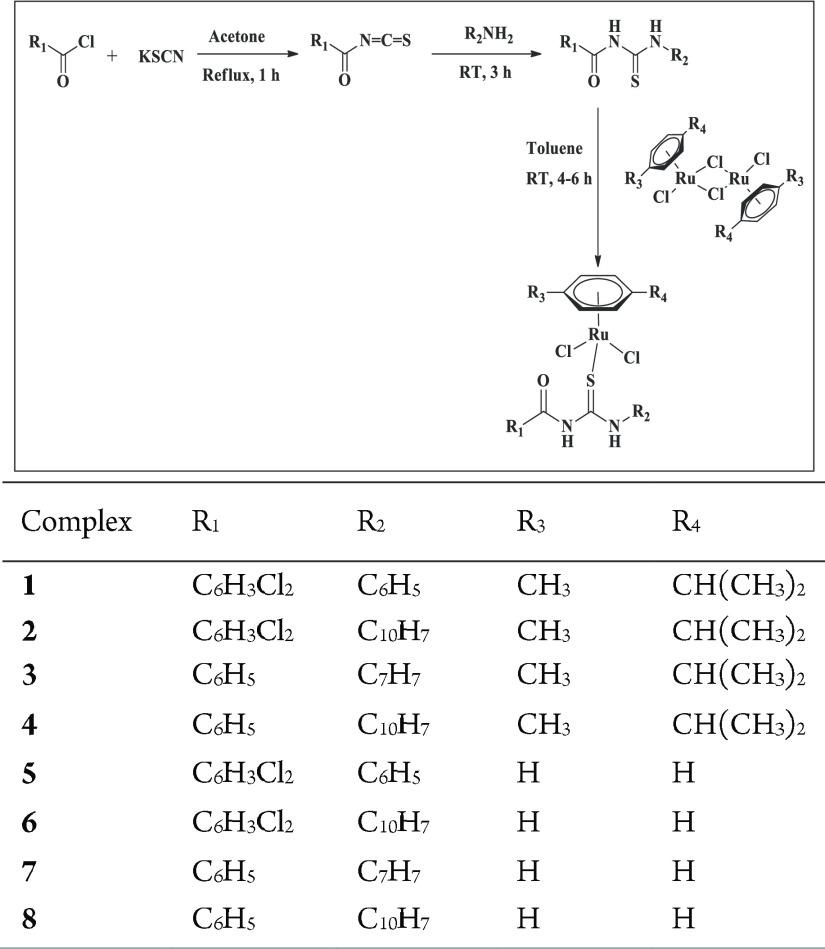
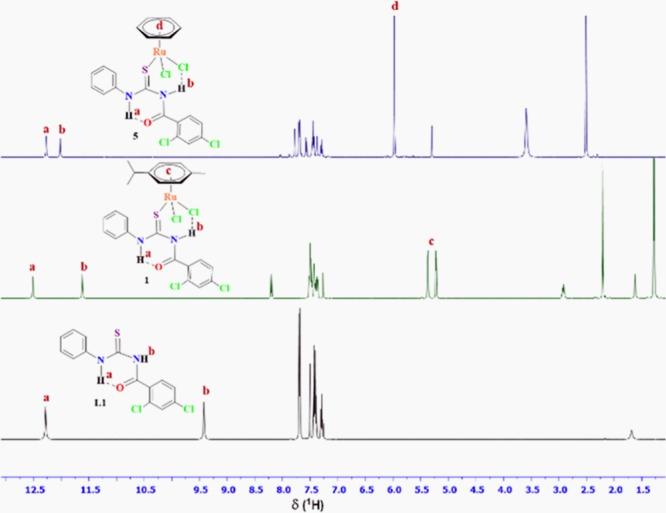
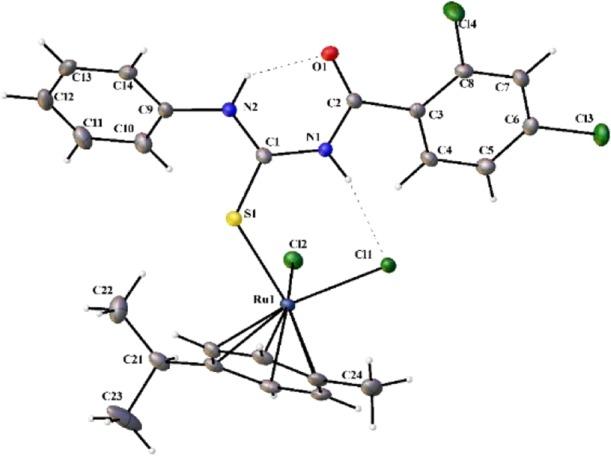
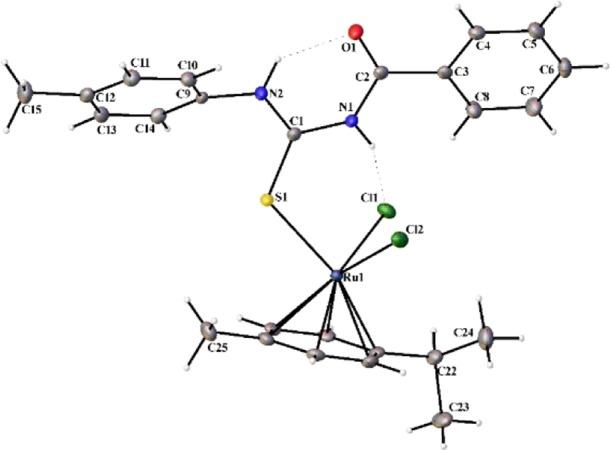
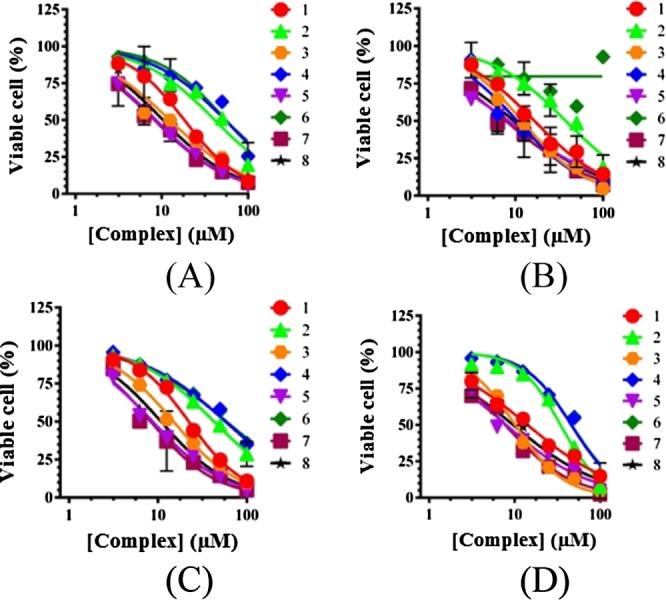
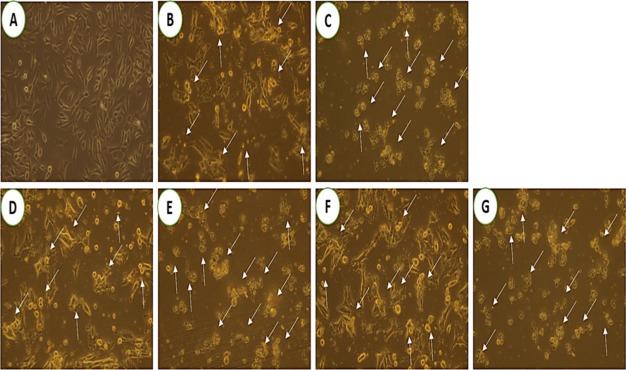
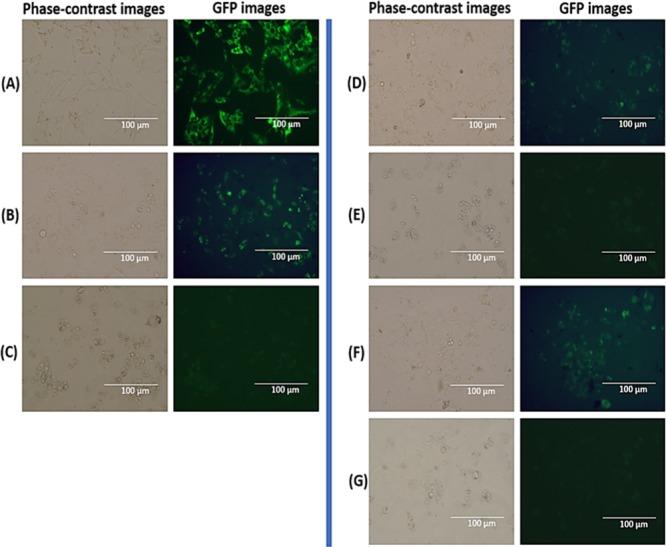
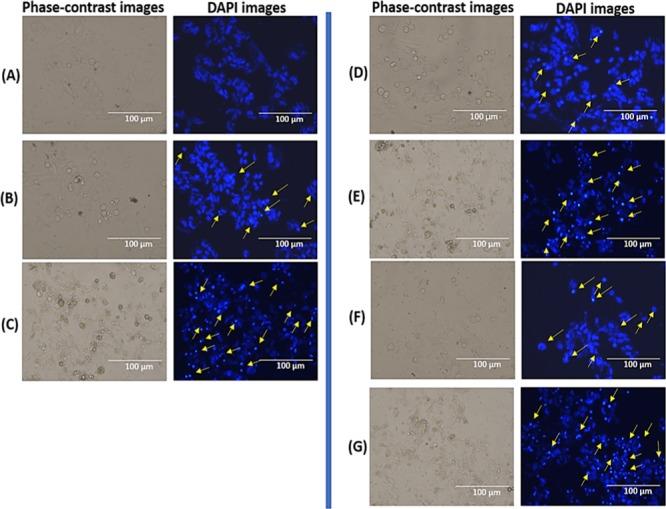
Eight new organometallic Ru(II)-arene complexes of the type [RuCl(η-arene)(η--aroylthiourea)] (arene = -cymene or benzene) were synthesized in order to evaluate the effect of the arene moiety and the substituent of the aroylthiourea ligand on the cytotoxicity of the complexes. The ligands (L1 and L2) and complexes () were characterized using analytical and spectroscopic (UV-visible, infrared, H NMR, C NMR, and mass) methods. The structure of the ligands (L1 and L2) and complexes ( and ) was obtained from single-crystal X-ray diffraction studies. The cytotoxicity of the complexes was evaluated against four different cancer cell lines: MCF-7 (breast), COLO 205 (colon), A549 (lung), and IMR-32 (neuroblastoma). All the complexes showed good cytotoxicity and the highest was in the IMR-32 cell line, which articulates the specificity of these complexes toward the IMR-32 cancer cell line. The complexes , , and exhibited remarkable cytotoxicity in the entire cancer cell lines tested, which was comparable with the standard drug, cisplatin. The anticancer mechanism of the complexes and in IMR-32 cells was evaluated by bright-field microscopy, intracellular reactive oxygen species (ROS), mitochondrial membrane potential (MMP), DNA damage, and caspase-3 analyses. The cells treated with the complexes showed upregulated caspase-3 compared to the control, and it was found that ROS and MMP were dose-dependent on analysis. Also, bright-field microscopy and 4',6-diamidino-2-phenylindole (DAPI) staining have correspondingly shown cellular membrane blebbing and DNA damage, which were morphological hallmarks of apoptosis. The study concluded that the complexes promoted the oxidative stress-mediated apoptotic death of the cancer cells through the generation of intracellular ROS, depletion of MMP, and damage of the nuclear material.
合成了八种新型的[RuCl(η-芳烃)(η-芳酰基硫脲)]类型的有机金属Ru(II)-芳烃配合物(芳烃 = -异丙苯或苯),以评估芳烃部分和芳酰基硫脲配体的取代基对配合物细胞毒性的影响。使用分析和光谱(紫外可见、红外、1H NMR、13C NMR和质谱)方法对配体(L1和L2)和配合物进行了表征。通过单晶X射线衍射研究获得了配体(L1和L2)和配合物(和)的结构。针对四种不同的癌细胞系评估了配合物的细胞毒性:MCF-7(乳腺癌)、COLO 205(结肠癌)、A549(肺癌)和IMR-32(神经母细胞瘤)。所有配合物均表现出良好的细胞毒性,其中最高的是在IMR-32细胞系中,这表明这些配合物对IMR-32癌细胞系具有特异性。配合物、和在所有测试的癌细胞系中均表现出显著的细胞毒性,与标准药物顺铂相当。通过明场显微镜、细胞内活性氧(ROS)、线粒体膜电位(MMP)、DNA损伤和半胱天冬酶-3分析评估了配合物和在IMR-32细胞中的抗癌机制。与对照相比,用配合物处理的细胞显示半胱天冬酶-3上调,并且发现ROS和MMP在分析中呈剂量依赖性。此外,明场显微镜和二脒基苯基吲哚(DAPI)染色相应地显示了细胞膜起泡和DNA损伤,这是细胞凋亡的形态学标志。该研究得出结论,配合物通过产生细胞内ROS、消耗MMP和损伤核物质,促进了癌细胞的氧化应激介导的凋亡死亡。





 Zotero 插件