
酒精使用障碍会加速表观遗传衰老,且这种加速受 APOL2 基因变异的调控。
Epigenetic aging is accelerated in alcohol use disorder and regulated by genetic variation in APOL2.
机构信息
Section on Clinical Genomics and Experimental Therapeutics, National Institute on Alcohol Abuse and Alcoholism, National Institutes of Health, Bethesda, MD, USA.
Department of Psychiatry and Psychotherapy, Charite - Universitaetsmedizin Berlin, Berlin, Germany.
出版信息
Neuropsychopharmacology. 2020 Jan;45(2):327-336. doi: 10.1038/s41386-019-0500-y. Epub 2019 Aug 29.
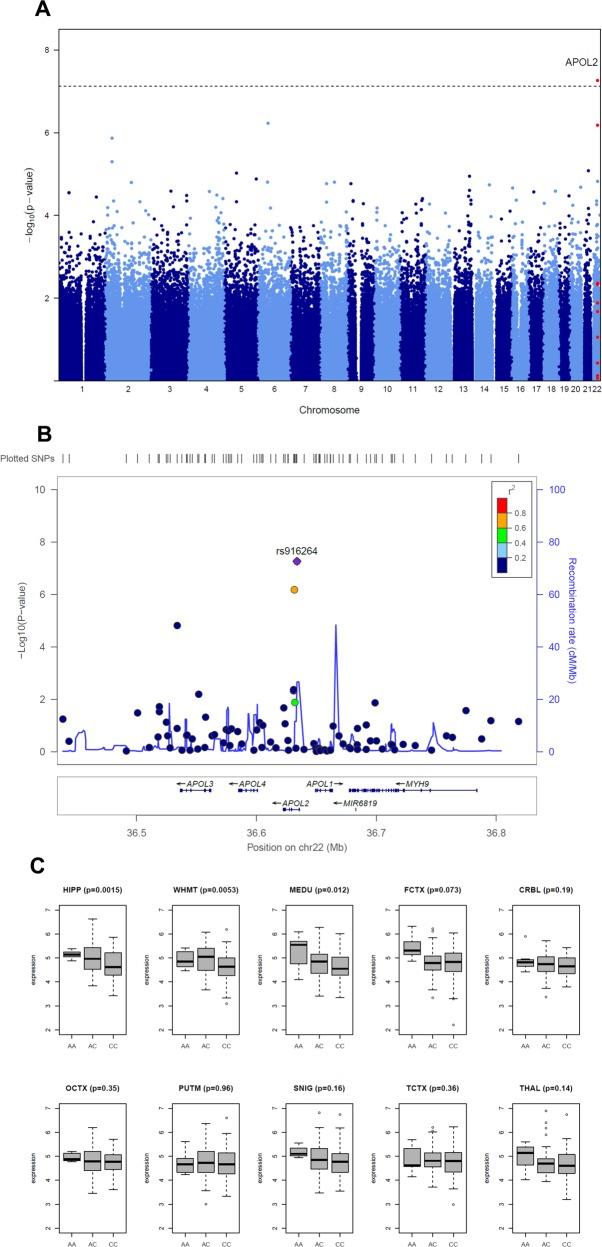
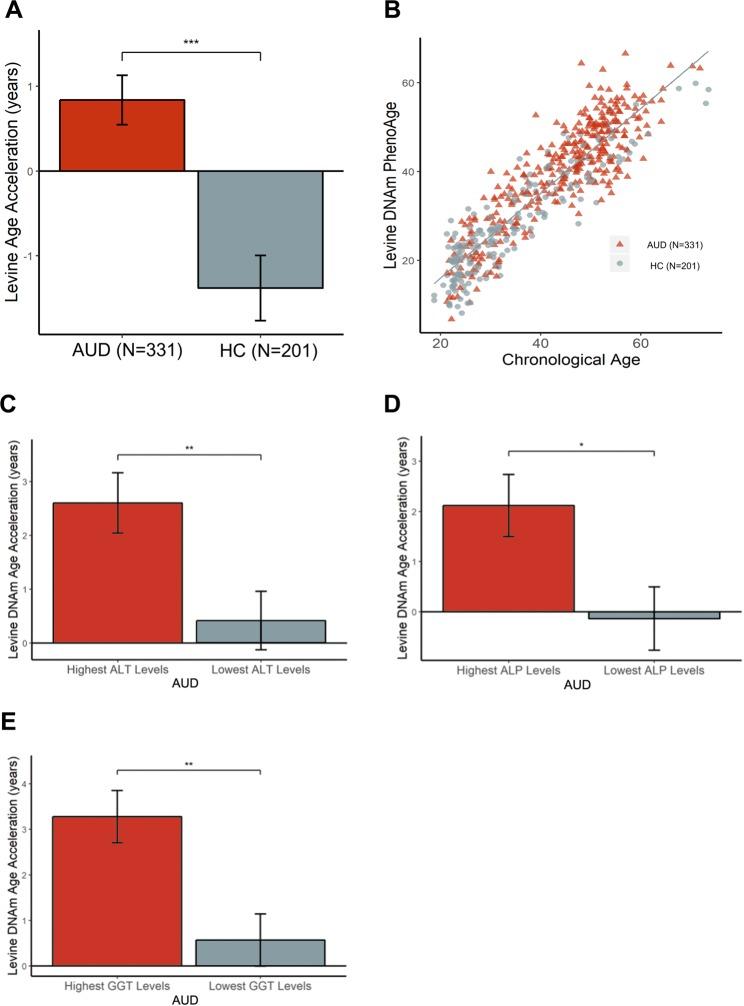
To investigate the potential role of alcohol use disorder (AUD) in aging processes, we employed Levine's epigenetic clock (DNAm PhenoAge) to estimate DNA methylation age in 331 individuals with AUD and 201 healthy controls (HC). We evaluated the effects of heavy, chronic alcohol consumption on epigenetic age acceleration (EAA) using clinical biomarkers, including liver function test enzymes (LFTs) and clinical measures. To characterize potential underlying genetic variation contributing to EAA in AUD, we performed genome-wide association studies (GWAS) on EAA, including pathway analyses. We followed up on relevant top findings with in silico expression quantitative trait loci (eQTL) analyses for biological function using the BRAINEAC database. There was a 2.22-year age acceleration in AUD compared to controls after adjusting for gender and blood cell composition (p = 1.85 × 10). This association remained significant after adjusting for race, body mass index, and smoking status (1.38 years, p = 0.02). Secondary analyses showed more pronounced EAA in individuals with more severe AUD-associated phenotypes, including elevated gamma-glutamyl transferase (GGT) and alanine aminotransferase (ALT), and higher number of heavy drinking days (all ps < 0.05). The genome-wide meta-analysis of EAA in AUD revealed a significant single nucleotide polymorphism (SNP), rs916264 (p = 5.43 × 10), in apolipoprotein L2 (APOL2) at the genome-wide level. The minor allele A of rs916264 was associated with EAA and with increased mRNA expression in hippocampus (p = 0.0015). Our data demonstrate EAA in AUD and suggest that disease severity further accelerates epigenetic aging. EAA was associated with genetic variation in APOL2, suggesting potential novel biological mechanisms for age acceleration in AUD.
为了探究酒精使用障碍(AUD)在衰老过程中的潜在作用,我们采用 Levine 的表观遗传时钟(DNAm PhenoAge)来估计 331 名 AUD 患者和 201 名健康对照者的 DNA 甲基化年龄。我们使用临床生物标志物,包括肝功能测试酶(LFTs)和临床指标,评估了重度、慢性酒精摄入对表观遗传年龄加速(EAA)的影响。为了研究 AUD 中导致 EAA 的潜在遗传变异,我们对 EAA 进行了全基因组关联研究(GWAS),并进行了通路分析。我们利用 BRAINEAC 数据库对与 EAA 相关的重要发现进行了后续的生物功能的转录组定量关联分析(eQTL)。在调整了性别和血细胞组成后,AUD 组比对照组的年龄加速了 2.22 岁(p=1.85×10)。在调整了种族、体重指数和吸烟状况后,这种关联仍然显著(1.38 岁,p=0.02)。进一步的分析表明,在具有更严重 AUD 相关表型的个体中,EAA 更为明显,包括谷氨酰转移酶(GGT)和丙氨酸氨基转移酶(ALT)升高,以及大量饮酒天数增加(所有 p<0.05)。AUD 中 EAA 的全基因组荟萃分析揭示了载脂蛋白 L2(APOL2)中的一个显著单核苷酸多态性(SNP)rs916264(p=5.43×10)。rs916264 的次要等位基因 A 与 EAA 相关,并与海马体中 mRNA 表达增加相关(p=0.0015)。我们的数据表明 AUD 中存在 EAA,并提示疾病严重程度进一步加速了表观遗传衰老。EAA 与 APOL2 的遗传变异相关,提示 AUD 中加速衰老的潜在新生物学机制。
 Zotero 插件