
基于整合生物信息学分析鉴定 CRC 亚型中的模块和功能分析。
Identification of modules and functional analysis in CRC subtypes by integrated bioinformatics analysis.
机构信息
Department of Gastroenterology and Hepatology, Graduate School of Medicine, Kyoto University, Kyoto, Japan.
DSK Project, Medical Innovation Center, Graduate School of Medicine, Kyoto University, Kyoto, Japan.
出版信息
PLoS One. 2019 Aug 30;14(8):e0221772. doi: 10.1371/journal.pone.0221772. eCollection 2019.
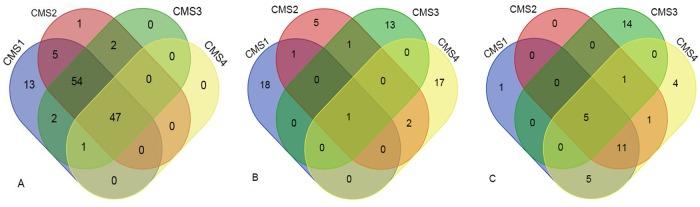
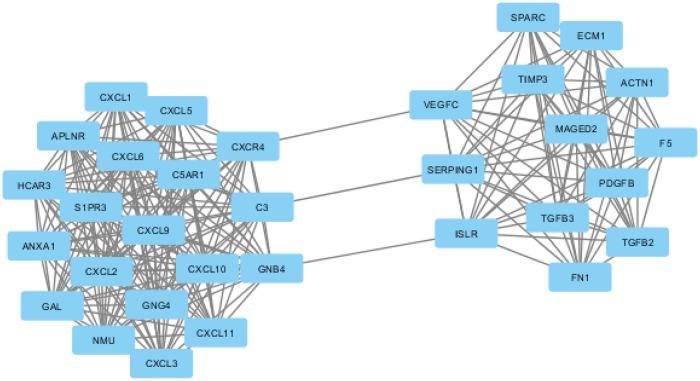
Colorectal cancer is one of the top three causes of cancer-related mortality globally, but no predictive molecular biomarkers are currently available for identifying the disease stage of colorectal cancer patients. Common molecular patterns in the disease, beyond superficial manifestations, can be significant in determining treatment choices. In this study, we used microarray data from colorectal cancer and adjacent normal tissue from the GEO database. These data were categorized into four consensus molecular subtypes based on distinct gene expression signatures. Weighted gene-based protein-protein interaction network analysis was performed for each subtype. NUSAP1, CD44, and COL4A1 modules were found to be statistically significant and present among all the subtypes and displayed though similar but not identical functional enrichment results. Reference of the characteristics of the subtypes to functional modules is necessary since the latter can stay resistant to platform changes and technique noise when compared with other analyses. The CMS4-mesenchymal group, which currently has a poor prognosis, was examined in the study. It is composed mainly of genes involved in immune and stromal expression, with modules focused on ECM dysregulation and chemokine biological processes. Hub genes detection and its' mapping into the protein-protein interaction network can be indicative of possible targets against specific modules. This approach identified subtypes using enrichment-oriented analysis in functional modules. Proper annotation of functional analysis of modules from different subtypes of CRC might be directive for finding extra options for treatment targets and guiding clinical routines.
结直肠癌是全球导致癌症相关死亡的三大原因之一,但目前尚无用于识别结直肠癌患者疾病阶段的预测性分子生物标志物。除了表面表现外,疾病的常见分子模式在确定治疗选择方面非常重要。在这项研究中,我们使用了来自 GEO 数据库的结直肠癌和相邻正常组织的微阵列数据。根据不同的基因表达特征,将这些数据分为四个共识分子亚型。对每个亚型进行加权基因蛋白-蛋白相互作用网络分析。发现 NUSAP1、CD44 和 COL4A1 模块在所有亚型中均具有统计学意义且存在,并显示出相似但不完全相同的功能富集结果。由于与其他分析相比,后者在与平台变化和技术噪声相比时具有更强的抗干扰能力,因此将亚型的特征与功能模块相关联是必要的。本研究还研究了目前预后较差的 CMS4-间充质组。它主要由涉及免疫和基质表达的基因组成,模块主要集中在 ECM 失调和趋化因子生物学过程上。核心基因检测及其映射到蛋白质-蛋白质相互作用网络可以指示针对特定模块的可能靶标。这种方法使用功能模块中的富集导向分析来识别亚型。对不同结直肠癌亚型的功能模块进行适当的功能分析注释可能有助于发现治疗靶点的额外选择,并指导临床常规。



 Zotero 插件