
欧洲人类生殖与胚胎学会指南:复发性流产
ESHRE guideline: recurrent pregnancy loss.
作者信息
Bender Atik Ruth, Christiansen Ole Bjarne, Elson Janine, Kolte Astrid Marie, Lewis Sheena, Middeldorp Saskia, Nelen Willianne, Peramo Braulio, Quenby Siobhan, Vermeulen Nathalie, Goddijn Mariëtte
机构信息
Miscarriage Association, 17 Wentworth Terrace, Wakefield WF1 3QW, UK.
Aalborg University Hospital, Department of Obstetrics and Gynaecology Aalborg, Reberbansgade 15, Aalborg 9000, Denmark.
出版信息
Hum Reprod Open. 2018 Apr 6;2018(2):hoy004. doi: 10.1093/hropen/hoy004. eCollection 2018.
STUDY QUESTION
What is the recommended management of women with recurrent pregnancy loss (RPL) based on the best available evidence in the literature?
SUMMARY ANSWER
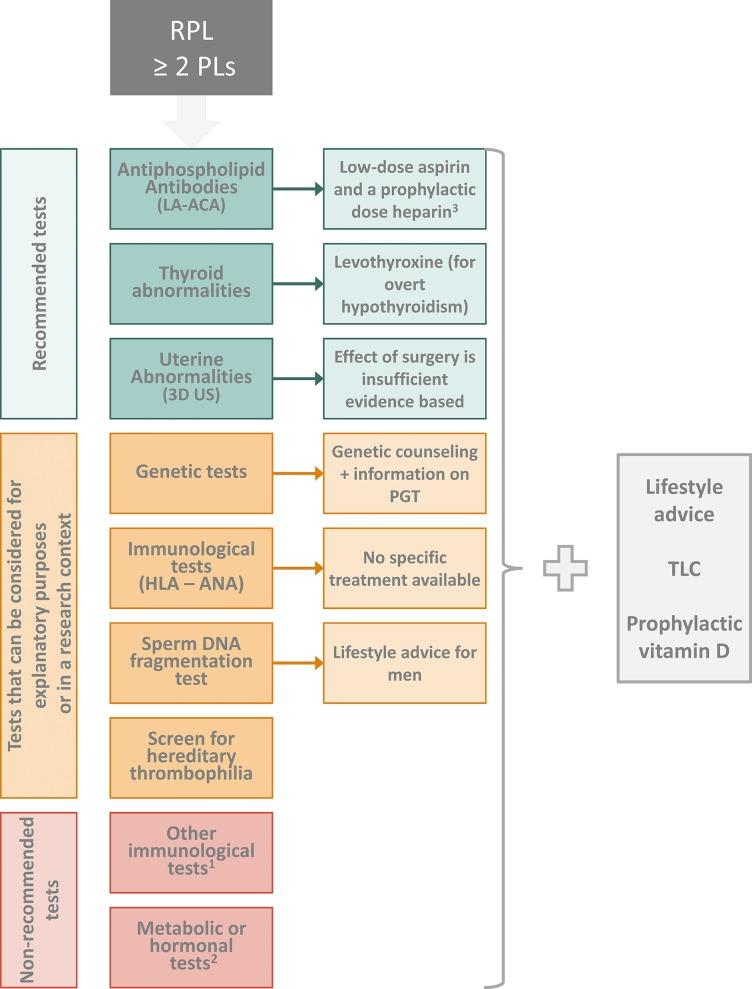
The guideline development group formulated 77 recommendations answering 18 key questions on investigations and treatments for RPL, and on how care should be organized.
WHAT IS KNOWN ALREADY
A previous guideline for the investigation and medical treatment of recurrent miscarriage was published in 2006 and is in need of an update.
STUDY DESIGN SIZE DURATION
The guideline was developed according to the structured methodology for development of ESHRE guidelines. After formulation of key questions by a group of experts, literature searches and assessments were performed. Papers published up to 31 March 2017 and written in English were included. Cumulative live birth rate, live birth rate and pregnancy loss rate (or miscarriage rate) were considered the critical outcomes.
PARTICIPANTS/MATERIALS SETTING METHODS: Based on the collected evidence, recommendations were formulated and discussed until consensus was reached within the guideline group. A stakeholder review was organized after finalization of the draft. The final version was approved by the guideline group and the ESHRE Executive Committee.
MAIN RESULTS AND THE ROLE OF CHANCE
The guideline provides 38 recommendations on risk factors, prevention and investigations in couples with RPL, and 39 recommendations on treatments. These include 60 evidence-based recommendations - of which 31 were formulated as strong recommendations and 29 as conditional - and 17 good practice points. The evidence supporting investigations and treatment of couples with RPL is limited and of moderate quality. Of the evidence-based recommendations, only 10 (16.3%) were supported by moderate quality evidence. The remaining recommendations were supported by low (35 recommendations: 57.4%), or very low quality evidence (16 recommendations: 26.2%). There were no recommendations based on high quality evidence. Owing to the lack of evidence-based investigations and treatments in RPL care, the guideline also clearly mentions investigations and treatments that should not be used for couples with RPL.
LIMITATIONS REASONS FOR CAUTION
Several investigations and treatments are offered to couples with RPL, but most of them are not well studied. For most of these investigations and treatments, a recommendation against the intervention or treatment was formulated based on insufficient evidence. Future studies may require these recommendations to be revised.
WIDER IMPLICATIONS OF THE FINDINGS
The guideline provides clinicians with clear advice on best practice in RPL, based on the best evidence available. In addition, a list of research recommendations is provided to stimulate further studies in RPL. One of the most important consequences of the limited evidence is the absence of evidence for a definition of RPL.
STUDY FUNDING/COMPETING INTERESTS: The guideline was developed and funded by ESHRE, covering expenses associated with the guideline meetings, with the literature searches and with the dissemination of the guideline. The guideline group members did not receive payment. J.E. reports position funding from CARE Fertility. S.L. reports position funding from SpermComet Ltd. S.M. reports research grants, consulting and speaker's fees from GSK, BMS/Pfizer, Sanquin, Aspen, Bayer and Daiichi Sankyo. S.Q. reports speaker's fees from Ferring. The other authors report no conflicts of interest.ESHRE Pages are not externally peer reviewed. This article has been approved by the Executive Committee of ESHRE.
研究问题
根据文献中现有最佳证据,复发性流产(RPL)女性的推荐管理方案是什么?
总结答案
指南制定小组制定了77条建议,回答了关于RPL的检查、治疗以及护理组织方式的18个关键问题。
已知信息
2006年曾发布过一份关于复发性流产调查和医学治疗的指南,现需要更新。
研究设计、规模、持续时间:本指南是根据欧洲人类生殖与胚胎学会(ESHRE)指南制定的结构化方法制定的。在一组专家提出关键问题后,进行了文献检索和评估。纳入了截至2017年3月31日发表的英文论文。累积活产率、活产率和妊娠丢失率(或流产率)被视为关键结果。
参与者/材料、环境、方法:基于收集到的证据,制定并讨论建议,直至在指南小组内达成共识。在草案最终确定后组织了利益相关者审查。最终版本由指南小组和ESHRE执行委员会批准。
主要结果及机遇的作用
该指南提供了38条关于RPL夫妇风险因素、预防和检查的建议,以及39条关于治疗的建议。其中包括60条基于证据的建议——其中31条被制定为强烈建议,29条为有条件建议——以及17条良好实践要点。支持RPL夫妇检查和治疗的证据有限且质量中等。在基于证据的建议中,只有10条(16.3%)得到了中等质量证据的支持。其余建议得到低质量证据(35条建议:57.4%)或极低质量证据(16条建议:26.2%)的支持。没有基于高质量证据的建议。由于RPL护理中缺乏基于证据的检查和治疗方法,该指南还明确提及了不应应用于RPL夫妇的检查和治疗方法。
局限性、谨慎的理由:为RPL夫妇提供了多种检查和治疗方法,但其中大多数研究不足。对于这些检查和治疗方法中的大多数,基于证据不足制定了反对干预或治疗的建议。未来的研究可能需要修订这些建议。
研究结果的更广泛影响
该指南基于现有最佳证据为临床医生提供了关于RPL最佳实践的明确建议。此外,还提供了一份研究建议清单,以促进对RPL的进一步研究。证据有限的最重要后果之一是缺乏RPL定义的证据。
研究资金/利益冲突:本指南由ESHRE制定并资助,涵盖与指南会议、文献检索以及指南传播相关的费用。指南小组成员未获得报酬。J.E.报告从CARE生育中心获得职位资金。S.L.报告从SpermComet有限公司获得职位资金。S.M.报告从葛兰素史克公司、百时美施贵宝/辉瑞公司、Sanquin公司、阿斯彭公司、拜耳公司和第一三共公司获得研究资助、咨询费和演讲费。S.Q.报告从辉凌公司获得演讲费。其他作者报告无利益冲突。ESHRE页面未进行外部同行评审。本文已获ESHRE执行委员会批准。
 Zotero 插件