
加拿大艾伯塔省同时使用处方类阿片和苯二氮䓬类药物/ Z 类药物的特征:一项基于人群的研究。
Characterisation of concurrent use of prescription opioids and benzodiazepine/Z-drugs in Alberta, Canada: a population-based study.
机构信息
School of Public Health, University of Alberta, Edmonton, Alberta, Canada.
McGill Clinical and Health Informatics, Montreal, Quebec, Canada.
出版信息
BMJ Open. 2019 Sep 6;9(9):e030858. doi: 10.1136/bmjopen-2019-030858.
OBJECTIVE
The objective of this study is to characterise concurrent use of benzodiazepine receptor modulators and opioids among prescription opioid users in Alberta in 2017.
DESIGN
A population based retrospective study.
SETTING
Alberta, Canada, in the year 2017.
PARTICIPANTS
All individuals in Alberta, Canada, with at least one dispensation record from a community pharmacy for an opioid in the year 2017.
EXPOSURE
Concurrent use of a benzodiazepine receptor modulator and opioid, defined as overlap of supply for both drugs for at least 1 day.
MAIN OUTCOME MEASURES
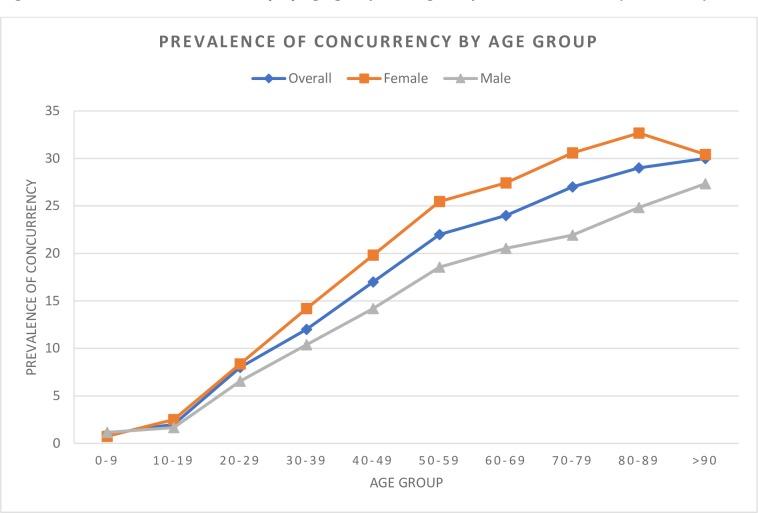
Prevalence of concurrency was estimated among subgroups of patient characteristics that were considered clinically relevant or associated with inappropriate medication use.
RESULTS
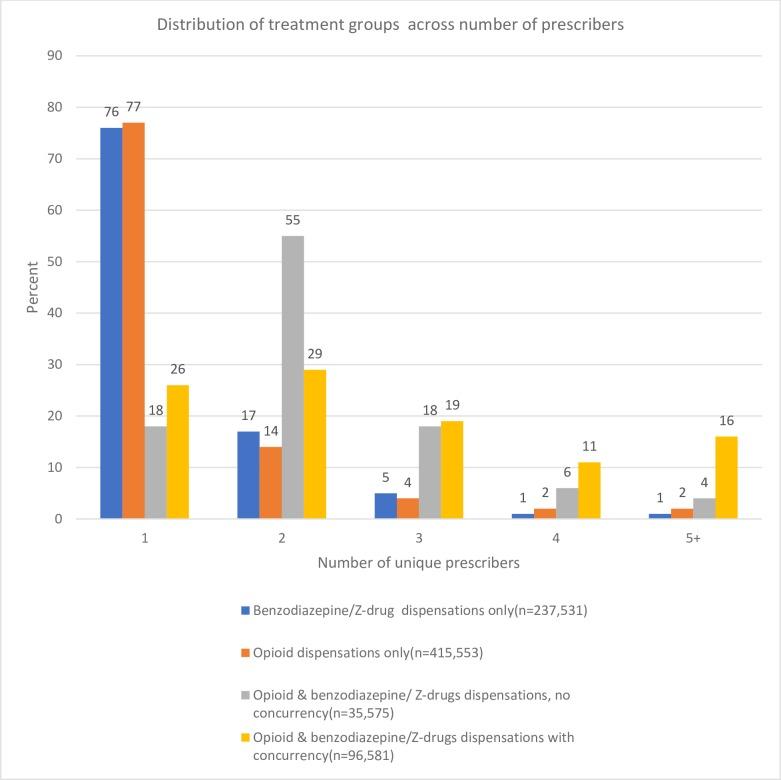
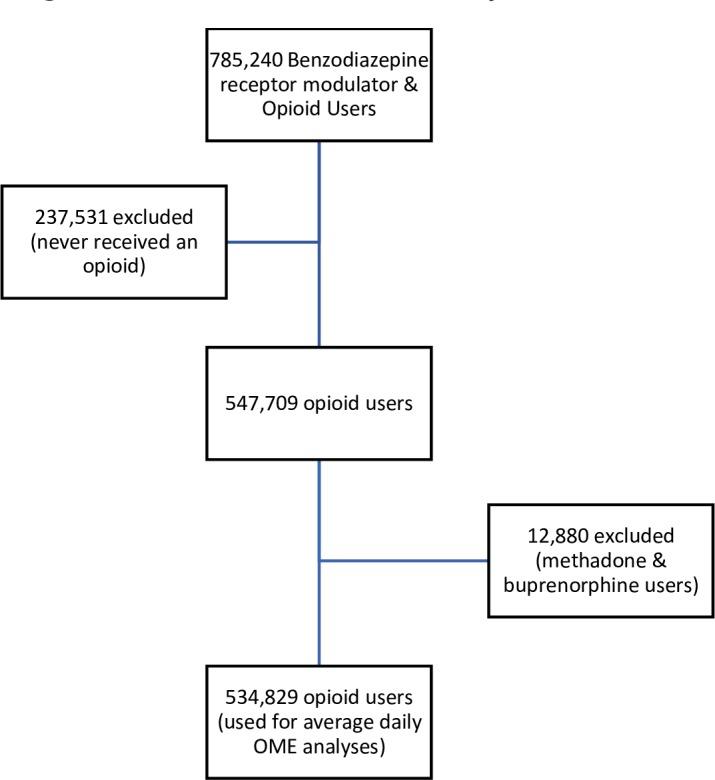
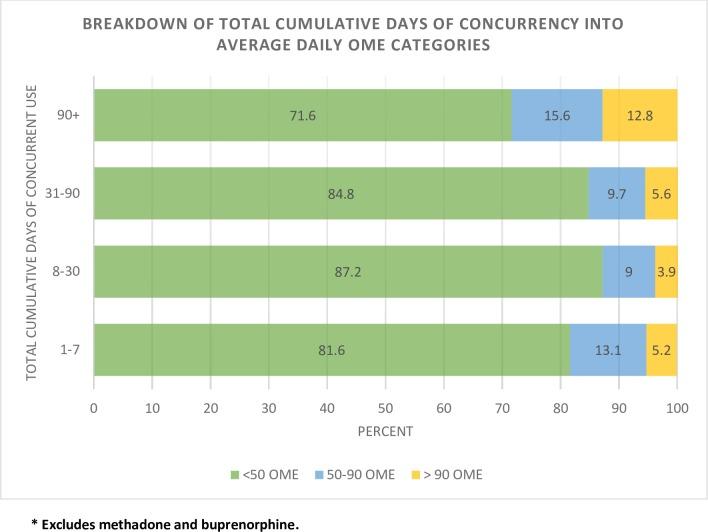
Among the 547 709 Albertans who were dispensed opioid prescriptions in 2017, 132 156 (24%) also received prescriptions for benzodiazepine receptor modulators. There were 96 581 (17.6%) prescription opioid users who concurrently used benzodiazepine receptor modulators with an average of 98 days (SD=114, 95% CI 97 to 99) of total cumulative concurrency and a median of 37 days (IQR 10 to 171). The average longest duration of consecutive days of concurrency was 45 (SD=60, 95% CI 44.6 to 45.4) with a median of 24 days (IQR 8 to 59). Concurrency was more prevalent in females, patients using an average daily oral morphine equivalent >90 mg, opioid dependence therapy patients, chronic opioid users, patients utilising a high number of unique providers, lower median household incomes and those older than 65 (p value<0.001 for all comparisons).
CONCLUSIONS
Concurrent prescribing of opioids and benzodiazepine receptor modulators is common in Alberta despite the ongoing guidance of many clinical resources. Older patients, those taking higher doses of opioids, and for longer durations may be at particular risk of adverse outcomes and may be worthy of closer follow-up for assessment for dose tapering or discontinuations. As well, those with higher healthcare utilisation (seeking multiple providers) should also be closely monitored. Continued surveillance of concurrent use of these medications is warranted to ensure that safe drug use recommendations are being followed by health providers.
目的
本研究旨在描述 2017 年艾伯塔省阿片类药物处方使用者中苯二氮䓬受体调节剂和阿片类药物同时使用的情况。
设计
基于人群的回顾性研究。
地点
加拿大艾伯塔省,2017 年。
参与者
艾伯塔省所有至少有一次社区药房开出阿片类药物处方的个体。
暴露
苯二氮䓬受体调节剂和阿片类药物同时使用,定义为两种药物的供应至少重叠 1 天。
主要观察指标
根据被认为与药物使用不当相关或具有临床意义的患者特征亚组,估计同时使用的发生率。
结果
在 2017 年接受阿片类药物处方的 547709 名艾伯塔省人中,有 132156 人(24%)同时开具了苯二氮䓬受体调节剂处方。有 96581 名(17.6%)阿片类药物处方使用者同时使用苯二氮䓬受体调节剂,平均累计同时使用 98 天(标准差[SD]=114,95%置信区间[CI]97 至 99),中位数为 37 天(IQR 10 至 171)。最长连续同时使用天数的平均值为 45 天(SD=60,95%CI 44.6 至 45.4),中位数为 24 天(IQR 8 至 59)。女性、平均每日口服吗啡当量>90mg、阿片类药物依赖治疗患者、慢性阿片类药物使用者、使用大量独特提供者、较低中位数家庭收入和年龄大于 65 岁的患者中,同时使用更为常见(所有比较的 p 值均<0.001)。
结论
尽管有许多临床资源提供指导,但在艾伯塔省,同时开具阿片类药物和苯二氮䓬受体调节剂的情况仍然很常见。年龄较大、使用较高剂量阿片类药物且使用时间较长的患者可能面临不良后果的风险更大,可能需要更密切的随访以评估剂量调整或停药。此外,那些医疗保健利用率较高(寻求多个提供者)的患者也应密切监测。需要继续监测这些药物的同时使用情况,以确保卫生保健提供者遵循安全用药建议。

 Zotero 插件