
影响痴呆症患者及其非正式护理人员采用智能健康技术的因素:范围综述与设计框架
Factors Influencing the Adoption of Smart Health Technologies for People With Dementia and Their Informal Caregivers: Scoping Review and Design Framework.
作者信息
Guisado-Fernández Estefanía, Giunti Guido, Mackey Laura M, Blake Catherine, Caulfield Brian Michael
机构信息
University College Dublin School of Public Health, Physiotherapy and Sports Science, Dublin, Ireland.
Insight Centre for Data Analytics, University College Dublin, Dublin, Ireland.
出版信息
JMIR Aging. 2019 Apr 30;2(1):e12192. doi: 10.2196/12192.
BACKGROUND
Smart Health technologies (s-Health technologies) are being developed to support people with dementia (PwD) and their informal caregivers at home, to improve care and reduce the levels of burden and stress they experience. However, although s-Health technologies have the potential to facilitate this, the factors influencing a successful implementation in this population are still unknown.
OBJECTIVE
The aim of this study was to review existing literature to explore the factors influencing PwD and their informal caregivers' adoption of s-Health technologies for home care.
METHODS
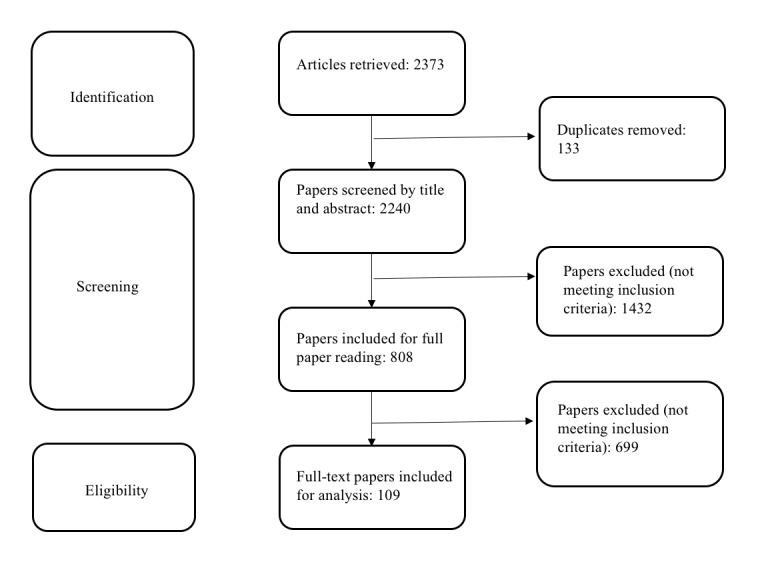
Following the Arksey and O'Malley methodology, this study is a scoping review providing a narrative description of the scientific literature on factors influencing s-Health technology adoption for PwD and their informal caregivers. A search was conducted using PubMed, the Cochrane library, the IEEE library, and Scopus. Publications screening was conducted by 2 researchers based on inclusion criteria, and full-text analysis was then conducted by 1 researcher. The included articles were thematically analyzed by 2 researchers to gain an insight into factors influencing adoption that PwD and their informal caregivers have to encounter when using s-Health technologies. Relevant information was identified and coded. Codes were later discussed between the researchers for developing and modifying them and for achieving a consensus, and the researchers organized the codes into broader themes.
RESULTS
Emerging themes were built in a way that said something specific and meaningful about the research question, creating a list of factors influencing the adoption of s-Health technologies for PwD and their informal caregivers, including attitudinal aspects, ethical issues, technology-related challenges, condition-related challenges, and identified gaps. A design framework was created as a guide for future research and innovation in the area of s-Health technologies for PwD and their informal caregivers: DemDesCon for s-Health Technologies. DemDesCon for s-Health Technologies addresses 4 domains to consider for the design and development of s-Health technologies for this population: cognitive decline domain, physical decline domain, social domain, and development domain.
CONCLUSIONS
Although s-Health technologies have been used in health care scenarios, more work is needed for them to fully achieve their potential for use in dementia care. Researchers, businesses, and public governments need to collaborate to design and implement effective technology solutions for PwD and their informal caregivers, but the lack of clear design guidelines seems to be slowing the process. We believe that the DemDesCon framework will provide them with the guidance and assistance needed for creating meaningful devices for PwD home care and informal caregivers, filling a much-needed space in the present knowledge gap.
背景
智能健康技术(s-Health技术)正在被开发,以支持居家的痴呆症患者(PwD)及其非正式照护者,改善护理状况并减轻他们所经历的负担和压力水平。然而,尽管s-Health技术有潜力促成此事,但影响在这一人群中成功实施的因素仍不为人所知。
目的
本研究的目的是回顾现有文献,以探索影响PwD及其非正式照护者采用s-Health技术进行居家护理的因素。
方法
遵循阿克斯西和奥马利的方法,本研究是一项范围综述,对关于影响PwD及其非正式照护者采用s-Health技术的因素的科学文献进行叙述性描述。使用PubMed、考克兰图书馆、电气和电子工程师协会(IEEE)图书馆以及Scopus进行检索。由2名研究人员根据纳入标准进行文献筛选,然后由1名研究人员进行全文分析。2名研究人员对纳入的文章进行主题分析,以深入了解PwD及其非正式照护者在使用s-Health技术时必须面对的影响采用的因素。识别并编码相关信息。研究人员随后对代码进行讨论,以开发和修改代码并达成共识,然后研究人员将代码组织成更广泛的主题。
结果
新出现的主题以一种对研究问题有特定且有意义表述的方式构建,形成了一份影响PwD及其非正式照护者采用s-Health技术的因素清单,包括态度方面、伦理问题、与技术相关的挑战、与病情相关的挑战以及已识别的差距。创建了一个设计框架,作为PwD及其非正式照护者的s-Health技术领域未来研究和创新的指南:s-Health技术的DemDesCon。s-Health技术的DemDesCon涉及为该人群设计和开发s-Health技术时要考虑的4个领域:认知衰退领域、身体衰退领域、社会领域和发展领域。
结论
尽管s-Health技术已用于医疗保健场景,但要使其在痴呆症护理中充分发挥潜力,还需要做更多工作。研究人员、企业和公共政府需要合作,为PwD及其非正式照护者设计和实施有效的技术解决方案,但缺乏明确的设计指南似乎正在减缓这一进程。我们相信,DemDesCon框架将为他们提供创建有意义的PwD居家护理设备和非正式照护者所需的指导和帮助,填补当前知识空白中急需的空间。

 Zotero 插件