
Th1/17 偏向的炎症环境与 COPD 相关,改变了气道上皮细胞对病毒和细菌刺激的反应。
Th1/17-Biased Inflammatory Environment Associated with COPD Alters the Response of Airway Epithelial Cells to Viral and Bacterial Stimuli.
机构信息
Mechanisms of Disease and Translational Research, School of Medical Sciences, UNSW Sydney, Sydney 2052, Australia.
Prince of Wales Clinical School, Faculty of Medicine, UNSW Sydney, Sydney 2052, Australia.
出版信息
Mediators Inflamm. 2019 Aug 25;2019:7281462. doi: 10.1155/2019/7281462. eCollection 2019.
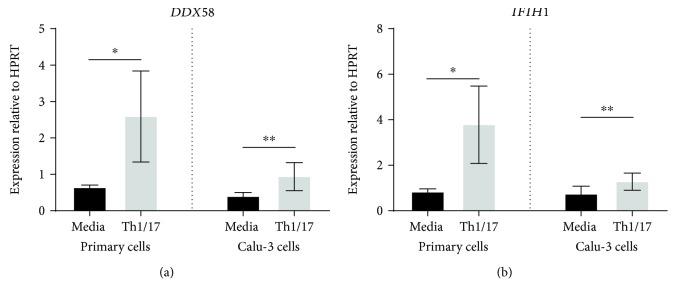
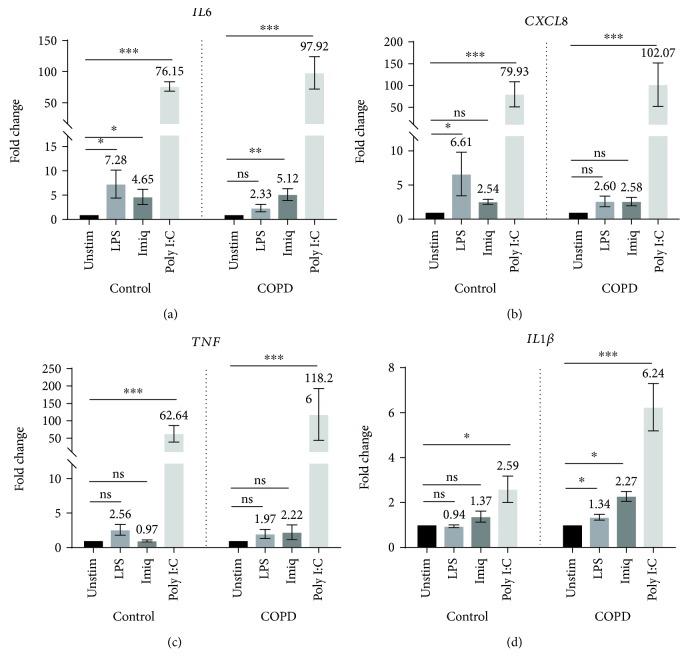
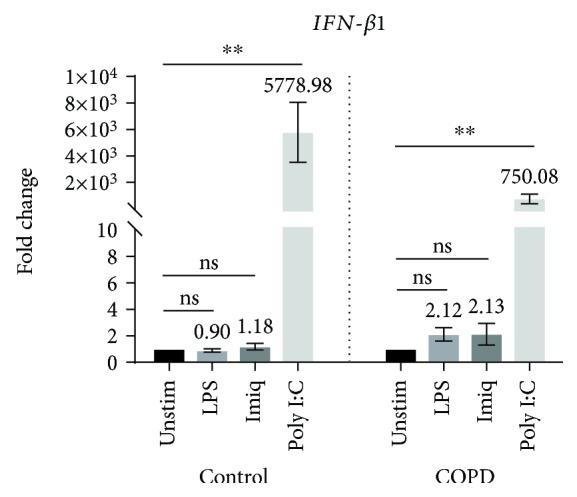
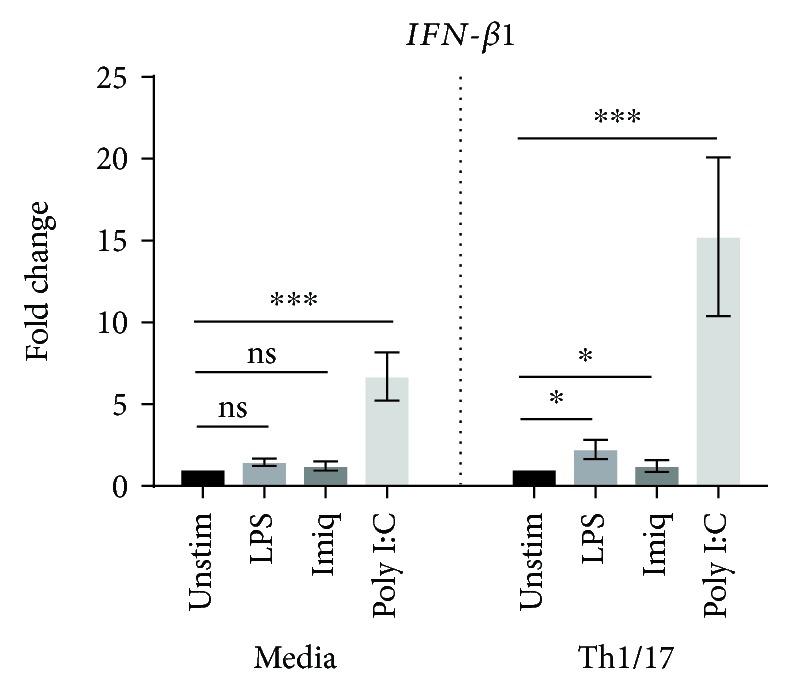
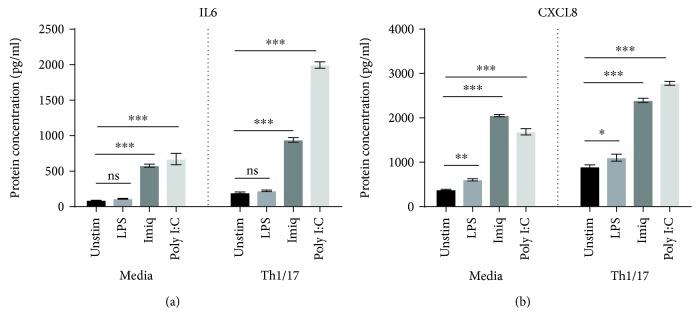
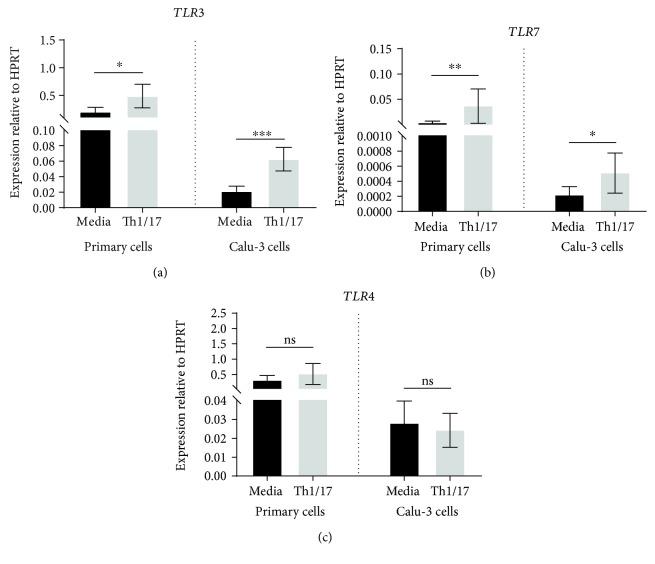
Chronic obstructive pulmonary disease (COPD) is characterized by airway inflammation associated with a Th1/17-biased cytokine environment. Acute exacerbations of COPD (AECOPD) are most often triggered by respiratory infections, which elicit an exaggerated inflammatory response in these patients, via poorly defined mechanisms. We investigated the responses of airway epithelial cells (AECs) to infective stimuli in COPD and the effects of the Th1/17-biased environment on these responses. Cytokine expression was assessed following exposure to virus-like stimuli (poly I:C or imiquimod) or bacterial LPS. The effects of pretreatment with Th1/17 cytokines were evaluated in both primary AECs and the Calu-3 AEC cell line. We found that poly I:C induced increased expression of the proinflammatory cytokines IL1, IL6, CXCL8, and TNF and IFN-1 in AECs from both control subjects and COPD patients. Expression of IL1 in response to all 3 stimuli was significantly enhanced in COPD AECs. Primary AECs pretreated with Th1/17 cytokines exhibited enhanced expression of mRNA for proinflammatory cytokines in response to poly I:C. Similarly, Calu-3 cells responded to virus-like/bacterial stimuli with increased expression of proinflammatory cytokines, and a Th1/17 environment significantly enhanced their expression. Furthermore, increased expression of pattern recognition receptors for viruses (TLR3, TLR7, IFIH1, and DDX58) was induced by Th1/17 cytokines, in both primary AECs and Calu-3 cells. These findings suggest that the Th1/17-biased environment associated with COPD may enhance the proinflammatory cytokine response of AECs to viral and bacterial infections and that increased signaling via upregulated receptors may contribute to exaggerated inflammation in virus-induced AECOPD.
慢性阻塞性肺疾病(COPD)的特征是气道炎症与 Th1/17 偏向的细胞因子环境相关。COPD 的急性加重(AECOPD)最常由呼吸道感染引发,通过尚未明确的机制,这些感染在患者中引发过度的炎症反应。我们研究了 COPD 患者气道上皮细胞(AEC)对感染性刺激的反应,以及 Th1/17 偏向环境对这些反应的影响。在暴露于病毒样刺激(多聚 I:C 或咪喹莫特)或细菌 LPS 后,评估细胞因子的表达。在原代 AEC 和 Calu-3 AEC 细胞系中,评估了 Th1/17 细胞因子预处理的影响。我们发现,多聚 I:C 诱导了来自对照受试者和 COPD 患者的 AEC 中促炎细胞因子 IL1、IL6、CXCL8 和 TNF 以及 IFN-1 的表达增加。在 COPD AEC 中,对所有 3 种刺激物的 IL1 反应的表达均显著增强。用 Th1/17 细胞因子预处理的原代 AEC 对多聚 I:C 的反应表现出促炎细胞因子 mRNA 表达的增强。类似地,Calu-3 细胞对病毒样/细菌刺激物的反应表现出促炎细胞因子表达的增加,而 Th1/17 环境显著增强了它们的表达。此外,Th1/17 细胞因子诱导了病毒(TLR3、TLR7、IFIH1 和 DDX58)的模式识别受体的表达增加,在原代 AEC 和 Calu-3 细胞中均如此。这些发现表明,与 COPD 相关的 Th1/17 偏向环境可能增强 AEC 对病毒和细菌感染的促炎细胞因子反应,并且通过上调的受体增加信号传递可能导致病毒诱导的 AECOPD 中炎症的过度放大。



 Zotero 插件