
脂肪酸可促进人多能干细胞来源的心肌细胞的成熟。
Fatty Acids Enhance the Maturation of Cardiomyocytes Derived from Human Pluripotent Stem Cells.
机构信息
Department of Pathology, University of Washington, Seattle, WA 98109, USA; Center for Cardiovascular Biology, University of Washington, Seattle, WA 98109, USA; Institute for Stem Cell and Regenerative Medicine, University of Washington, 850 Republican Street, Brotman Building Room 453, Seattle, WA 98109, USA.
Department of Mechanical Engineering, University of Washington, Seattle, WA 98109, USA; Center for Cardiovascular Biology, University of Washington, Seattle, WA 98109, USA; Institute for Stem Cell and Regenerative Medicine, University of Washington, 850 Republican Street, Brotman Building Room 453, Seattle, WA 98109, USA.
出版信息
Stem Cell Reports. 2019 Oct 8;13(4):657-668. doi: 10.1016/j.stemcr.2019.08.013. Epub 2019 Sep 26.
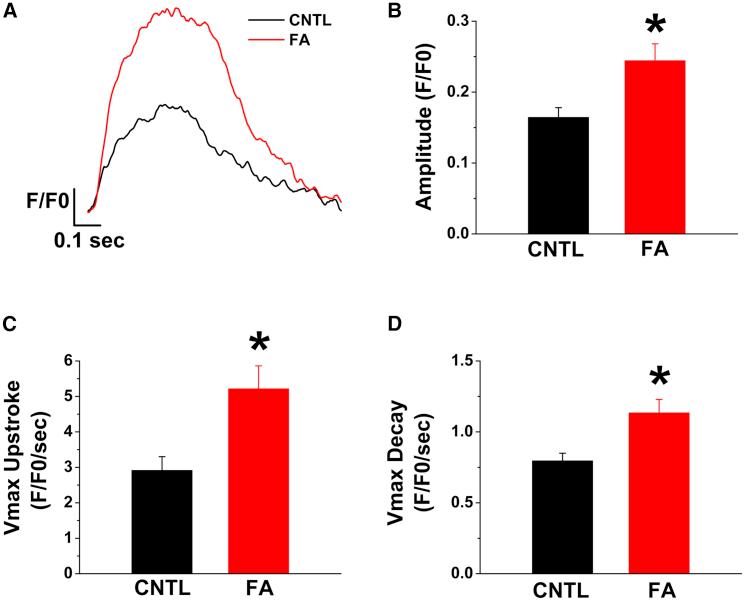
Although human pluripotent stem cell-derived cardiomyocytes (hPSC-CMs) have emerged as a novel platform for heart regeneration, disease modeling, and drug screening, their immaturity significantly hinders their application. A hallmark of postnatal cardiomyocyte maturation is the metabolic substrate switch from glucose to fatty acids. We hypothesized that fatty acid supplementation would enhance hPSC-CM maturation. Fatty acid treatment induces cardiomyocyte hypertrophy and significantly increases cardiomyocyte force production. The improvement in force generation is accompanied by enhanced calcium transient peak height and kinetics, and by increased action potential upstroke velocity and membrane capacitance. Fatty acids also enhance mitochondrial respiratory reserve capacity. RNA sequencing showed that fatty acid treatment upregulates genes involved in fatty acid β-oxidation and downregulates genes in lipid synthesis. Signal pathway analyses reveal that fatty acid treatment results in phosphorylation and activation of multiple intracellular kinases. Thus, fatty acids increase human cardiomyocyte hypertrophy, force generation, calcium dynamics, action potential upstroke velocity, and oxidative capacity. This enhanced maturation should facilitate hPSC-CM usage for cell therapy, disease modeling, and drug/toxicity screens.
尽管人多能干细胞来源的心肌细胞(hPSC-CMs)已成为心脏再生、疾病建模和药物筛选的新平台,但它们的不成熟极大地限制了其应用。出生后心肌细胞成熟的一个标志是代谢底物从葡萄糖向脂肪酸的转变。我们假设脂肪酸的补充会增强 hPSC-CM 的成熟。脂肪酸处理诱导心肌细胞肥大,并显著增加心肌细胞的收缩力。收缩力产生的改善伴随着钙瞬变峰值高度和动力学的增强,以及动作电位上升速度和膜电容的增加。脂肪酸还增强了线粒体呼吸储备能力。RNA 测序表明,脂肪酸处理上调了参与脂肪酸 β-氧化的基因,并下调了脂质合成的基因。信号通路分析表明,脂肪酸处理导致多种细胞内激酶的磷酸化和激活。因此,脂肪酸增加了人类心肌细胞的肥大、收缩力、钙动力学、动作电位上升速度和氧化能力。这种增强的成熟度应该有助于 hPSC-CM 用于细胞治疗、疾病建模和药物/毒性筛选。




 Zotero 插件