
粒细胞-巨噬细胞集落刺激因子在炎症中的作用。
GM-CSF in inflammation.
机构信息
The University of Melbourne, Department of Medicine, Royal Melbourne Hospital, Parkville, Victoria, Australia.
Australian Institute for Musculoskeletal Science, The University of Melbourne and Western Health, St Albans, Victoria, Australia.
出版信息
J Exp Med. 2020 Jan 6;217(1). doi: 10.1084/jem.20190945.
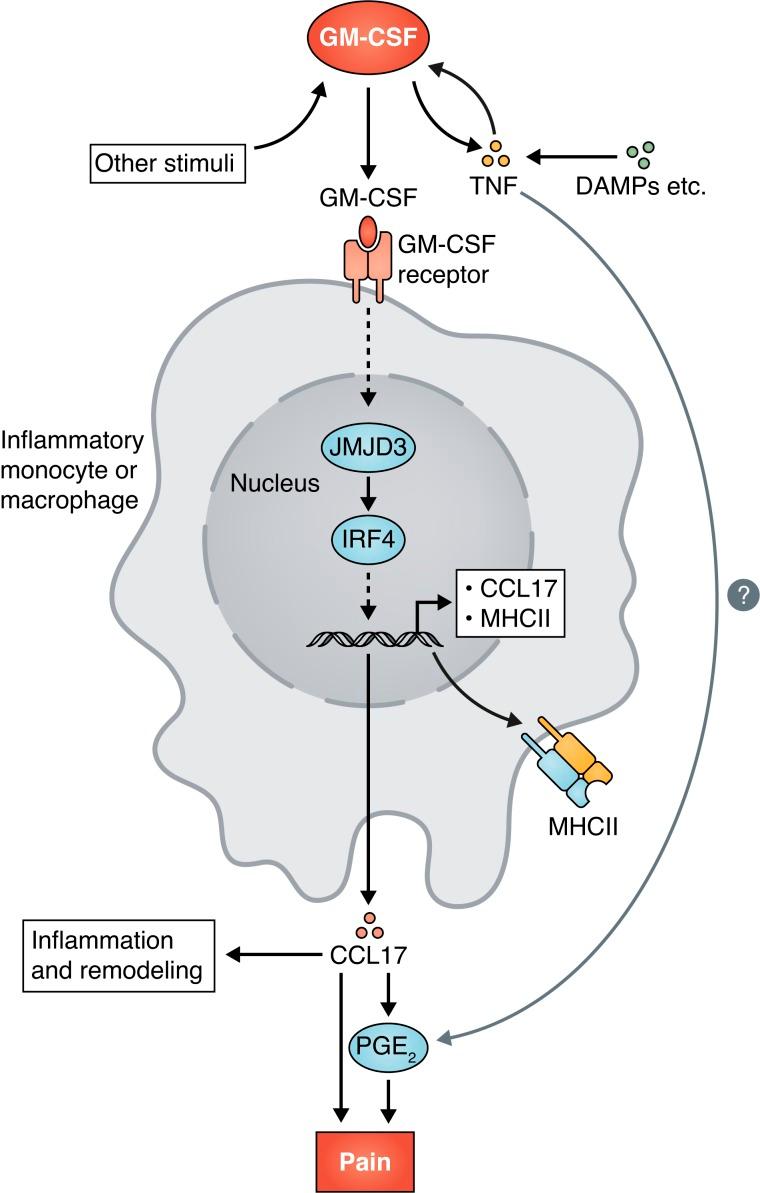
Granulocyte-macrophage colony-stimulating factor (GM-CSF) has many more functions than its original in vitro identification as an inducer of granulocyte and macrophage development from progenitor cells. Key features of GM-CSF biology need to be defined better, such as the responding and producing cell types, its links with other mediators, its prosurvival versus activation/differentiation functions, and when it is relevant in pathology. Significant preclinical data have emerged from GM-CSF deletion/depletion approaches indicating that GM-CSF is a potential target in many inflammatory/autoimmune conditions. Clinical trials targeting GM-CSF or its receptor have shown encouraging efficacy and safety profiles, particularly in rheumatoid arthritis. This review provides an update on the above topics and current issues/questions surrounding GM-CSF biology.
粒细胞-巨噬细胞集落刺激因子 (GM-CSF) 的功能远不止其最初在体外被鉴定为诱导祖细胞向粒细胞和巨噬细胞发育的功能。GM-CSF 生物学的关键特征需要更好地定义,例如反应和产生细胞类型、与其他介质的联系、其生存与激活/分化功能,以及在病理学中何时相关。GM-CSF 缺失/耗尽方法产生的大量临床前数据表明,GM-CSF 是许多炎症/自身免疫性疾病的潜在靶点。针对 GM-CSF 或其受体的临床试验显示出令人鼓舞的疗效和安全性,尤其是在类风湿关节炎中。本综述提供了上述主题的最新信息,以及围绕 GM-CSF 生物学的当前问题/疑问。

 Zotero 插件