
缺乏肝载脂蛋白 E 并不影响早期 Aβ 沉积:来自新的 APOE 基因敲入模型的观察结果。
Lack of hepatic apoE does not influence early Aβ deposition: observations from a new APOE knock-in model.
机构信息
Department of Neurology, Hope Center for Neurological Disorders, Knight Alzheimer's Disease Research Center, Washington University School of Medicine, St. Louis, MO, USA.
Medical Scientist Training Program (MSTP), Washington University School of Medicine, St. Louis, MO, USA.
出版信息
Mol Neurodegener. 2019 Oct 17;14(1):37. doi: 10.1186/s13024-019-0337-1.
BACKGROUND
The apolipoprotein E (APOE) gene is the strongest genetic risk factor for late-onset Alzheimer disease (AD). ApoE is produced by both astrocytes and microglia in the brain, whereas hepatocytes produce the majority of apoE found in the periphery. Studies using APOE knock-in and transgenic mice have demonstrated a strong isoform-dependent effect of apoE on the accumulation of amyloid-β (Aβ) deposition in the brain in the form of both Aβ-containing amyloid plaques and cerebral amyloid angiopathy. However, the specific contributions of different apoE pools to AD pathogenesis remain unknown.
METHODS
We have begun to address these questions by generating new lines of APOE knock-in (APOE-KI) mice (ε2/ε2, ε3/ε3, and ε4/ε4) where the exons in the coding region of APOE are flanked by loxP sites, allowing for cell type-specific manipulation of gene expression. We assessed these mice both alone and after crossing them with mice with amyloid deposition in the brain. Using biochemical and histological methods. We also investigated how removal of APOE expression from hepatocytes affected cerebral amyloid deposition.
RESULTS
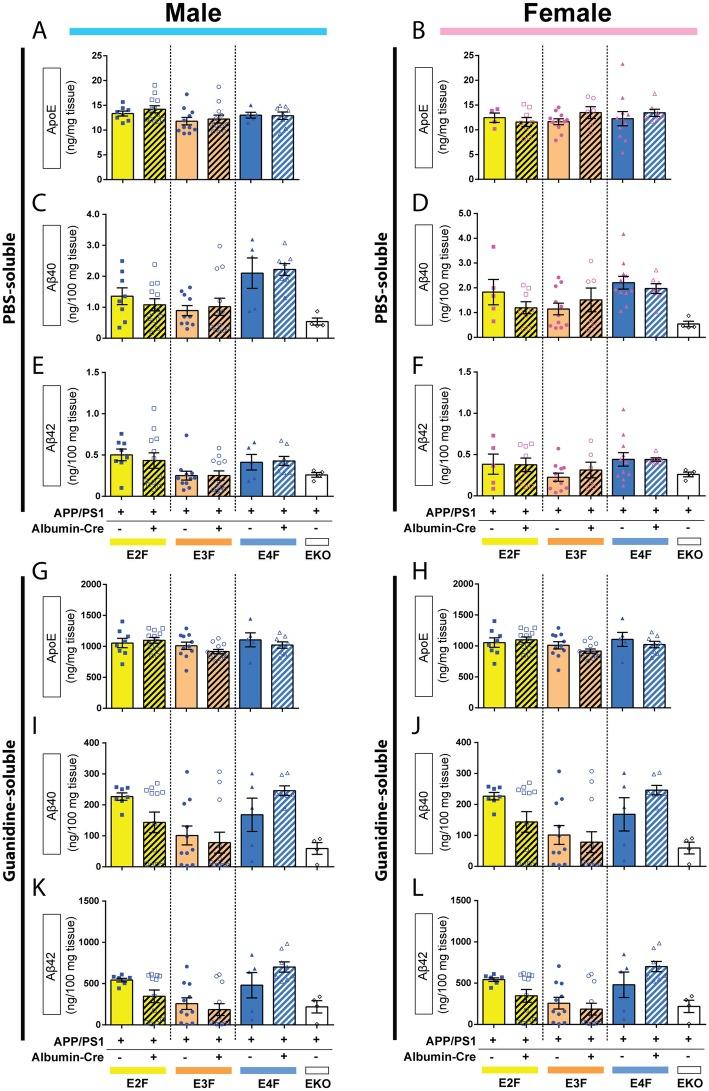
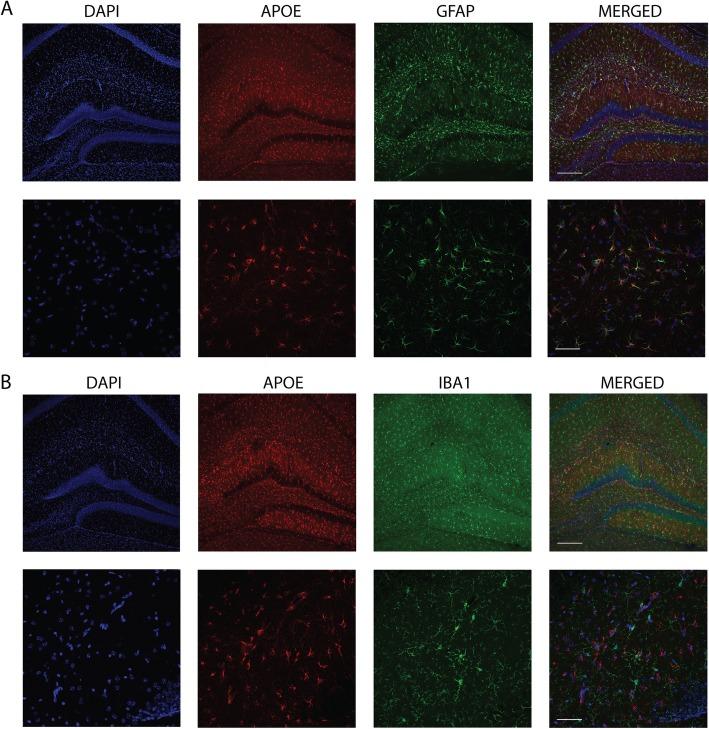
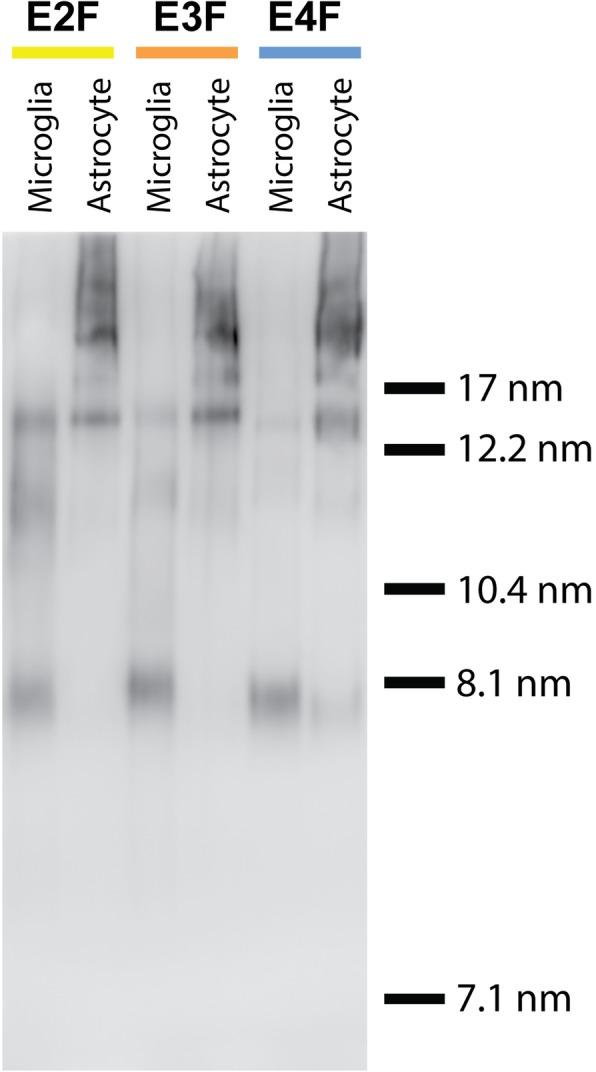
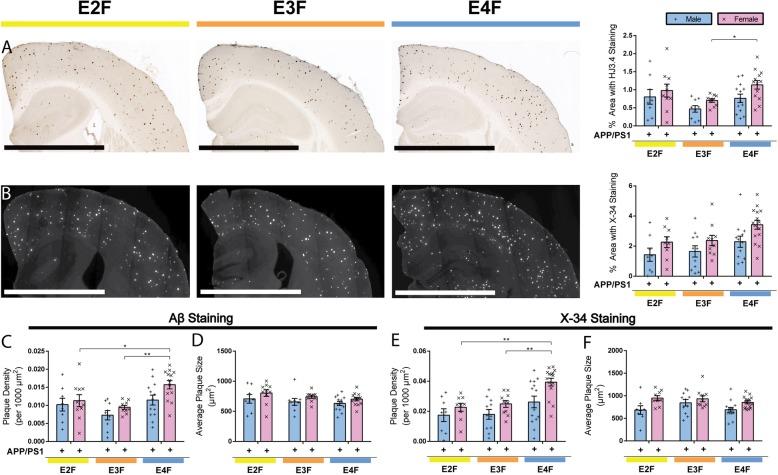
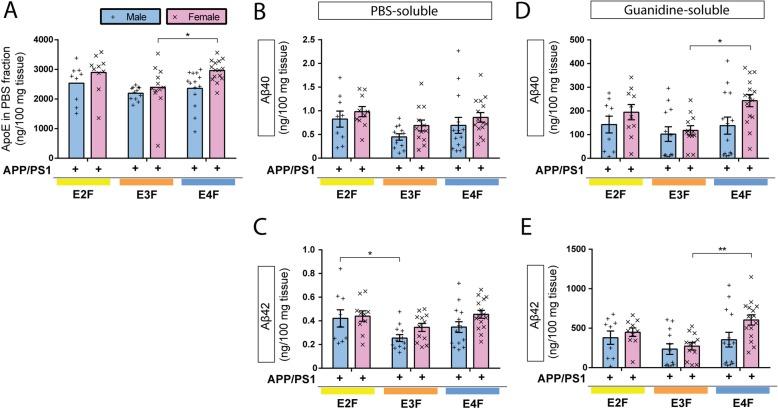
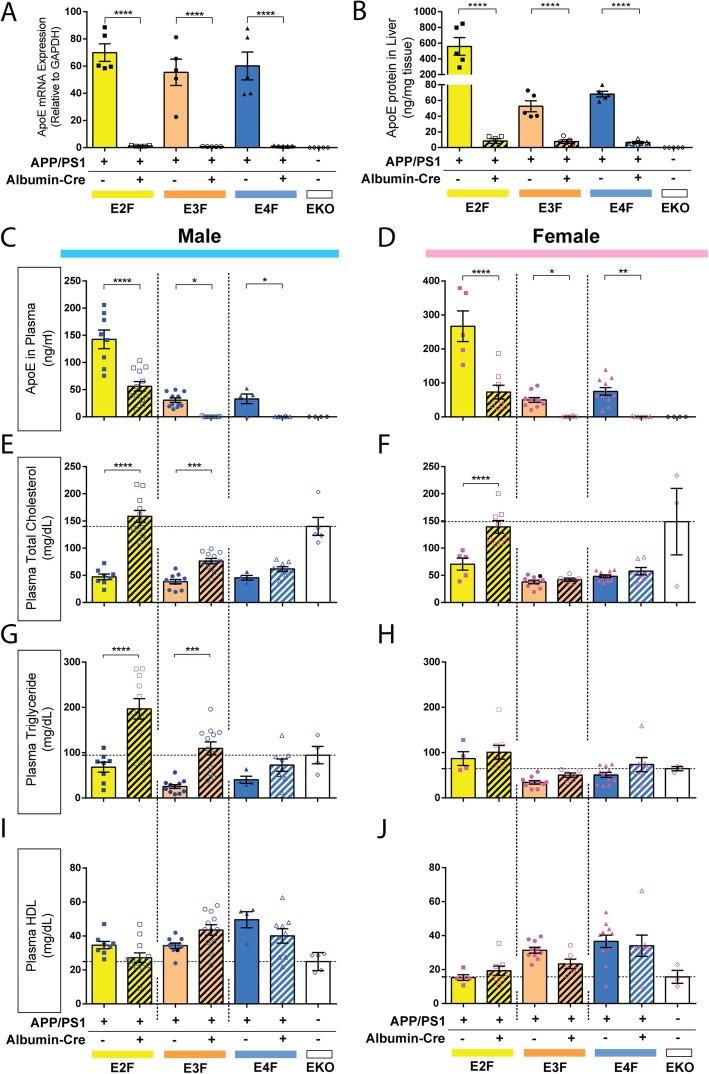
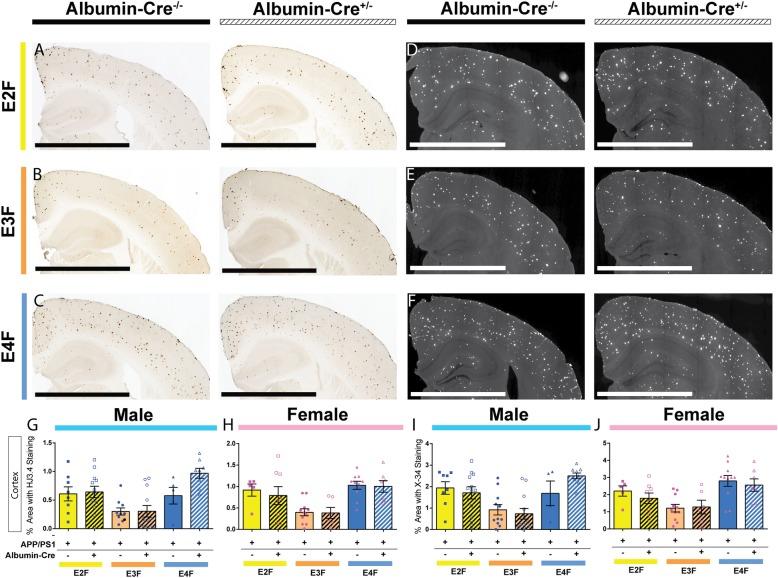
As in other APOE knock-in mice, apoE protein was present predominantly in astrocytes in the brain under basal conditions and was also detected in reactive microglia surrounding amyloid plaques. Primary cultured astrocytes and microglia from the APOE-KI mice secreted apoE in lipoprotein particles of distinct size distribution upon native gel analysis with microglial particles being substantially smaller than the HDL-like particles secreted by astrocytes. Crossing of APP/PS1 transgenic mice to the different APOE-KI mice recapitulated the previously described isoform-specific effect (ε4 > ε3) on amyloid plaque and Aβ accumulation. Deletion of APOE in hepatocytes did not alter brain apoE levels but did lead to a marked decrease in plasma apoE levels and changes in plasma lipid profile. Despite these changes in peripheral apoE and on plasma lipids, cerebral accumulation of amyloid plaques in APP/PS1 mice was not affected.
CONCLUSIONS
Altogether, these new knock-in strains offer a novel and dynamic tool to study the role of APOE in AD pathogenesis in a spatially and temporally controlled manner.
背景
载脂蛋白 E(APOE)基因是晚发性阿尔茨海默病(AD)最强的遗传风险因素。APOE 由大脑中的星形胶质细胞和小胶质细胞产生,而肝细胞则产生外周血中发现的大多数 APOE。使用 APOE 基因敲入和转基因小鼠的研究表明,APOE 对脑内淀粉样β(Aβ)沉积的积累具有强烈的异构体依赖性影响,其形式为 Aβ 含量的淀粉样斑块和脑淀粉样血管病。然而,不同 APOE 池对 AD 发病机制的具体贡献仍不清楚。
方法
我们通过生成新的载脂蛋白 E 基因敲入(APOE-KI)小鼠(ε2/ε2、ε3/ε3 和 ε4/ε4)来解决这些问题,这些小鼠的 APOE 编码区的外显子侧翼为 loxP 位点,允许对基因表达进行细胞类型特异性操作。我们单独评估了这些小鼠,并在与脑内有淀粉样沉积的小鼠交叉后评估了这些小鼠。我们使用生化和组织学方法。我们还研究了从肝细胞中去除 APOE 表达如何影响脑内淀粉样沉积。
结果
与其他 APOE 基因敲入小鼠一样,apoE 蛋白在基础条件下主要存在于星形胶质细胞中,并且在淀粉样斑块周围的反应性小胶质细胞中也有检测到。原代培养的星形胶质细胞和小胶质细胞从小鼠的 APOE-KI 中分泌 apoE,在天然凝胶分析中形成大小分布不同的脂蛋白颗粒,小胶质细胞的颗粒明显小于星形胶质细胞分泌的 HDL 样颗粒。将 APP/PS1 转基因小鼠与不同的 APOE-KI 小鼠杂交,重现了先前描述的异构体特异性效应(ε4>ε3)对淀粉样斑块和 Aβ 积累的影响。肝细胞中 APOE 的缺失并未改变脑内 apoE 水平,但导致血浆 apoE 水平显著降低和血浆脂质谱发生变化。尽管外周 apoE 和血浆脂质发生了这些变化,但 APP/PS1 小鼠脑内淀粉样斑块的积累并未受到影响。
结论
总之,这些新的基因敲入品系为以时空可控的方式研究 APOE 在 AD 发病机制中的作用提供了一种新颖而动态的工具。


 Zotero 插件