
基于普朗尼克凝胶的挖掘实验方法,用于快速评估秀丽隐杆线虫的神经肌肉健康状况。
Pluronic gel-based burrowing assay for rapid assessment of neuromuscular health in C. elegans.
机构信息
Department of Chemical Engineering, Texas Tech University, Lubbock, TX, USA.
Department of Molecular Genetics of Ageing, Max Planck Institute for Biology of Ageing, and Cologne Excellence Cluster on Cellular Stress Responses in Aging-Associated Diseases (CECAD), University of Cologne, Cologne, Germany.
出版信息
Sci Rep. 2019 Oct 23;9(1):15246. doi: 10.1038/s41598-019-51608-9.
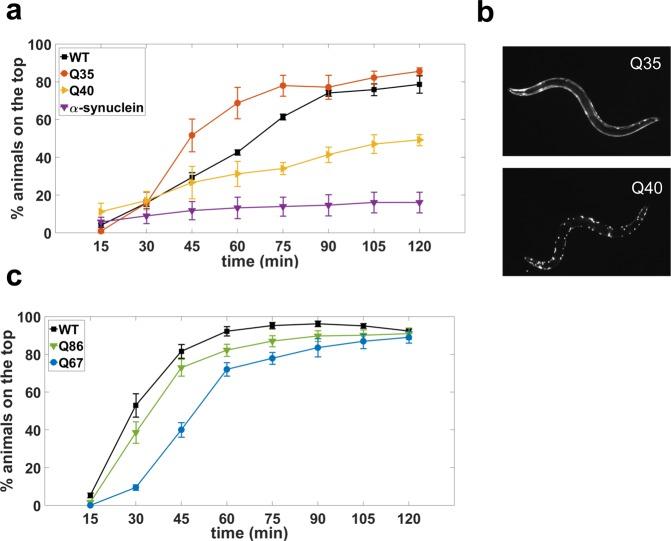
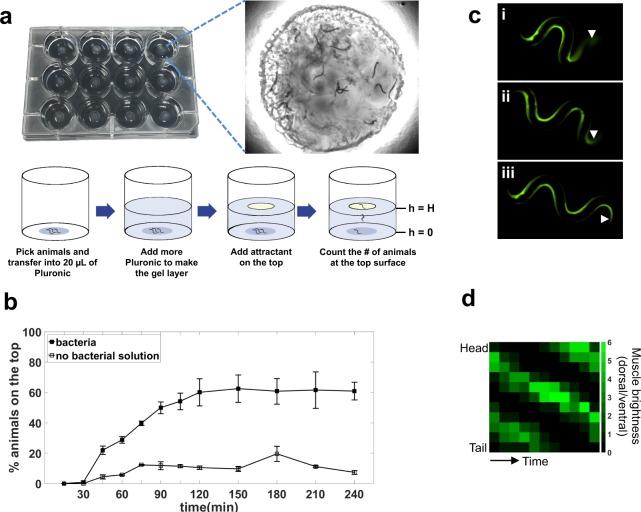
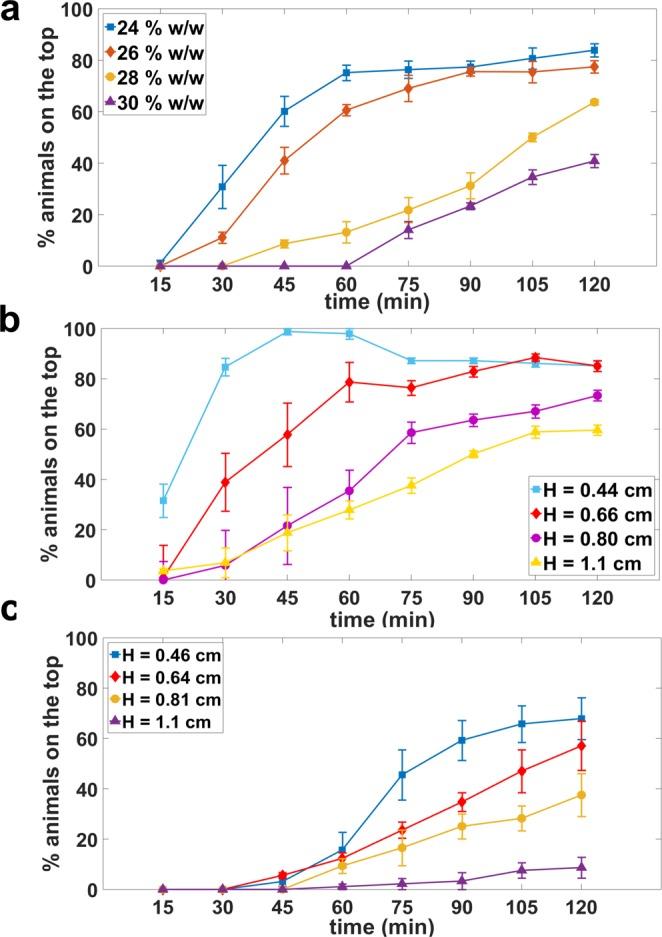
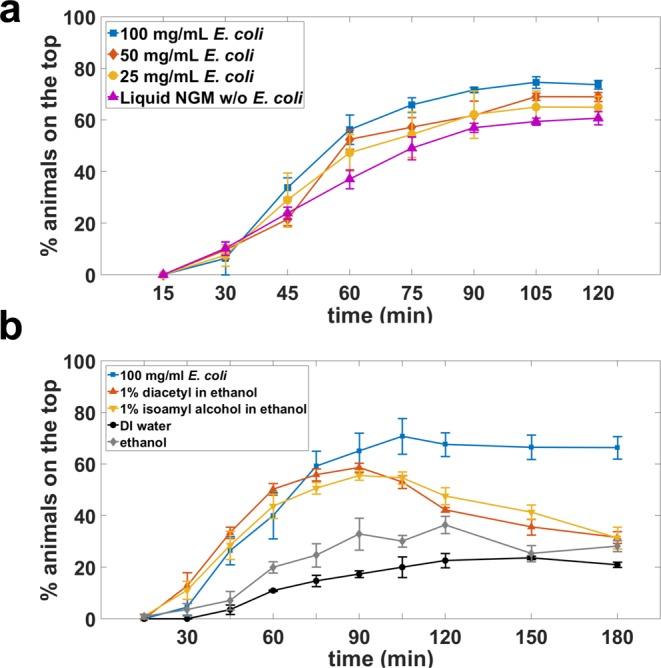
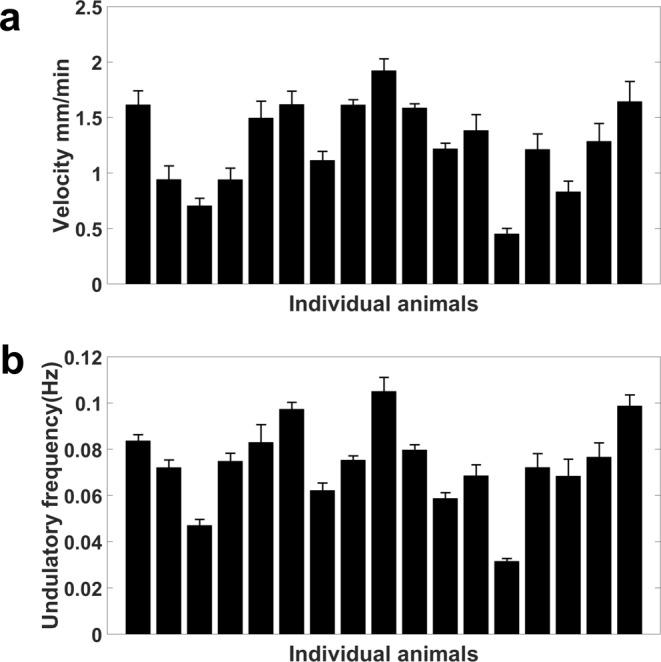
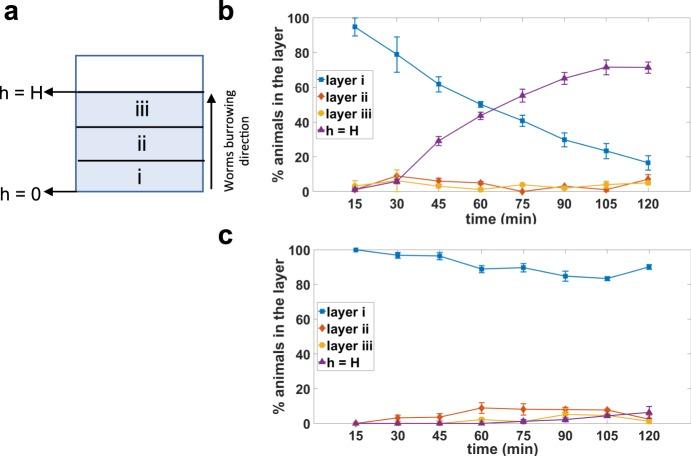
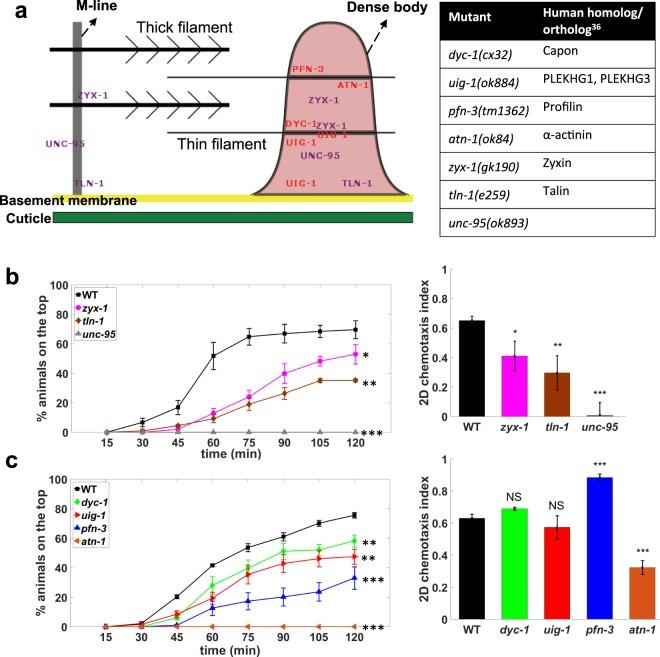
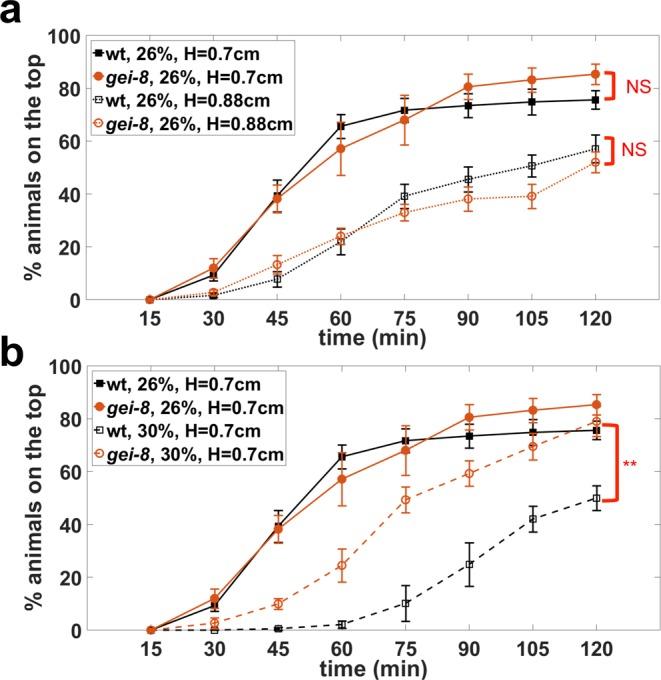
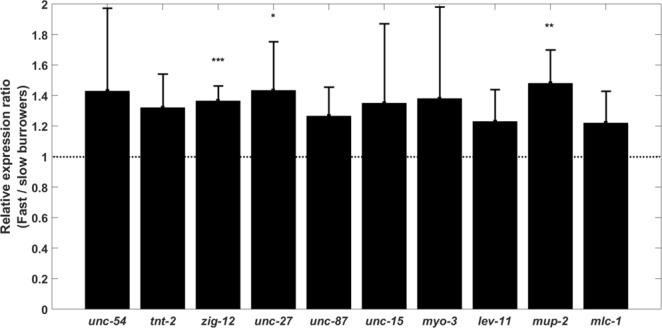
Whole-organism phenotypic assays are central to the assessment of neuromuscular function and health in model organisms such as the nematode C. elegans. In this study, we report a new assay format for engaging C. elegans in burrowing that enables rapid assessment of nematode neuromuscular health. In contrast to agar environments that pose specific drawbacks for characterization of C. elegans burrowing ability, here we use the optically transparent and biocompatible Pluronic F-127 gel that transitions from liquid to gel at room temperature, enabling convenient and safe handling of animals. The burrowing assay methodology involves loading animals at the bottom of well plates, casting a liquid-phase of Pluronic on top that solidifies via a modest temperature upshift, enticing animals to reach the surface via chemotaxis to food, and quantifying the relative success animals have in reaching the chemoattractant. We study the influence of Pluronic concentration, gel height and chemoattractant choice to optimize assay performance. To demonstrate the simplicity of the assay workflow and versatility, we show its novel application in multiple areas including (i) evaluating muscle mutants with defects in dense bodies and/or M-lines (pfn-3, atn-1, uig-1, dyc-1, zyx-1, unc-95 and tln-1), (ii) tuning assay conditions to reveal changes in the mutant gei-8, (iii) sorting of fast burrowers in a genetically-uniform wild-type population for later quantitation of their distinct muscle gene expression, and (iv) testing proteotoxic animal models of Huntington and Parkinson's disease. Results from our studies show that stimulating animals to navigate in a dense environment that offers mechanical resistance to three-dimensional locomotion challenges the neuromuscular system in a manner distinct from standard crawling and thrashing assays. Our simple and high throughput burrowing assay can provide insight into molecular mechanisms for maintenance of neuromuscular health and facilitate screening for therapeutic targets.
整体动物表型分析是评估模式生物(如线虫 C. elegans)神经肌肉功能和健康的核心。在本研究中,我们报告了一种新的线虫挖掘行为分析方法,该方法能够快速评估线虫的神经肌肉健康。与琼脂环境相比,该方法具有特定的缺点,不利于对线虫挖掘能力进行特征描述,而我们采用的光学透明且生物相容的 Pluronic F-127 凝胶在室温下从液体转变为凝胶,便于安全地处理动物。挖掘行为分析方法包括将动物加载到底部的孔板中,在顶部浇注液态的 Pluronic,通过适度的温度升高使其凝固,通过化学趋性吸引动物到达食物表面,并定量分析动物到达化学引诱剂的相对成功率。我们研究了 Pluronic 浓度、凝胶高度和化学引诱剂选择对优化分析性能的影响。为了展示分析方法的简单性和多功能性,我们在多个领域展示了其新颖的应用,包括(i)评估在致密体和/或 M 线(pfn-3、atn-1、uig-1、dyc-1、zyx-1、unc-95 和 tln-1)有缺陷的肌肉突变体,(ii)调整分析条件以揭示突变体 gei-8 的变化,(iii)对遗传一致的野生型群体中的快速挖掘者进行分类,以便稍后对其独特的肌肉基因表达进行定量分析,以及(iv)测试亨廷顿氏病和帕金森氏病的蛋白质毒性动物模型。我们的研究结果表明,刺激动物在提供对三维运动的机械阻力的密集环境中导航,以与标准爬行和抽搐分析不同的方式挑战神经肌肉系统。我们简单且高通量的挖掘行为分析方法可以深入了解神经肌肉健康的分子机制,并有助于筛选治疗靶点。
 Zotero 插件