
解析突变 F508del-CFTR 更易受四种囊性纤维化校正剂作用的区域。
Unravelling the Regions of Mutant F508del-CFTR More Susceptible to the Action of Four Cystic Fibrosis Correctors.
机构信息
Istituto di Biofisica, Consiglio Nazionale delle Ricerche, 16149 Genova, Italy.
出版信息
Int J Mol Sci. 2019 Nov 1;20(21):5463. doi: 10.3390/ijms20215463.
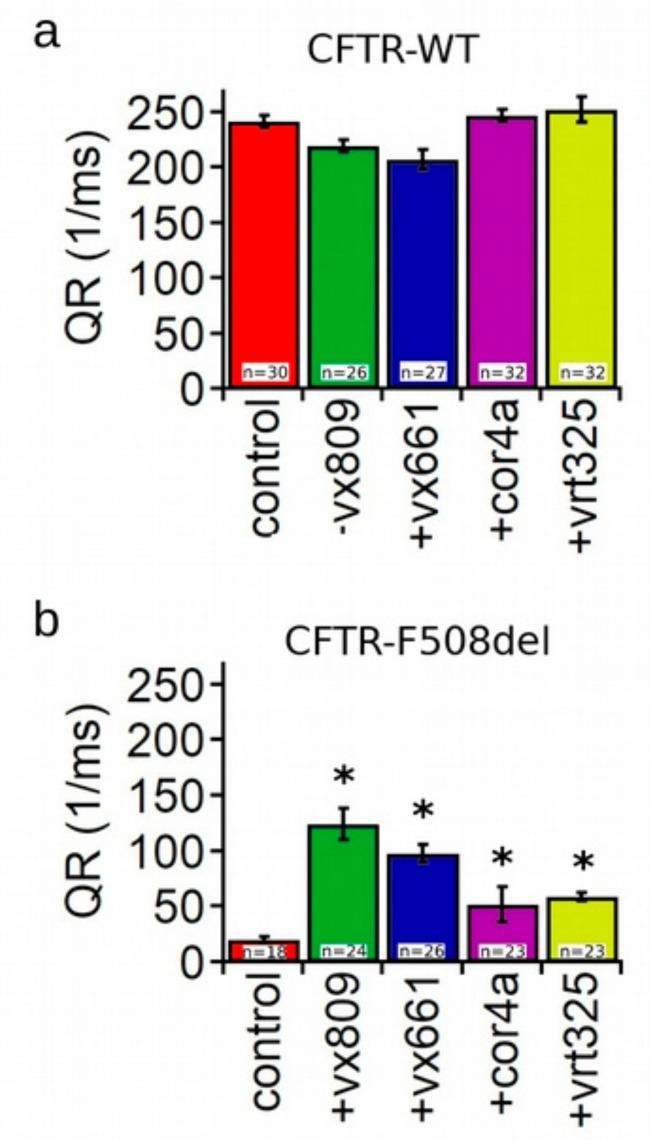
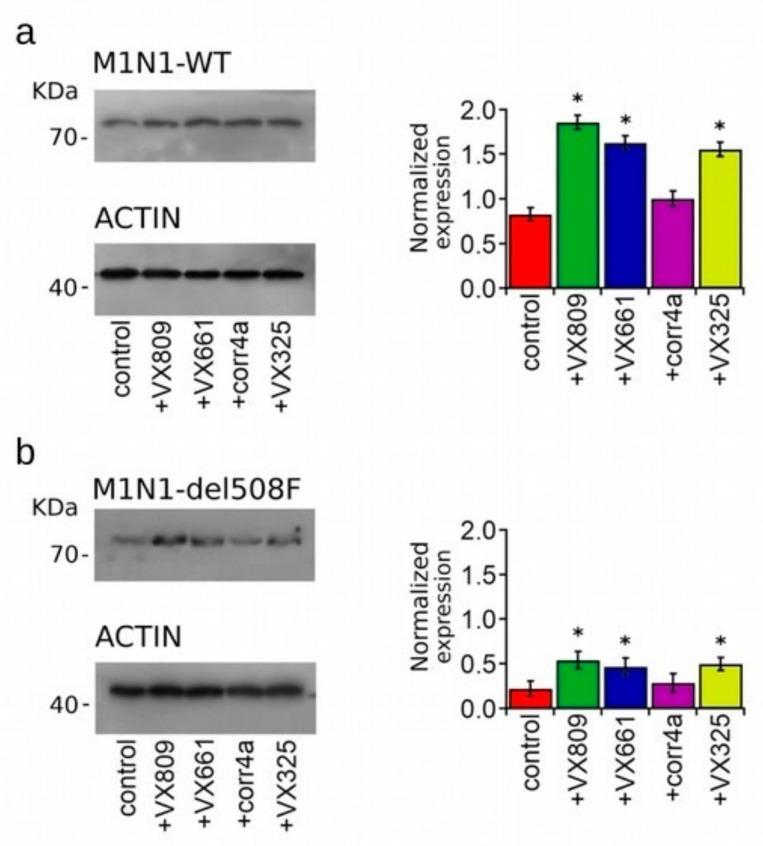
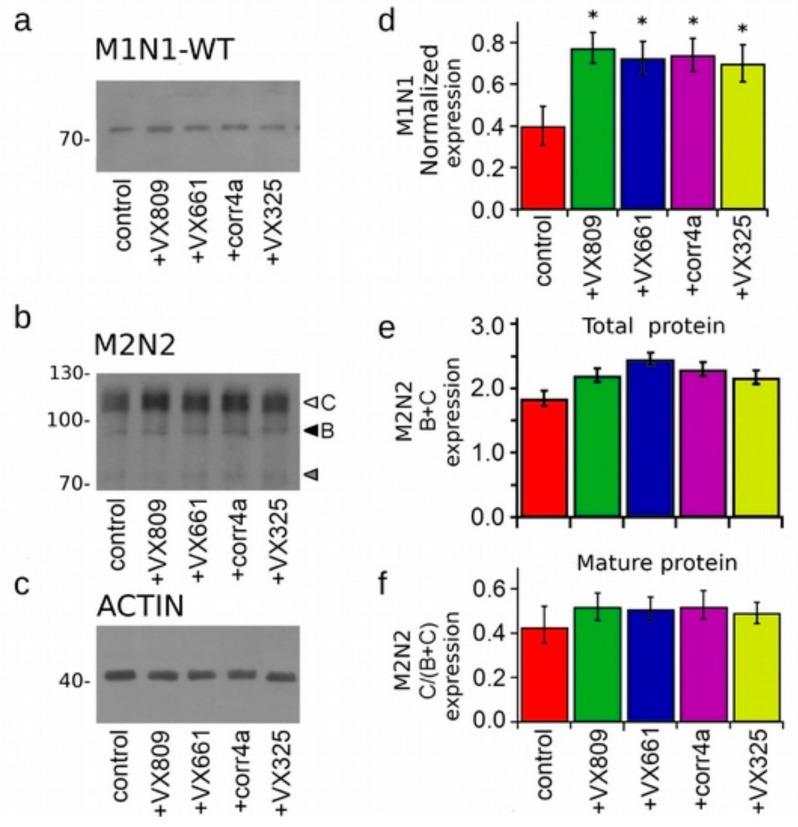
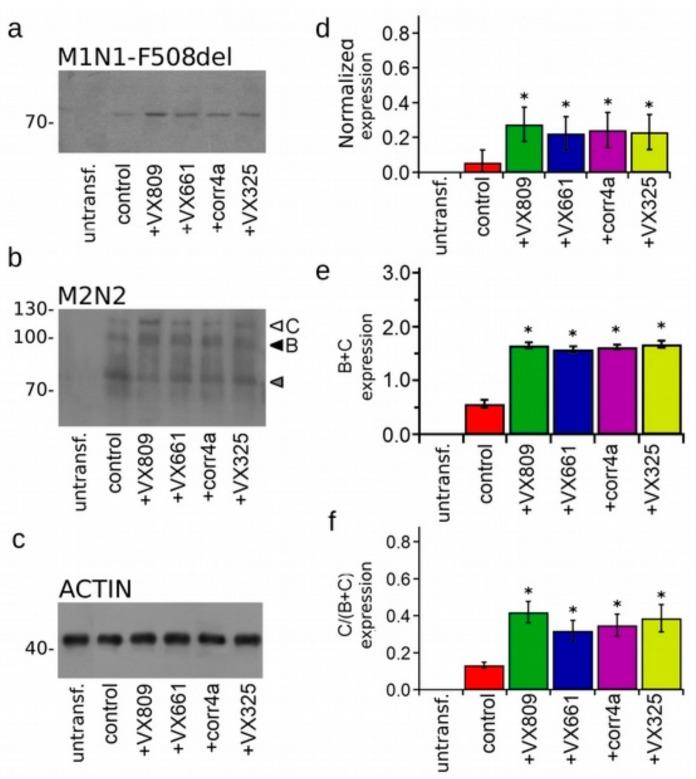
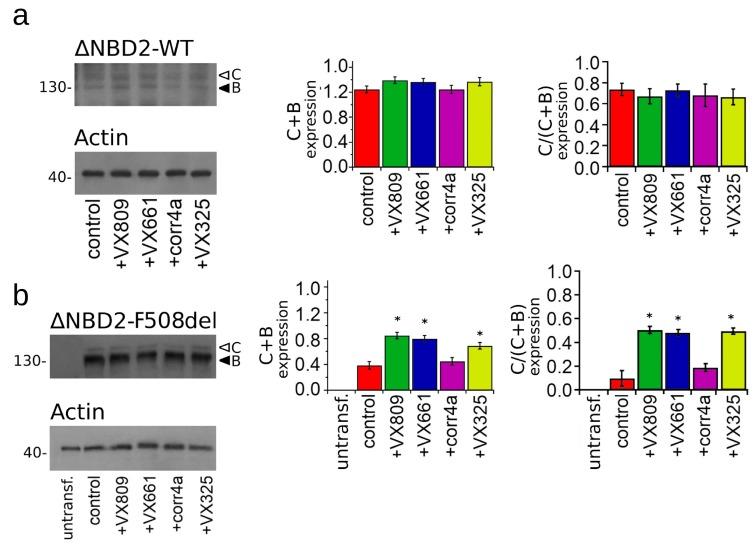
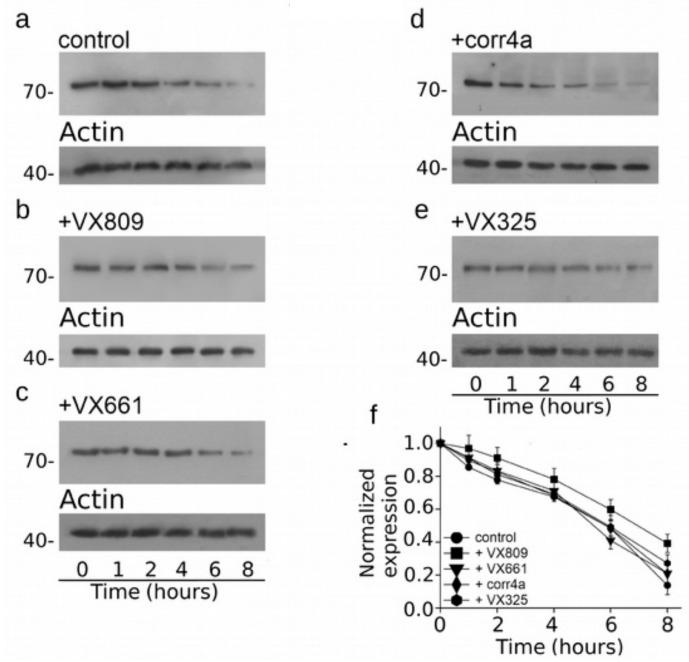
Cystic fibrosis (CF) is a genetic disease associated with the defective function of the cystic fibrosis transmembrane conductance regulator (CFTR) protein that causes obstructive disease and chronic bacterial infections in airway epithelia. The most prevalent CF-causing mutation, the deletion of phenylalanine at position 508 (F508del), leads to CFTR misfolding, trafficking defects and premature degradation. A number of correctors that are able to partially rescue F508del-CFTR processing defects have been identified. Clinical trials have demonstrated that, unfortunately, mono-therapy with the best correctors identified to date does not ameliorate lung function or sweat chloride concentration in homozygous F508del patients. Understanding the mechanisms exerted by currently available correctors to increase mutant F508del-CFTR expression is essential for the development of new CF-therapeutics. We investigated the activity of correctors on the mutant F508del and wild type (WT) CFTR to identify the protein domains whose expression is mostly affected by the action of correctors, and we investigated their mechanisms of action. We found that the four correctors under study, lumacaftor (VX809), the quinazoline derivative VX325, the bithiazole compound corr4a, and the new molecule tezacaftor (VX661), do not influence either the total expression or the maturation of the WT-CFTR transiently expressed in human embryonic kidney 293 (HEK293) cells. Contrarily, they significantly enhance the expression and the maturation of the full length F508del molecule. Three out of four correctors, VX809, VX661 and VX325, seem to specifically improve the expression and the maturation of the mutant CFTR N-half (M1N1, residues 1-633). By contrast, the CFTR C-half (M2N2, residues 837-1480) appears to be the region mainly affected by corr4a. VX809 was shown to stabilize both the WT- and F508del-CFTR N-half isoforms, while VX661 and VX325 demonstrated the ability to enhance the stability only of the mutant F508del polypeptide.
囊性纤维化(CF)是一种与囊性纤维化跨膜电导调节蛋白(CFTR)功能缺陷相关的遗传性疾病,导致气道上皮发生阻塞性疾病和慢性细菌感染。最常见的 CF 致病突变是第 508 位苯丙氨酸缺失(F508del),导致 CFTR 错误折叠、运输缺陷和过早降解。已经鉴定出许多能够部分挽救 F508del-CFTR 加工缺陷的校正剂。临床试验表明,不幸的是,迄今为止鉴定出的最佳校正剂的单一疗法并不能改善纯合 F508del 患者的肺功能或汗液氯化物浓度。了解目前可用的校正剂增加突变 F508del-CFTR 表达的机制对于开发新的 CF 治疗方法至关重要。我们研究了校正剂对突变 F508del 和野生型(WT)CFTR 的活性,以确定受校正剂作用影响最大的蛋白结构域,并研究了它们的作用机制。我们发现,在所研究的四种校正剂中,lumacaftor(VX809)、喹唑啉衍生物 VX325、双噻唑化合物 corr4a 和新分子 tezacaftor(VX661)既不影响瞬时表达于人胚肾 293(HEK293)细胞的 WT-CFTR 的总表达,也不影响其成熟。相反,它们显著增强全长 F508del 分子的表达和成熟。四种校正剂中的三种,即 VX809、VX661 和 VX325,似乎特别能改善突变 CFTR N-半段(M1N1,残基 1-633)的表达和成熟。相比之下,CFTR C-半段(M2N2,残基 837-1480)似乎是 corr4a 主要影响的区域。VX809 被证明能稳定 WT 和 F508del-CFTR N-半段同工型,而 VX661 和 VX325 则显示出增强突变 F508del 多肽稳定性的能力。


 Zotero 插件