
白皮杉醇从 Diels 抑制 2,4-二硝基氟苯诱导的 SKH-1 无毛小鼠特应性皮炎。
Chamaejasmine Isolated from Diels Suppresses 2,4-Dinitrofluoro-benzene-Induced Atopic Dermatitis in SKH-1 Hairless Mice.
机构信息
College of Pharmacy, Pusan National University, Busan 46241, Korea.
Natural Products Research Institute, Korea Institute of Science and Technology, Gangneung 25451, Korea.
出版信息
Biomolecules. 2019 Nov 5;9(11):697. doi: 10.3390/biom9110697.
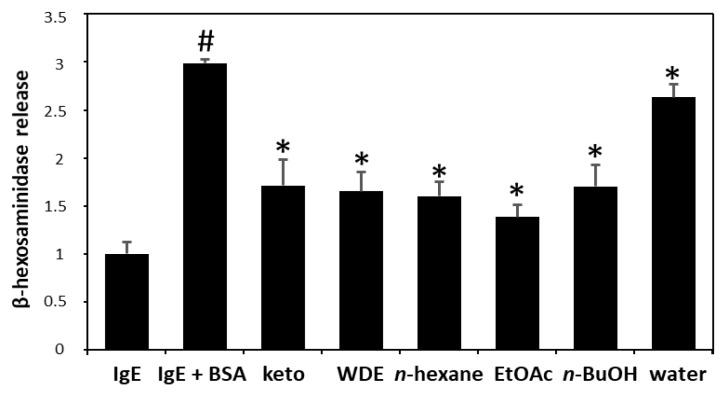
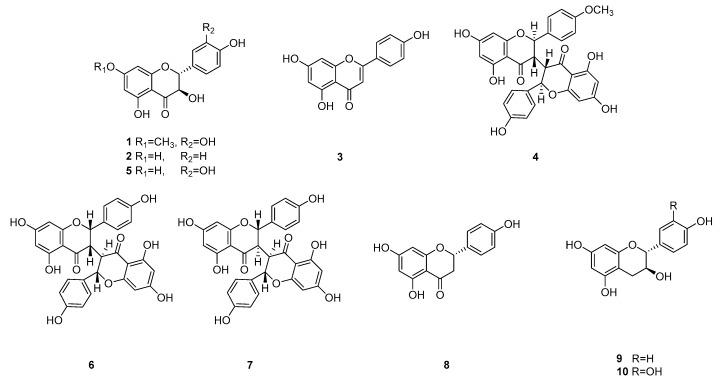
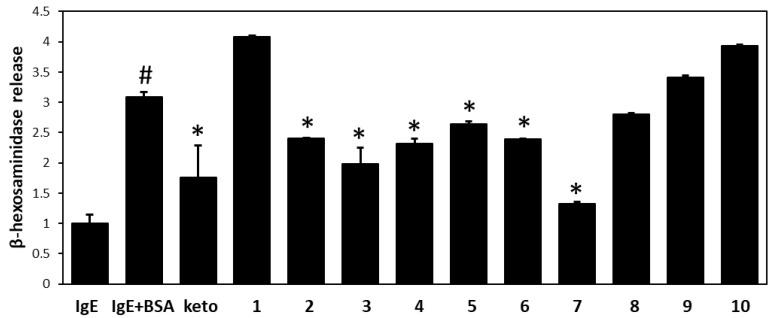
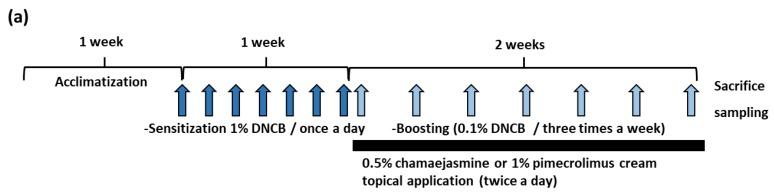
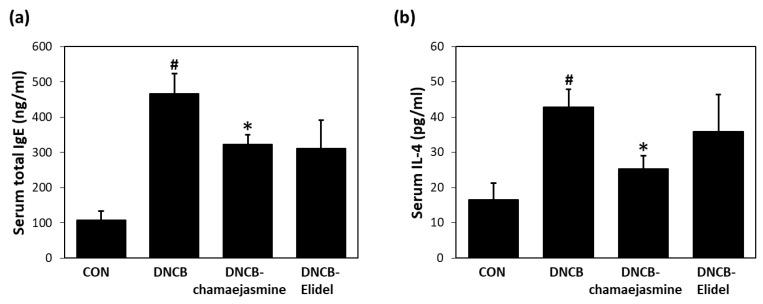
Plants of the genus have long been used as traditional medicines to treat diseases like pneumonia, rheumatism, and bronchitis. This study was designed to determine the effect of chamaejasmine, a biflavonoid present in , on atopic dermatitis (AD)-like skin lesions in a 2,4-dinitrochlorobenzene (DNCB)-induced murine model of AD. Initially, we examined the anti-allergic activities of ten flavonoids from by measuring β-hexosaminidase release from RBL-2H3 cells. Subsequently, an SKH-1 hairless mouse model of AD was developed based on the topical application of DNCB. Chamaejasmine (0.5%) or pimecrolimus (1%, positive control) were applied to dorsal skins of DNCB-sensitized AD mice for two weeks. Serum IL-4 and IgE levels were determined using enzyme-linked immunosorbent assay kits and transepidermal water loss (TEWL) and skin hydration were measured using a Tewameter TM210 and a SKIN-O-MAT, respectively. Of the ten flavonoids isolated from , chamaejasmine most potently inhibited DNP-specific IgE-induced degranulation in RBL-2H3 cells. Topical administration of chamaejasmine attenuated the clinical symptoms of DNCB-induced dermatitis (i.e., itching, dryness, erythema, and edema). Histological analyses demonstrated that dermal thickness and mast cell infiltration in dermis were significantly reduced by chamaejasmine. In addition, 0.5% chamaejasmine inhibited DNCB-induced increases in total IL-4 and IgE levels in serum, improved skin barrier function, and increased epidermis moisture. Our findings suggest chamaejasmine might be an effective therapeutic agent for the treatment of atopic diseases.
该属植物长期以来一直被用作传统药物,用于治疗肺炎、风湿和支气管炎等疾病。本研究旨在确定存在于中的双黄酮查玛西亚嗪对 2,4-二硝基氯苯(DNCB)诱导的 AD 样皮肤损伤的影响。最初,我们通过测量 RBL-2H3 细胞中β-己糖胺酶的释放来检查来自的十种类黄酮的抗过敏活性。随后,根据 DNCB 的局部应用,建立了 AD 的 SKH-1 无毛小鼠模型。将查玛西亚嗪(0.5%)或吡美莫司(1%,阳性对照)应用于 DNCB 致敏 AD 小鼠的背部皮肤,持续两周。使用酶联免疫吸附试剂盒测定血清 IL-4 和 IgE 水平,使用 Tewameter TM210 和 SKIN-O-MAT 分别测定经表皮水分流失(TEWL)和皮肤水分。在从中分离的十种类黄酮中,查玛西亚嗪最有效地抑制了 DNP 特异性 IgE 诱导的 RBL-2H3 细胞脱粒。局部给予查玛西亚嗪可减轻 DNCB 诱导的皮炎的临床症状(即瘙痒、干燥、红斑和水肿)。组织学分析表明,查玛西亚嗪可显著减少真皮厚度和真皮中的肥大细胞浸润。此外,0.5%查玛西亚嗪抑制 DNCB 诱导的血清总 IL-4 和 IgE 水平升高,改善皮肤屏障功能并增加表皮水分。我们的研究结果表明,查玛西亚嗪可能是治疗特应性疾病的有效治疗剂。


 Zotero 插件