
LTX-315依次促进非淋巴细胞依赖性和淋巴细胞依赖性抗肿瘤作用。
LTX-315 sequentially promotes lymphocyte-independent and lymphocyte-dependent antitumor effects.
作者信息
Liao Hsin-Wei, Garris Christopher, Pfirschke Christina, Rickelt Steffen, Arlauckas Sean, Siwicki Marie, Kohler Rainer H, Weissleder Ralph, Sundvold-Gjerstad Vibeke, Sveinbjørnsson Baldur, Rekdal Øystein, Pittet Mikael J
机构信息
Center for Systems Biology, Massachusetts General Hospital Research Institute, Harvard Medical School, Boston, MA, USA.
These authors contributed equally.
出版信息
Cell Stress. 2019 Oct 14;3(11):348-360. doi: 10.15698/cst2019.11.204.
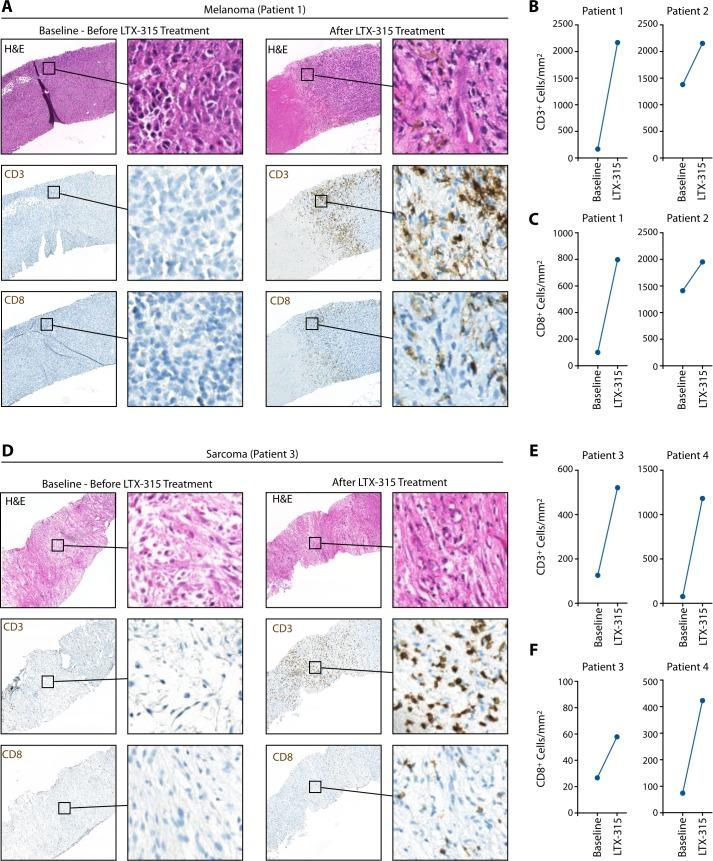
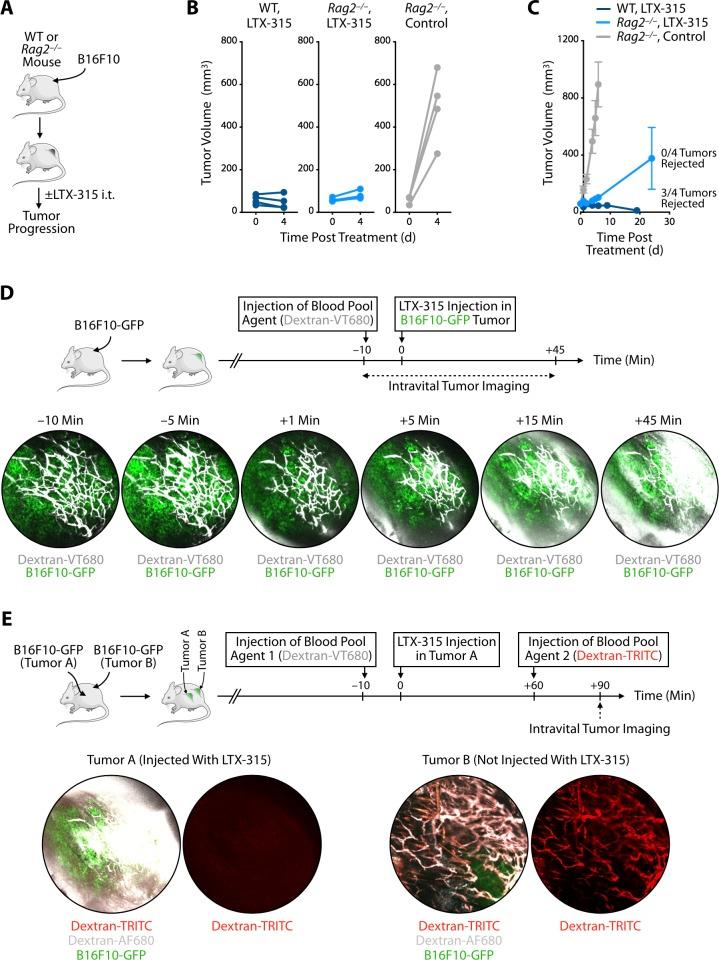
LTX-315 is an oncolytic peptide that has antitumor efficacy in mice grafted with various tumor cell lines and is currently being tested in phase II clinical trials. Here we aimed to further evaluate LTX-315 in conditional genetic mouse models of cancer that typically resist current treatment options and to better understand the drug's mode of action . We report LTX-315 mediates profound antitumor effects against and -driven melanoma and delays the progression of and driven soft tissue sarcoma in mice. Additionally, we show in melanoma that LTX-315 triggers two sequential phases of antitumor response. The first phase of response, which begins within minutes of drug delivery into tumors, is defined by disrupted tumor vasculature and decreased tumor burden and occurs independently of lymphocytes. The second phase of response, which continues over weeks, is defined by long-term alteration of the tumor microenvironment; the changes induced by LTX-315 are most notably characterized by CD8+ T cell infiltration. We further show that these CD8+ T cells are involved in suppressing melanoma outgrowth in mice and report similar CD8+ T cell infiltration following LTX-315 treatment in melanoma and sarcoma patients. Taken together, these findings reveal LTX-315's multiple antitumor effects, including disrupting the tumor vasculature and promoting the conversion of poorly immunogenic tumors into ones that display antitumor T cell immunity.
LTX-315是一种溶瘤肽,在接种了各种肿瘤细胞系的小鼠中具有抗肿瘤功效,目前正在进行II期临床试验。在此,我们旨在进一步评估LTX-315在通常对当前治疗方案有抗性的癌症条件性基因小鼠模型中的作用,并更好地了解该药物的作用模式。我们报告称,LTX-315对BRAF和NRAS驱动的黑色素瘤具有显著的抗肿瘤作用,并能延缓小鼠中AKT和RAS驱动的软组织肉瘤的进展。此外,我们在黑色素瘤中发现,LTX-315引发了两个连续的抗肿瘤反应阶段。反应的第一阶段在将药物注入肿瘤后几分钟内开始,其特征是肿瘤血管被破坏和肿瘤负担减轻,且该阶段独立于淋巴细胞发生。反应的第二阶段持续数周,其特征是肿瘤微环境的长期改变;LTX-315诱导的变化最显著的特征是CD8 + T细胞浸润。我们进一步表明,这些CD8 + T细胞参与抑制小鼠黑色素瘤的生长,并报告在黑色素瘤和肉瘤患者接受LTX-315治疗后也有类似的CD8 + T细胞浸润。综上所述,这些发现揭示了LTX-315的多种抗肿瘤作用,包括破坏肿瘤血管以及促进低免疫原性肿瘤转变为具有抗肿瘤T细胞免疫的肿瘤。


 Zotero 插件